Category: Writing
Friday, Nov 4, 2011 | The Juliet Stories, Work, Writing |
Ah, the best laid plans. I am sitting at my desk and working, and sat and worked most of yesterday too, but I’m not writing reams of words into a new book; instead I’m going over the final copy edits for The Juliet Stories, which arrived on Wednesday afternoon. I was almost afraid to open the file. When Hair Hat was being published, lo these many years ago, I enjoyed every stage of the editing process … right up until we got to the copy editing. Suddenly, I disagreed with the editor, and strongly. You’ll remember that my one real job was at a newspaper where I worked my way up to being a copy editor. So I was feeling pretty confident that I’d turned in a clean manuscript to my publisher.
But the copy editor didn’t think so.
And, listen, she was right and I was right. We were both right. The copy editor’s job is to use a fine-toothed comb and to insist on grammatical correctness and stylistic consistency, by which I mean adherence to the style guide used by the publisher, and not style as in stylish. And that was where we disagreed. I wrote Hair Hat in a deliberately flat and uninflected (stylish) style. I didn’t even use question marks. I wanted the reader to arrive at conclusions without being dragged there by me, the author. The copy editor wanted all questions to end with a question mark.
I just couldn’t do it. It sounds ridiculous to get upset over punctuation, but by God, I just could not compromise. And it pained me. I like to make people happy (even more so at the time than I do now.)
So when the copy edits landed on Wednesday afternoon accompanied by a long message from my editor explaining the process, I went all fear and trembling. It’s been a fabulous editing process up until now. Would the copy edits do me in? Well, I’m only about halfway through them now, but the answer so far has been a gentle, no. These copy edits will not do me in. Am I a more relaxed person, now, than I was before? Is my (stylish) style in The Juliet Stories more compatible with traditional grammar? Or have I just accepted that some disagreement will be part of the process, and conflict doesn’t upset my stomach in the same way that it once did?
I have to go with door number three. I’m still a pretty finicky person. I can get very excited over a semi-colon, let me tell you. And my (stylish) style in The Juliet Stories, though different from Hair Hat, is unique, and sometimes idiomatic rather than grammatically correct. I don’t always agree with what the copy editor has suggested, but I’m okay with that; we don’t have to agree about everything, and I get that this time around. She’s done a bang-up job on this book. The fact checking is amazing. And I’m taking notes on her highly effective use of italics.
I’m back at it again today. Thankfully without dread.
Where does that leave my ambitions for a November writing month? I’m sticking with the original plan, just pushing the start date back by a few days. The copy edits are due back at the publisher on Tuesday morning. The amazing thing is that the builders say my new office will be DONE by Wednesday. In some strange confluence of otherwise unconnected endings and beginnings, that means that I will start my new book in my new office, having dotted all i’s and crossed all t’s on this one.
It’s too much to think about. So I’m off to think about italics instead.
Wednesday, Nov 2, 2011 | Big Thoughts, Dream, Writing |
Yes, this photo is blurred. But within the blur, the colours seem brighter, and the body positions more expressive. I should make something of that. Observe that it mimics our perception of time when mothering small children, the way the days disappear into a blur, and some small detail remains in memory, a flash of colour, a story that gets passed down and requested at bedtime.
Today, I am thinking about motivation. I am thinking about sitting down at my desk and writing into a story that may or may not become a novel that may or may not succeed. What keeps me sitting back down and writing more, not knowing what may come of it? I think it must be hope. I’ve read that people with depression have an inability to imagine the future; instead, they see an unchanging blank. I’ve got whatever is the opposite, though it’s got its downsides, too. Let’s call it an over-active imagination. I get excited about the future based on the slimmest of evidence. My happiest daydreams fling me far and wide through adventure and thrill and accomplishment. “What was I just thinking about?” I’ll wonder, returning to earth with a glowing feeling, and then I’ll remember, oh yes, I was thinking about being interviewed by Eleanor Wachtel. Or about training as a midwife and travelling to Central America to practice. Or about recording myself playing an original song on the piano and becoming a star on YouTube. Heh.
Is it healthy to daydream such big, such ridiculous, such clearly out-of-reach dreams? I’m not sure. But some of the things I’ve dreamed have come true. I dreamed of becoming a published writer, long before anyone else would have dreamed it of me. I dreamed of motherhood. I dreamed of completing a triathlon before I could even swim. Of course, the original dream was that I could become an Olympic triathlete, and reality whittled that fantasy back down to size. But that’s okay. Even if the original dream was wildly over-ambitious, it sent me on a path toward actual achievement.
Almost always (or is that always always?) the daydream is realized in watered-down and compromised form. Reality has mosquitos and critics and temper tantrums. It has limitations. Daydreams don’t.
Lately, I’ve been daydreaming about writing this story. I would like to sit down and just do it, but I seem to need the daydreams to carry me over the fear of failure, the doubt that it will add up to anything special. I also need tangible goals. So I’m going to do something I’ve never tried before. I’m going to write in volume. I’m going to participate in November’s National Novel-Writing Month, even though I’ve disdained it for years (who can force the muse to show her face?) It’s abbreviated as Na-No-Wri-Mo for the hashtag on Twitter, and I’m going to tweet my progress. My goal is 30,000 words by the end of the month.
Because daydreams are shiny happy places in which to linger, but you have to get to work if you’re going to leave a flash of colour in the blur of reality.
Friday, Oct 28, 2011 | Death, Kids, School, Writing |
Today is a perfect fall day, crisp, pale blue sky threaded with grey clouds.
Today, I will sit at my desk and write.
Today, I will enjoy this cup of coffee and wish for a second one.
Today, I did not get up early for yoga. When the alarm sounded, I turned it off and crawled back into dreamland.
Today, I ate porridge for breakfast, plus an egg with toast.
Today, I kissed and hugged four children, reminded them repeatedly to get ready for school, listened to them play the piano, and bribed one of them to go to math club once a week.
Today, the builders arrived to continue their work.
Today, I will sit at my desk and make up stories about characters I’ll never get to meet in real life.
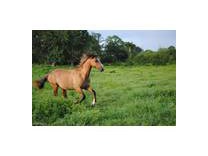
Today, I pause to remember my Gramps. Once, he took me to see wild horses. Mustangs. It was sadder than I thought it would be. I was ten or eleven. The mustangs were corralled for sale on a ranch, of sorts. I remember dust. I don’t know what my Gramps thought of it all. What the wild horses meant to him. I think he appreciated the atmosphere of wheeling and dealing. But I know he loved horses, too, like I did. When I think of him, I think of horses.
Today is a perfect fall day, yellow leaves on green grass, and the frost lifted by the sun.
Today, I will write something for Gramps.
Tuesday, Oct 18, 2011 | Feminism, Money, Mothering, Work, Writing |
How to pare down today’s thoughts into a blog-worthy parcel? First, I want to say thank you to the many who added their comments and experiences to the working-mom meets stay-at-home-mom post. So much food for thought. And I’ve been hungry. Here’s where your thoughts led me:
1. Six-and-a-half years ago, I read an essay by Carol Shields that both comforted me and rung true. In it, she offered the idea that there is enough time. She was writing the essay while dying of breast cancer, but even for dying, she wrote, there is enough time. When she was younger, she worried about fitting everything in, but in each stage of life, she discovered time enough. It wasn’t that she could do everything all at once, it was that she honoured and lived out each stage.
I loved that idea (still do). That I could enter fully into intense hands-on motherhood and take my time. And when the stage passed, I could enter fully into whatever came next. And in my untested theory, somehow those years of intense motherhood would be an asset to whatever came next: all the juggling of multiple demands and scheduling and coping with crises and being nurse / healer / calm-amidst-the-storm / psychiatrist / chef / chauffeur / event planner / and on and on as the moment required would be valued, and would add value to whatever I chose to do next.
A couple of big assumptions in my theory. a) That employers would value experience that couldn’t be validated or quantified. b) That careers could be built overnight or slipped into like a pair of shoes. c) That I would get to choose my career like an item picked off a menu. d) That I would have a clear idea of whatever came next. e) That the intense hands-on motherhood stage would pass.
Reading your thoughts, it struck me: my theory is entirely unproven. I’ve spent six years quietly and confidently assuming everything would fall into place at the right time. (And who knows, stranger things have happened.) But let’s just say things don’t. Let’s observe that intense motherhood doesn’t pass, exactly, things just calm down somewhat. Even a decade on, it’s still pretty intense (with children ages 10, 8, 6 and 3). Meeting their needs continues to occupy a large portion of my mind and my time. The stages of life, therefore, aren’t so clear-cut and tidy.
2. Beyond that, I’m feeling a deeper appreciation for the work that career-building takes. Success in a chosen field isn’t something you can step into. It’s a slow build, a steady climb; you have to be there in order to make connections and to stumble into the right place at the right moment. It takes hard work and commitment. And time. Time and commitment that I’ve chosen to put into my home life and my children. Not into a career.
3. But: At the expense of a career? I still refuse to believe that. Especially because I have been (slowly) building a career as a fiction writer, and, yes, it’s taken time and commitment. But as most writers of fiction will tell you, this ain’t a career known for wild profiting; or even, in all honesty, breaking even. Which brings me to …
4. How much do I prioritize financial independence? I am in a marriage with a supportive partner who has shouldered the burden of our expenses ever since we started having children (you could say, conversely, that I’ve shouldered the burden of caring for our children during that time; and that perhaps we both have made sacrifices–and gains–in this arrangement.) I realize that I’m fortunate even to be able to ask this question, but, if I had to choose between nurturing my creative life and becoming financially independent, which would it would be? Because, let’s be realistic, it may be that there isn’t time to be a mother, and a writer, AND a [fill in the blank] money-earner. At least not all at once.
5. Feminism. One reader commented that her mother strongly prioritized financial independence, for herself and by extension for her daughters; and I know my own mom was troubled by her lack of financial independence, and hoped for better for her daughters. I haven’t done much better, not yet. Why does this weigh on me? (Because it does.)
And, finally …
6. Experimenting freely. Does all of this worry and analysis leave out the most important part, the most exciting part, about where I stand, right this second? (Okay, I’m actually sitting.) Because there is so much possibility in the unknown. My imagination runs wild. Sometimes I’m afraid; but mostly, here’s how I want to frame this nebulous whatever comes next stage that no longer seems so well-defined and particular …
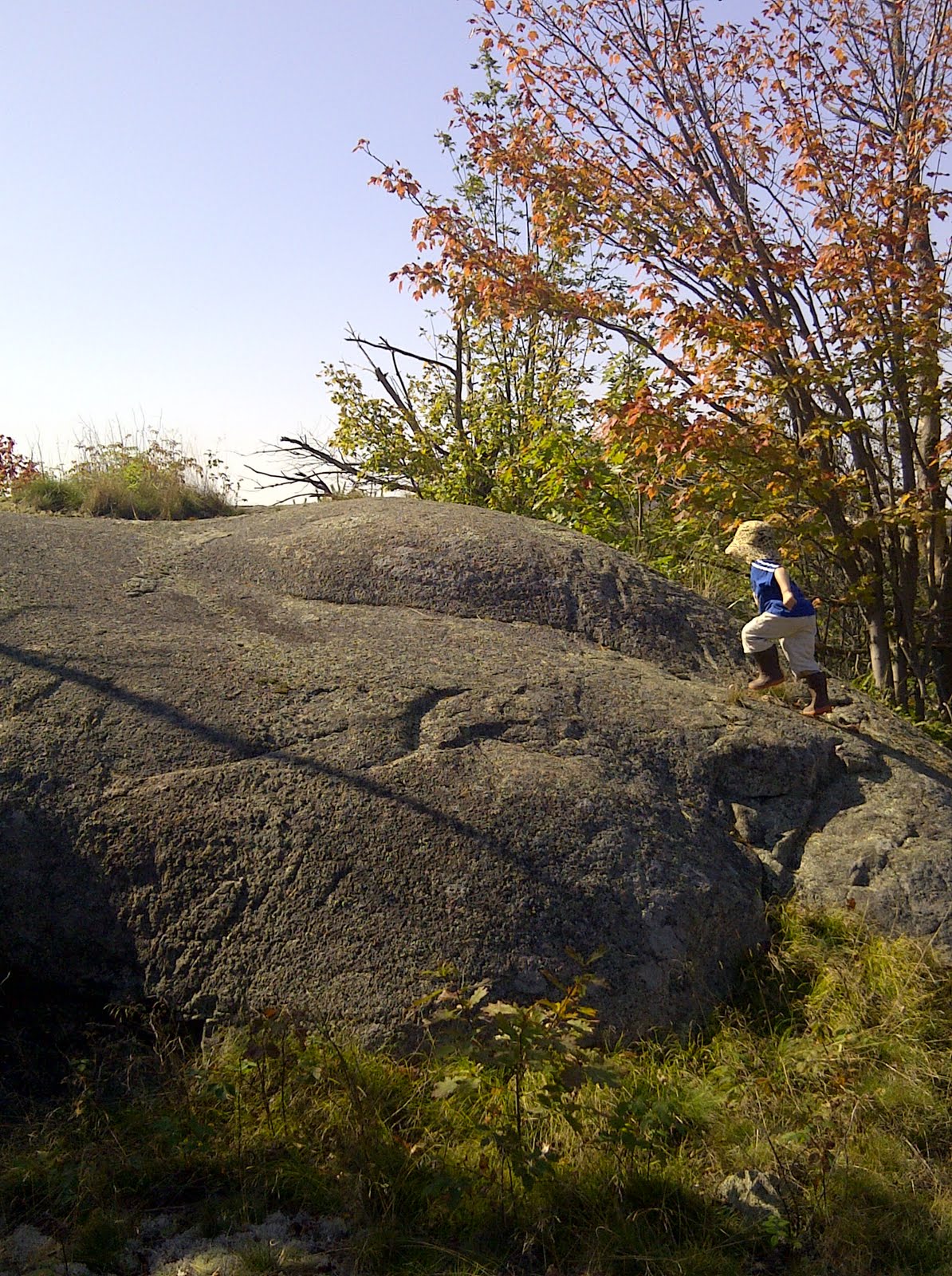
**Like I’m marching joyfully up a giant rock in my rubber boots to survey the fields all around.
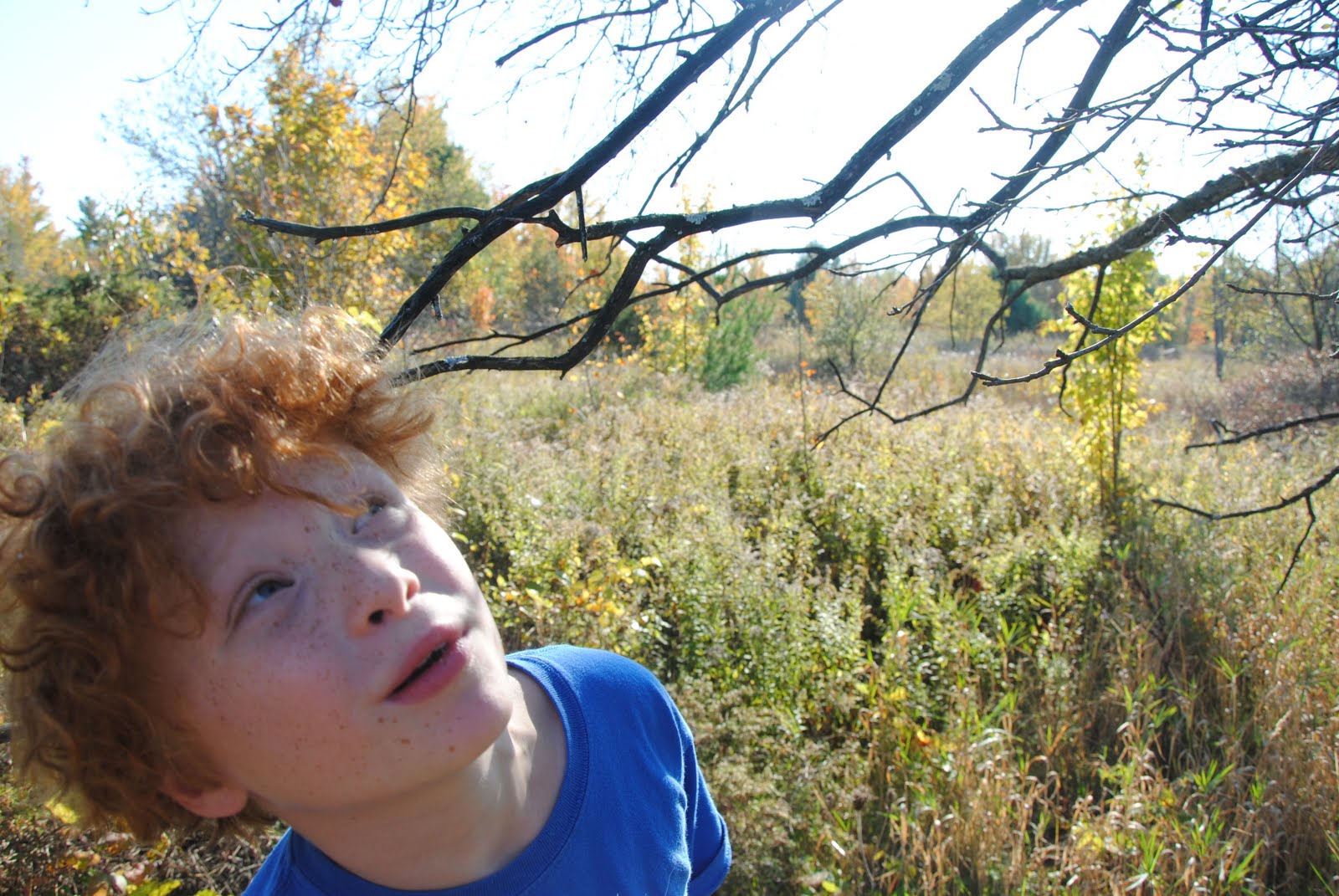
**Like I’m climbing an old apple tree, not necessarily expecting to find edible fruit, but for the heart-pounding excitement of being up so high; and to test the branches, and my own bravery.
(Now, if you please … tell me what you think.)
Friday, Sep 30, 2011 | Writing |
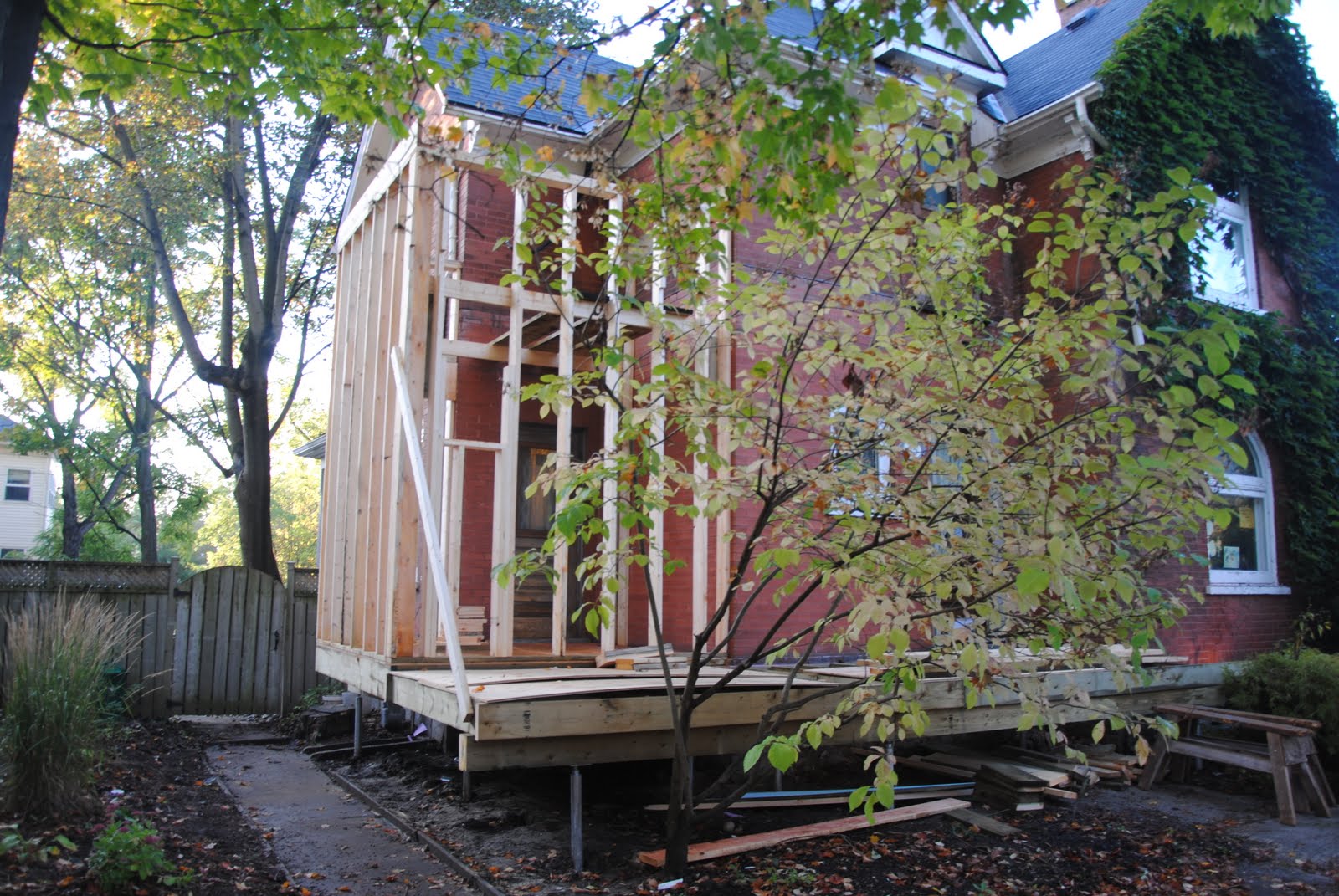
Just look at this, the progress made from one day to the next.
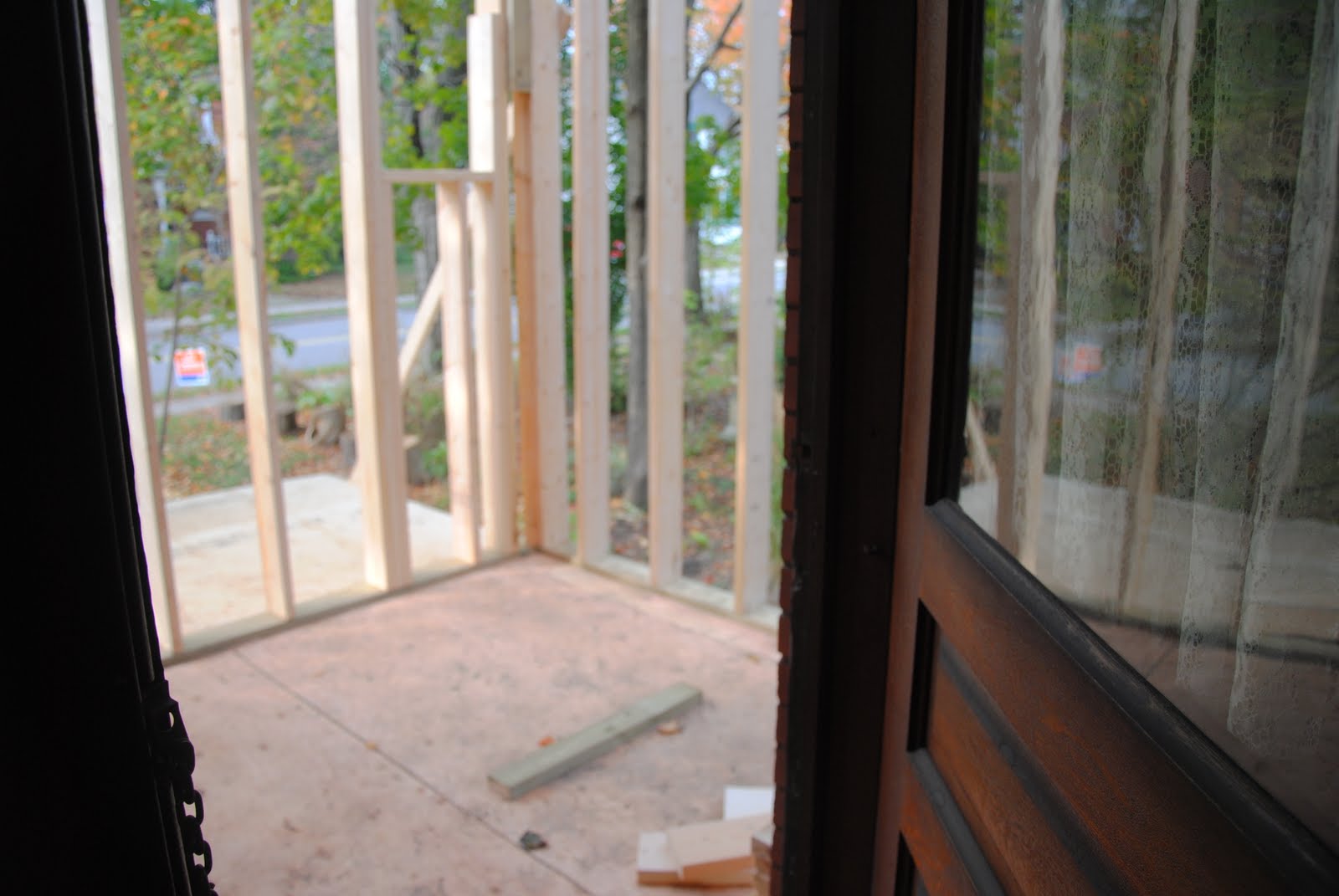
The ceiling in my new office is going to be 1.5 stories tall. Down the road, I hope to add a wall of built-in bookshelves. Possibly a long way down the road. After I’ve sold a few more books and can pay for such an extravagance myself. Meanwhile, this seems quite extravagant enough. A room of one’s own. It’s really boggling my mind.
I’m gathering a lot of restless energy these days, and not spending it entirely wisely. What to do when a big project like Juliet is DONE? Really, I long to leap into something else, possibly something entirely different, and just keep moving. Pour this energy into the next big thing. But life doesn’t necessarily offer up one big thing after another. There aren’t always mountains to climb. I’m looking for the right metaphor (as always). I’m listening to the universe. I’m testing door knobs. I’m waiting for a sign.
When I look at the framed space that will contain a new room in my life, I’m wishing for something as concrete as that to shape my hours. Writing. It requires so much internal energy and drive. Stirring up freelance work takes effort and imagination. No one is (yet) knocking down my door offering plum writing gigs (will that ever happen??) And starting a new book is an act of pure faith: there’s your hope, optimism, and love, right there. It’s not something anyone can tell you to do, really. You have to do it by yourself, of your own initiative, because you feel it must be done.
Question: Do people who go out to a job every day gain a sense of satisfaction and purpose from the simple act of going and doing? Or am I romanticizing?
Can I create a sense of satisfaction and purpose without having an external employer to guide me? More to the point, will this new room create for me a sense of purpose? I’m loathe to hang that kind of responsibility on a room. I’ve been able to work in a variety of carved-out spaces: Hair Hat was written at the end of my bed; The Juliet Stories were written (mostly) here in the playroom. I’ve been proud of not needing a room of my own.
And yet. If I am honest with myself, that’s exactly what I’m hoping for, from this room, from this framed and real space: that stepping into it will create a sense of direction and importance and weight, and legitimize my hopeful efforts, and define me ever more concretely as a writer. That’s asking a lot. As the room gets framed, beneath my excitement, truth be told, anxiety roils.
But maybe, just maybe, stepping into a space devoted to the act of writing will be similar to getting dressed in the appropriate clothes. I’ve learned that simply putting on my running gear makes heading out for a run easy, somehow (and tomorrow morning I’m going to put on that gear for a 25km trail run). It’s not that the run itself is made easy, it’s those first steps that are made easy, and once begun, I never mind how hard it is, and even relish the difficulty. Taking the leap to start is the biggest obstacle of all.
Coming from a Mennonite background, I have minimal in-born appreciation for spaces that are designed to be sacred. I grew up believing that worship could happen anywhere, that stained glass and soaring ceilings and incense and elaborate stagecraft might as much keep people out as draw them in; further, that maybe we end up worshipping those external elements instead of wrestling with our own faith. Too much hierarchy. Too much evidence of wealth and exclusion. Too much us and them. And somehow that translates for me across the board. I’m only slowly, in my mid-thirties, coming around to ideas that others probably don’t find very radical at all. That the things that surround us matter. Clothes. Rooms. Architectural beauty.
I still strongly believe that any space can be sacred (just attend a birth and try to think otherwise). I believe that writing can happen anywhere (just add ear plugs, that’s my motto). But that doesn’t diminish the possibility that beauty and purpose is contained and expressed in beautiful or purposed spaces. That we’re drawn to these spaces for a reason. And that I’m damned lucky.
Wednesday, Sep 21, 2011 | Blogging, Word of the Year, Writing |
(Note: since I never posted photos from our summer holiday, I’ve been using the artsy sunset ones to illustrate orphan posts).
There was such a warm, heartfelt response to yesterday’s post about homework/studying/piano practice that I feel inspired to reply with a thank-you post. How I appreciated hearing your different perspectives: from someone who teaches to someone who remembers being the student who had to work extra hard to succeed.
What surprises me every time I sit down to write a new post is how my ideas change as I write them down. I can plan to write a post on, say, canning tomatoes, but the writing happens, and in following unexpected and twisting lines of thought, the post turns out to be about feminism. Or something. You know what I mean.
It’s the mystery of the process that makes me want to be a writer: because the writing itself is the key to discovery. You can’t plan it out in advance, not entirely. You have to see what develops between you and the word, the written word.
When I started this post, I planned to write more about Albus and how we are hoping to address his struggles, but the words came hard, and I sensed my growing discomfort. He’s ten. When I was ten, I sure wouldn’t have wanted my mom telling everyone about my struggles–or more precisely, about her interpretation of my struggles. So, while I’m glad that I choose to write yesterday’s post, I’m going to choose not to delve further into the subject today. What I want to say is thank you for your thoughtful responses. They give me hope, and ideas.
(One of which is to clean up this office/playroom space to make a proper study space for all the people in the house who need a quiet room in which to work. I include myself. Put it on the weekend-project list. Because, though the digging starts on Friday, that new porch/office is still a few months off.)
This is also a rather long-winded way of saying, I love hearing from the people who are reading my blog! I love when it feels like a conversation. I love the connections this blog continues to bring, some of them quite random, some to people I would never have gotten to know otherwise.
Ah, yes. One big sappy thank you note of a post. If I were writing this in pen, I’d be doodling all around the edges in vines and flowers and stick-ray suns. Maybe even hearts.