
Monday night, 9:38PM, Carrie-in-France vanishes
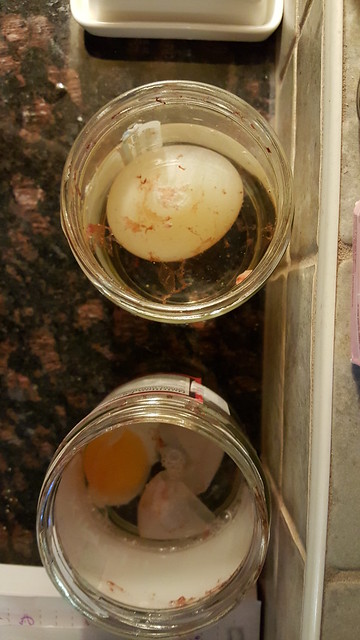 It was the moment when I was on my hands and knees trying to vacuum up every last tiny fragment of broken glass off the kitchen tiles—a science experiment gone awry at 9:38PM—and I was still dressed in my coaching gear after our exciting exhibition game, and I could hear the younger kids upstairs calling for me to come kiss them goodnight, and I saw Carrie-in-France like a ghost haunting the scene, like an ephemeral substance dissolving before me in a puff of breath. I could not be here and be Carrie-in-France. What did it mean, to be Carrie-in-France? It meant being so unencumbered by responsibility that my mind could empty out and be still and I could think clearly, think with a relaxation and peacefulness that allowed for fantastically ambitious plots and schemes and plans. Not just to dream of them but to see how they might be realized.
And here, with the tiny sparkles of broken glass everywhere, glass covered in corn syrup, which was drawing an army of ants—ants! we have ants!!—it was all I could do to keep my shit together, if you know what I mean. I was congratulating myself on only yelling the tiniest bit, on staying relatively calm, and not freaking out completely, on merely with a sense of exhaustion and inevitability getting to the task of making our kitchen floor safe for bare feet while the boy doing the science experiment stood by sheepishly, another glass jar in his hands.
Here is also what I thought: it’s okay. It’s okay because I brought back those ideas from France. I carried them home (and not in glass jars) and I’m working on them now. But when those ideas shrivel up, when their energy dissipates, I need to remember to head out again on a retreat, I need to remember that it’s not a waste of time, it’s a necessity, it’s the path to clarity. I can’t replicate what happened in France here at home. Here at home fills me with a different kind of energy, a different kind of drive—the chaos, the whirling schedule, the stolen moments of peace and stillness (like right now); I don’t begrudge here at home.
I just need the other too. Now I know.
xo, Carrie
Today is a good day
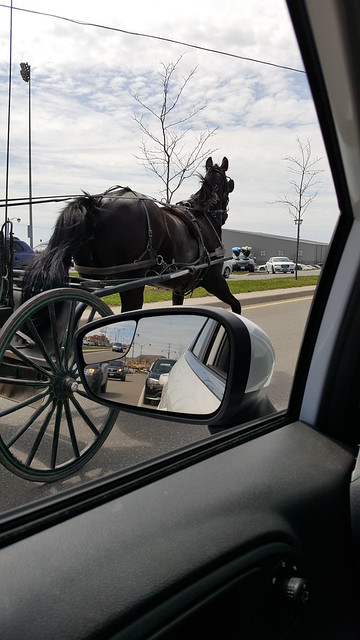
Today is a good day.
Every day is a good day.
That is not true, but every day could be a good day. Since I returned from France, I have endeavoured to hang onto the laid-back vibe that surfaced, slowly, and prevailed while I was there. It was so easy to be laid-back when my mind was emptied of its many duties and responsibilities, and I had only to focus on what mattered to me, and what I decided would matter to me.
Of course, that mind has once again been cluttered with necessities, but I am trying, trying, trying to maintain a focus on what matters. Does it matter that we will be a few minutes late because a child is disorganized (or because I am)? No. It does not matter. In France, I was amused to realize that it was no advantage to be early or even to be precisely on time, because no one was ever early or even precisely on time. Better to arrive a few minutes late without breaking a sweat. Now, that doesn’t quite work here in Canada, but at the same time, it isn’t a bad policy to follow: to not break a sweat. I don’t know if I can keep that laid-back feeling of … hey, this isn’t a real problem, this is a problem of vanishing effervescence which serves me not to trouble over. So many of the day-to-day problems are like this. If only I could let them go.
But how to let go the child yelling “hey, Mom!” from the other room as I clutch my train of thought while trying to respond politely, laidbackly.
Certain things seem easier, it is true. I’ve been reading and researching even if it looks (and even feels) like leisure. Just because I’m enjoying it doesn’t mean it’s not productive. Also, I’ve been much better at ignoring emails until a designated time, when I churn through the whole lot; or designating a particular half hour to a particular subject, like soccer messages (aargh!), or tax prep (double argh!). But you know. It all needs to get done.
I returned from France feeling content with my life. In France, I decided not to complain anymore about the things I’m asked to do, but to do these things with excitement and a sense of adventure. I decided to not worry so much about whether I did an awesome job, and simply content myself with doing my best and showing up. I get asked to do a lot of different things, some of which I’m not, frankly, all that good at, and probably never will be. So all I can do is try.
What I remembered, in France, is that a person is rewarded for her curiosity, her interest, her excitement, her willingness to leap in whole-heartedly. Really, those are simple ingredients. They require no talent. They require no skill. They require only a willingness to learn, to listen, to observe, to engage, to dig in, to do. I have those things! Sometimes I almost annoyingly have those things. I know that the light is going out of me when I lose those things. It takes so little to spark them again. I lose them when I’m exhausted, run down, distracted, overwhelmed.
You know, this can happen, in this life.
I wish the busyness of my every day life was renewing, but sometimes its effect is draining. Okay, so be it. I decided to have four kids, and I enjoy all of the richness and interest that come with raising them; of course there is a downside. There is always a downside. So how to make space within the chaos, how to prioritize, how to make space for my mind to wander, as it needs to, and to dream, and to come untethered from the schedule and the organizing and the mass of must-does.
I must go pick up children for violin lessons right about now.
Dare to dream, remember to dream, wander. Let the mind wander. Feed it on clean air, on walks outside, on friendship, and on work. Good work. Work that feels good to do.
xo, Carrie
I think I came to France …
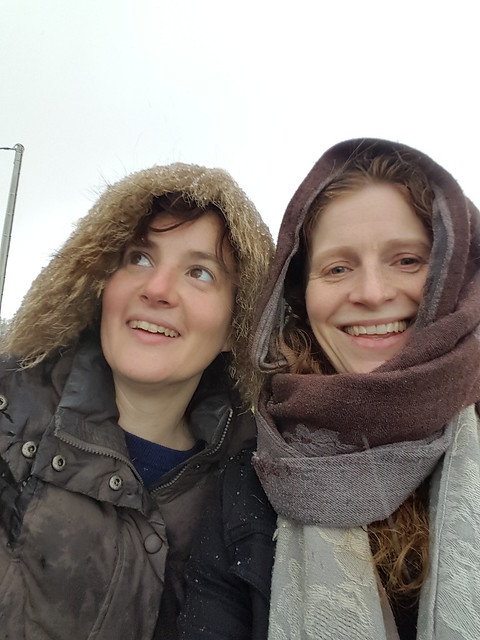 On my last full day in France, I went for one last walk on the Voie Verte, with Kelly Riviere, my collaborator, who translated and today performed my museum piece. I promised her that, contrary to its reputation, Normandy had been beautifully sunny during my stay, and as we set out, this seemed to hold true. We saw ducklings in a stream, a father fishing with his small son, families on bicycles. It was only when we turned around that we noticed the lowering darkening sky, and no sooner had we said, “Oh dear it’s going to rain,” then it began to rain. The rain came in the form of hail, icy fragments that melted on contact and soaked us by the time we’d reached the village again. But as you can see from the photo above, we appear to have a similar sense of adventure.
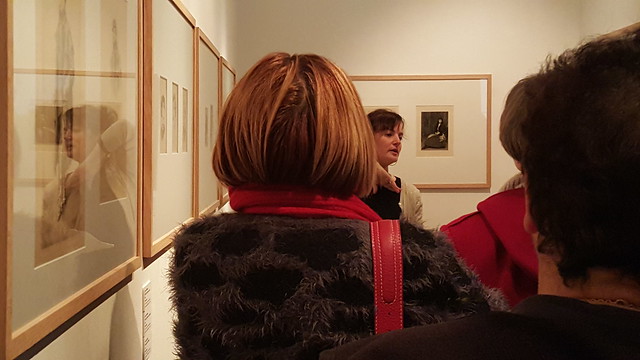 A few hours later, we’d dried off and readied ourselves for the performance at the museum. As planned, at the start of the piece, I positioned a chair and sat in it, laptop open, as if preparing to write about the paintings before me — the first paintings discussed in the piece. I was quite close to the paintings, and I sat looking at them as the room behind me began to fill. And fill. And fill. I realized, without turning around, that the small gathering we had expected was not small at all. Kelly began. And the crowd followed her and stayed with her — with us — for the entire time, as we moved through the museum. This was quite remarkable given the limitations of the space, and the size of the paintings or etchings, many quite small, which meant people were standing and listening to Kelly describe and illuminate a painting they could not see.
 It was a moving experience, and unlike any I’ve ever had or expect to have again. And that sums up this whole trip, I think. This whole wholly embracing and embraced trip into what seems to be another world. One in which I’ve been opened, again, to the beauty of possibility, and the possibility of beauty.
 It’s funny, but throughout the trip I kept saying to myself, “I think I came to France to …” and filling in the blank with something different. I think I came to France to write. I think I came to France to be alone and listen to myself. I think I came to France to appreciate art (hello, Paris!). And now, I think I came to France to discover the magic of collaboration. But I think it must be for all of these reasons. I needed to be here for awhile, longer than seemed reasonable when I was chalking out those columns on the board at home. But here we are, in the last day of the last column, all still standing.
I’m excited to be going home. I can’t wait to see those beautiful faces again. But I think — no, I’m certain — that whatever comes next will be better because I’ve been here. And I hope to come back again soon.
xo, Carrie
Under the influence

I suppose I should know better than to blog under the influence of extreme emotion or wine, or, much worse, both, but here goes.
I am “home” from a truly wonderful evening that completely focused on and celebrated Invisible sous the lumiere, as Girl Runner must be called while I am in France. It was a truly remarkable evening. I can’t believe it, actually. Nearly three hours, all focused on Girl Runner. The first performer (above) was actually a writer, not an actress, a young woman who has already published novels herself and who is also a runner: she memorized at least half an hour of text directly from the novel and performed it — embodying Aggie at different times in Aggie’s life. After her performance, which was very moving, the same woman did a short lecture on sports and literature, and the book. This was followed by a second performance, a reading from the book performed by a male actor, who showed us a whole different aspect of Aggie’s character — her humour. The audience was really laughing. I started to think that I’d written not a novel but a play! When his reading of the text was done, it was my turn on stage for an interview, with a warm reception from the audience.
After all of this, there was a dinner for the artists. During which I had some wine along with the meal. And I’m only “home” now, and it’s after midnight.
I feel like I’ve seen something that I won’t forget, and also that’s changed my view of what I can do and imagine. Being in France has shown me Aganetha as I never saw her before, but it has also shown me something about my own writing that I hadn’t appreciated, somehow. I don’t know how to describe it. All I can say is that it’s amazing to feel such energy and to be in such a different creative space. This trip has been a complete gift. Full stop.
Tomorrow is the performance of my museum piece. And on Monday I come home. But meanwhile, here I am, floating.
xo, Carrie
Paris wandering
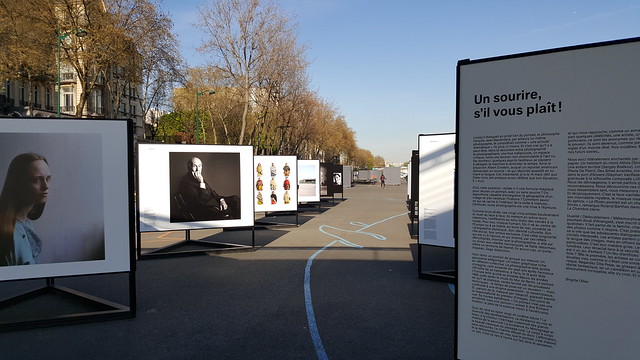
I had lunch at the Cafe de Flore, which is next to Les Deux Magots and across the street from the Brasserie Lipp, all famous French literary landmarks. The waiter, when asked, said that I was sitting exactly where Simone de Beauvoir would sit when she came to the cafe. Now, he may say this to everyone who asks, granted, but I’m not picky. And it was a good spot. I could see the whole cafe.
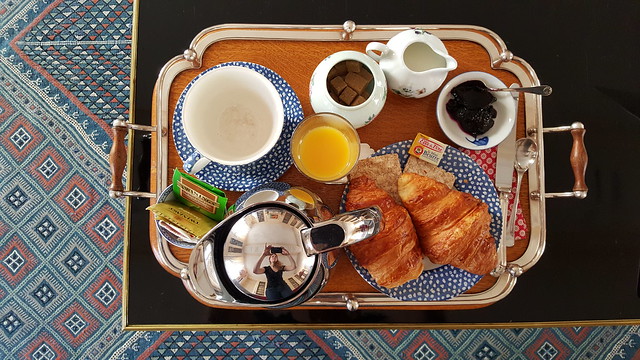
I am returning by train to Louviers soon, to finish my work there. But today, I had nothing on my schedule. So after breakfast (two croissants, jam, camomile tea, served discreetly in the “library” at the appointed hour), I walked. I walked and walked and walked, marvelling at how open the city is, how inviting. How it has been arranged to feed the public — anyone who comes — with beauty.
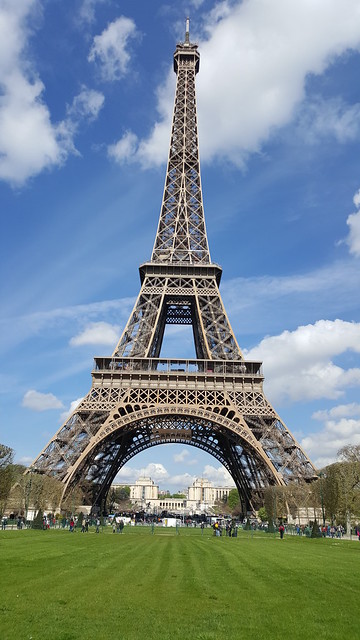
I sat on a bench beside the Eiffel Tower, having stumbled onto the quiet side, and here is what I wrote.

Sit on a bench. Sit and look at the tower built for a World Fair in 1889. Two birds fly directly toward you and flit past your head. Green buds on trees newly popping open. What shall you do, but look? And sit. And rest in the strange power of human-made beauty — a thing that has no practical purpose, really. I finished reading Elizabeth Gilbert’s Big Magic last night, and she writes that what she loves about her work (as a writer) is that it is NOT essential. And therefore it is play. It expresses the same thing that this Eiffel Tower does and these buildings of enormous beauty and power — and the portraits at the museum in Louviers. It says: we are here to be joyful, too.
A man stops and touches the blooms on a flowering bush, of pale yellow, a middle-aged man with sunglasses and a paunch, stops and touches the blooms. All of this beauty freely available, maintained over generations, open to the public, open to anyone who can get here, like me, and sit on a bench and look.
Maybe art exists because we want to create, we humans. Maybe I should stop wishing I were someone with a practical essential career, and rejoice instead that my gift, such as it is, is a gift. That what I have been stumbling toward all these years is an expression of thanks. Thanks to this world for letting me in, letting me live and breathe and love and feel the overwhelming desire to express what catches inside me.
Elizabeth Gilbert is absolutely right. My work is not essential. I’m not saving anyone’s life or changing the world here. I’m just playing. And my God, how good it is to have the freedom, the safety, the permission, maybe even the calling, to play.
I like how Gilbert describes itching at a tiny curiosity and how it grew, for her, into a book. Maybe I need to scratch more points of curiosity: research, study, fill the arid patches in my mind with knowledge, and see what connections get made, see what stories grow. I think Gilbert’s book may have given me a template, a guide, for how to continue doing this with real purpose. It isn’t all about the writing. It’s also about collecting knowledge and experience and material in order to transform it into something that can’t be seen in advance. No guarantees.
But that’s okay. Risk is not so scary when all I’m risking is time and effort poured into something that pleases me. Forget selfishness, or stop fretting about it. Do I wish the people who built this tower had dug wells instead? Do I wish that Mavis Gallant had become a nurse instead of moving to Paris to write stories? No!
Can you accept yourself unconditionally for who you are right now? I’ve been saying this to myself and it is a powerful powerful medicine — or incantation. It is powerful good.


Maybe I came to Paris to see what beauty means. That it is bigger than its human creators; that I just need to do my work. Does your writing love you? Elizabeth Gilbert asked, and Yes, I declare that it does! Look at the gifts it’s given me: I wrote a book and it brought me to Paris! I must admit that when it comes to gift-giving, I prefer to give than to receive. Sometimes, often, I’m resistant, wary, guilty, almost afraid of being given gifts — like I must repay what’s given or fall into debt. It is probably a desire to control: a gift, after all, is something over which the receiver has no control. A gift is a gift. And I see I’ve been mistaken and blind all this time. I’ve been thinking I need to repay my debts by helping others, serving, being useful … when all I really need to do is say thank you.
xo, Carrie
PS Forgive any typos: written and posted in a very short amount of time, as I am rushing to get the train back to Louviers. Goodbye, Paris!