Category: Parenting
Monday, Feb 23, 2015 | Big Thoughts, Exercise, Kids, Meditation, Parenting |

icicles on Aggie
Daily meditation, in slightly increasing increments of time, has given me plenty to think about … even while I’m practicing standing a small distance away from my thoughts, trying to observe rather than control or judge them.
The thinking never really stops.
Here’s an observation applicable throughout the day, and in parenting situations too. The physical state of the body greatly affects the mind’s ability to focus. Obvious? Yeah, I know. I spend a lot of time discovering the obvious. Or, more accurately, rediscovering the obvious. You’d think you’d remember all the wise and useful things you’ve learned, at great cost, over years of experience, right? Well, I don’t seem to. I need reminders.
Yesterday, I struggled to sit quietly for the full twenty minutes, and not only because I could hear my kids rolling around wrestling and mock-arguing in the next room. I struggled because it had been a morning without much activity. I’d snuggled a grumpy kid in bed, read the paper, eaten breakfast, sipped a coffee. All was ease and leisure. And then I sat down to meditate and my body, it turned out, was flaring with unshed energy. I hadn’t noticed! If I’d noticed anything, I would have said I was feeling a bit grumpy or anxious—I would have interpreted my physical state as being a state of mind, as if the two were quite separate.
Those twenty minutes felt endless. I was crawling out of my skin with wanting to get up and move.
This morning’s meditation, by contrast, felt easy. I was alert, steady, and twenty minutes flew by, so quickly that I couldn’t believe it was already over. The difference being quite simple, I think: this morning I got up early, and exercised. My body, by the time I sat down to meditate, had shed plenty of energy and was prepared for quiet and stillness, and therefore my mind was capable to quiet stillness too. This is more than enough reason to get up early and exercise, in my opinion. (I set my alarm for 5-ishAM, five mornings a week, and for that habit to stick, I need a good reason, frankly.)
I applied my new-found/re-found observation yesterday when the kids were practicing their instruments. The six-year-old was getting frustrated and impatient, so I sent him running a loop around the house—once, and then twice—pretending to time him. (Side note: funny how much he loves being timed for activities; maybe the opportunity to lay down a “best time,” no matter how arbitrary, is endlessly exciting.) Anyway, after setting a new course record, he sat back down at the keys, panting a bit, but with a much happier spirit. Same for the nine-year-old violinist. (She didn’t need to be timed, however.)
It made me appreciate that three out of four kids walk to school every morning, and the fourth kid usually gets up to do some exercise before breakfast.
Makes me ask, too: How often is our physical state affecting our mental state, and we’re completely unaware?
xo, Carrie
Friday, Feb 6, 2015 | Book Review, Books, Feminism, Girl Runner, Parenting, Word of the Year, Writing |

I keep track of my book-reading life in a separate section of this blog (under Extras), but as this is the year of WRITE, I’d like to highlight the connection between writing and reading by sharing some of my book-related reflections here, too. Because really, it can’t be a year of WRITE if it’s not also a year of READ. (And if you ever want advice from me on how to be a writer, here’s the only decent answer I’ve got: PRACTICE your writing like you’d practice the piano; and READ all the time, everything you can get your hands on, especially but not exclusively in the styles and forms you admire.)
So. Reading life. Below are three books I’ve read recently. But first I want to tell you about the newspaper article I read this morning in the Globe & Mail, an interview with two young women, both 13, both in grade 8 (and therefore the same age as my eldest, who is a boy). It’s the most clear-eyed, clear-headed perspective on sex education that I’ve ever come across. I love these young women! (Their parents must be pretty awesome too.) I’d like to have my older kids read this interview and then discuss it with them. Here’s a brief excerpt: What do you wish boys would understand? “Boys need to understand that women aren’t sex objects or lesser people. … Girls aren’t this whole other world. Boys and girls actually aren’t that different and they should be treated like they aren’t that different. Otherwise nothing is going to change.”
::
What I’m reading …
〉 Fingersmith, by Sarah Waters
* Christmas gift from Kevin to me
I’ve become a Sarah Waters fan. This book seriously creeped me out, but I could not stop reading it. It’s set in Victorian England and it’s gritty and dirty and full of evil plots and human foulness, and lots of things I’m actually quite squeamish about, but I was completely taken in. Plot twists? By the dozen. Never saw ’em coming. Waters is phenomenally good at storytelling, and at capturing the intimate details of an historical time period. I’m taking mental notes as I read her. I wasn’t sure what the message at the core of the book was, exactly — it seemed emptier at its core than The Little Stranger — but I didn’t really care either. I just wanted to devour the book and piece everything together. When I have time, I will definitely be reading more of Sarah Waters. (Problem is, I couldn’t put the book down, and was up late on a few nights, turning pages….)
〉 Fair Play, by Tove Jansson, translated from the Finnish, with a foreword by Ali Smith
* bought on my Kobo
This book challenged me. I really wanted to love it, and found that I could only like it. It is a series of small stories about two characters, loosely (or perhaps not so loosely) based on Jansson and her partner, a woman who was an artist. I kept mixing up the main characters’ names; they didn’t seem that different from each other, and that was one of the problems I had with the book. The other problem was the structure of the stories, which at times seemed overly and overtly plotted, even while most ended with a severe abruptness that seemed indicative of an undeveloped thought. Yet, even while my writer brain critiqued the stories’ structure, I was nevertheless drawn into this slightly odd world being portrayed, of two artists and friends (the specifics of their relationship are never explained, but they do live together at times and often share a bed), who share their lives and their work with each other. I can’t imagine having such a close friendship with another artist, one who would criticize my work even while I’m making it; that’s a level of collaboration that I really can’t fathom. I can’t fathom knowing another woman quite this well, I suppose, too. It’s a bit strange, as I’m thinking about this now, that we totally normalize pairing up and sharing our lives and space with a sexual partner, but a platonic friendship with the same depth of understanding and time spent together seems strange (or it seems strange to me, anyway). The exception to the strangeness was that brief period in my life when I had roommates, and it seems connected specifically to youth, pre-marriage. There were so many things I liked about being that close to my friends — sharing food, social lives, plans, down-time, the daily small miseries and joys. I know there were downsides too, and irritations; Jansson depicts these well. This book made me long for closer friendships — closer than is possible in my current life, which revolves around raising kids.
〉 A Sense of Style: The Thinking Person’s Guide to Writing in the 21st Century, by Steven Pinker
* ordered on Amazon.ca as an impulse buy when purchasing photo albums for Christmas gifts
The opening chapters of the book are well-written and fascinating, and support my own style of writing, which he calls “classic prose.” I really loved seeing Pinker diagram and break down sentences to show why they work (or don’t), in terms of the basic structure. We can only hold a very limited amount of information in our short-term memories, so the order in which our brain receives new information matters in terms of the ease of making connections between parts. That’s why a poorly written sentence stops us up, makes us puzzle over the parts as we try to connect them in the sense the author has intended. And a well-written sentence simply skims by, clear and well-lit. In a sense, it explains to me why it’s easy to overlook excellent writing: because it’s easy to understand, a reader assumes it’s a) easy to write and/or b) simplistic. But in fact clear writing, or classic prose, a) takes great skill to write and can be used to b) effectively communicate complex ideas. Pinker gets bogged down in his final chapter, which put me to sleep night after night, in which he logically and rationally argues over points of grammar and usage. I found his arguments sensible, on the whole, until he started arguing for rather than against particular grammatical sticking points — then he sounded just like the grammar police he was railing against. Point being: grammar is not a science. Grammar is an agreed-upon set of rules that aid clear communication, and when not-agreed-upon, well, that’s where history and tradition butt up against popular usage. Unfortunately, I come away from the book without a clearer idea of how to teach students to punctuate their sentences “properly.” I simply could not wrap my head around Pinker’s “grammar trees,” in which he diagrammed sentences using different names to categorize the parts of the sentence than the names I’m familiar with. I don’t know if this is because I’m stupid about theory (which I am, in some ways), or whether grammar is just too complicated no matter how clear you try to make your explanation, especially when you’re getting down to the nitty-gritty bits. I couldn’t imagine trying to take Pinker’s trees to my students in an attempt to make common grammatical errors clearer to them.
Now, your turn. What are you reading?
xo, Carrie
PS A review of Girl Runner from the Daily Mail in the UK arrived in my inbox this morning. I’m too chicken to read it, but Kevin promises me it’s good. Apparently this is an accurate excerpt: “Original … moving … engrossing.” (Dunno what words came in between those, but I sure hope “not” wasn’t among them …)
Sunday, Jan 25, 2015 | Chores, Family, Kids, Lists, Parenting, Weekend |
I cleaned my office!
List of things to do today, on this Sunday, a month after Christmas…
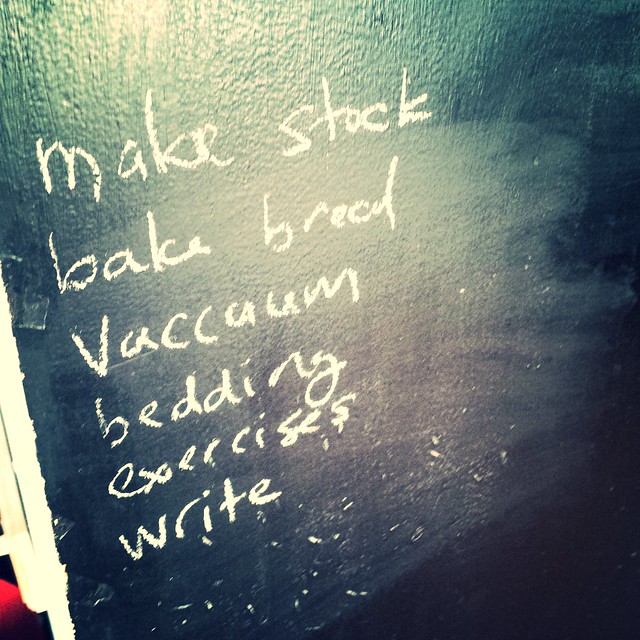
wash bedding; bake bread; make chicken stock; vacuum; exercises; write
Write comes last, but it’s where I’ve begun (well, a second load of bedding is whirling in the washer as I type, but laundry is like that, must be attacked in a steady march throughout the day).
What we’re struggling with, on the parenting front…
motivating a child who does what’s asked, but no more: and I wonder, are some born without a strong internal self-motivational engine and how best to foster/plant the seeds of creativity and initiative? Are we the dreaded helicopter parents if we schedule this child’s life on his/her behalf, or are we neglectful if we allow her/him to drift, seemingly content not to discover or pursue any interests arising from within?
Do we all have interests arising from within? What is interest? Is it creativity, curiosity, the desire for knowledge and challenge? Is it also, perhaps, the desire for more, a positive form of anxiety, a positive channeling of our dissatisfaction with what we already have?
What we want for our children is universal: we want them to be content, but also to be productive, kind, thoughtful, engaged individuals. It’s that last bit we want most of all: to be engaged. Engagement means (to me) that sweet spot where the interests within an individual connect to the world without.
What is working, on the parenting front…
this four-part system of apology. It goes roughly like this. 1. I’m sorry for [insert specific wrong-doing]. 2. It was wrong because [insert specific harm caused to the other person]. 3. Next time I will [insert possible amendment(s) to future behaviour]. 4. Will you forgive me? [to which the wronged person replies “I forgive you.”]
It feels a bit odd and formal when introduced for the first time, but I must say there’s a real appeal to it in practice, and makes saying sorry both more meaningful and more satisfactory to all parties involved.
Good ways to spend some “free” time on the weekend …
playing Bach on the piano; walking to the library with a cranky child; helping coach small boys on the soccer field; lingering, being silly with family over a supper of hamburgers and caesar salad; legendary power nap on the couch by the fire; beer and conversation with Kevin
xo, Carrie
PS I actually wrote this list on our chalkboard wall this morning. So it really will happen. If it’s on the wall, it must happen.
Tuesday, Jan 6, 2015 | Big Thoughts, Confessions, Exercise, Parenting, Spirit, Work |
One poem, good morning. I start with my hands on the keyboard. But nothing comes. Because I am not a poet?
This morning my alarm sounded early, but I woke just before and lay in the dark waiting for it, anticipating. Floss and brush. Dress. And before that, upon rising, drink two glasses of cool water.
Nina meets me outside. We drive down the street, a bit of a chat, a bit of a change of routine as the front door is iced shut at the yoga studio, so we walk around the ugly squat building through the snow and enter at the back, boots off. We say “bye” at the door to the classroom and enter and are alone, not side by side. Waiting in warmth for class to start.
The instructor says the words moving meditation, and I hold them, calmly certain that this is what I am doing. She welcomes the new year, invites us to consider what we want to open ourselves to, and also what we want to leave behind. My mind shouts: nothing! in reply, and mentally I see my storerooms and spare rooms and shelves and cupboards overflowing, as if I’ve just embraced the hoarding lifestyle, a hoarder of words and actions and routine and time itself.
And then I know, almost at once, that it is okay, that much will be let go. I ask myself to try letting go of the word Success, as the new year opens itself up. But I’m afraid to. There are aspects to success that I admire too much. I’m superstitious. Am I turning my back on luck and fortune if I let go of the word Success? Is that what letting go means? Or is letting go different, somehow, does it mean letting go of the burden of that word?
Success is not the same as confidence. It is not the same as faith. It is not the same as grace. It is not the same as the deep calm hum of life.
It is not the same as song. My birthday party was about singing and music and collaboration. Our new year’s party was about singing and music and game-playing and connecting in different ways, sitting on the floor, squeezed around the table, a bit messy, unadorned, fun.
Sacred. That word came onto the radio while I was driving home from physio. Physio came after yoga, shower in between, waiting in a long line for young women to finish their radiant luxurious showers. “You were fast,” said the woman in line behind me, who was still waiting when I exited the shower. “I am fast,” I said stupidly, having not spoken all this time; but at home I am not fast and I thought self-righteous thoughts while towelling off and dressing, thoughts about choosing the right place to indulge in radiant luxurious showering.
And then needling at physio, muscles popping and grabbing and twitching. She said: I’m causing a small trauma to the muscle, which causes blood to flow there, and healing. There is an analogy in this, I thought, as I lay on my stomach under heating pads and tried not to let the tickle in my throat turn into a full-fledged coughing fit, the conversations winding around me from the beds adjacent; I hear and don’t hear, I listen and don’t listen, I rest and don’t rest. Think of trauma as a means to heal. Think that without trauma the healing would be slower or incomplete, might never happen, that it is trauma that incites the rapid-response, the shock that draws attention and alters everything. That is what I hope for, in my muscles: relief, but also healing. But I don’t want trauma in my life; none of us do; there must be an easier way to let go.
Sacred, sacred. On the radio, on the drive home, slow in snow and behind a city bus. The man on the radio says the choices you make with your body are private and they are sacred, how you feel when you are doing things with someone else, how someone else makes you feel when they are doing things with you, that is your sacred space and only you know what you want or need. The subject is parenting, and teaching your children and teens about sexual abuse, misogyny, gendered culture, and practical and philosophical responses to those things, to situations they may encounter; 78% of parents never talk to their children about abuse in sexual relationships.
Have I? Must I? Age appropriately, of course.
I pull into the driveway and make a mental note, I bend before the washing machine sorting a dark load, I measure lentils into a pot, I cook poached eggs for breakfast, I skim the opening pages of the newspaper, I set the timer and rest for 20 minutes by the fire with the dogs, and I make a mental note, a mental note, to invite my two eldest to a conversation about abuse in (sexual) relationships. Which they will hate and resist and roll their eyes, groaning, oh mom, we already know this stuff what’s wrong with you. I mentally note that I will start by saying: this is pre-emptive, and this is not what I anticipate for you in your current or future relationships, but here is the way the world can operate, and here is how you can respond. If you see injustice or cruelty or harm, step in—the example given on the radio was of Katherine Switzer running the Boston Marathon before women were allowed to, and the male organizer of the race trying to tackle her to remove her from the course, and Katherine’s football-playing boyfriend stepping between them, protecting her, running with her.
I would say to my children: make that be you, whether you’re male or female. Take responsibility. Care for someone in pain or who is being harmed or hurt or threatened, do not exploit anyone or use anyone.
Last night sitting at soccer, watching Angus play his heart out. Pride in my heart, therefore. I realized that I speak ill of children sometimes, in sports contexts. I judge some of the players harshly, I judge their efforts and skills, measure, compare. I am not talking about my own children, but other people’s children, and that is mean, it is meanness, it is shameful, it is wrong. I want to stop, now, immediately. I took out a pen and wrote this pledge into the tiny notebook I keep in my purse: stop now, this stops now.
There in the notebook, I discovered writing I’d forgotten about, characters I’d been thinking about earlier this fall, times and places I’d wanted to visit fictionally, forgotten words. So. Keep writing, at all times. I sit here at the keyboard, on this good morning, and a poem now exists—yes, it is impoverished and ill-fitting and ugly in shape—but it is where before there was nothing.
The new plates are Kevin’s birthday gift to me. (This is the car that Aggie bought.)
Standing in the yoga parking lot, kicking snow off of “Aganetha’s” underside, I realized that all the work that I do is work that I want to do, that I enjoy doing, that I relish doing, that feels relevant and useful and that feeds me while I do it. What do I want to let go of this year? Meanness, ingratitude, unkindness, exclusion.
“They say it is better to light a candle than to curse the dark.” —Quotation I read on the wall in the back entrance of the yoga studio this morning, while putting on my big black boots (which Fooey wore yesterday to help Kevin put out the garbage—she said they felt so warm and soft; and they fit her; she is 9 years old). Yes, it is better to light a candle. Always a light a candle. But, I asked, too, reading the colourful flowing words on the wall, is it sometimes important to curse the dark? To call it out for what it is, rather than pretend it’s not there? It depends, I think, on whether the dark is changeable, or the dark is elemental. Some dark is necessary. There will be night. There will be winter. To curse what is natural and seasonal and implacable is to waste one’s energy. But some dark is caused by human evil, such as the darkness of measuring a child’s effort for no reason other than unchallenged, blind competitive instinct. I don’t say curse the dark, but call it out and name it for what it is. And then light that candle and light another and another, and don’t be afraid to keep lighting candles even if they sputter or get blown out.
xo, Carrie
Tuesday, Dec 23, 2014 | Kevin, Kids, Organizing, Parenting |
Kevin and I are constantly fiddling with rules and limits around electronic devices. It’s a subject for a whole separate blog post, and after fighting with the kids all day yesterday about this very topic, I don’t want to rehash it today. Let’s just say, that creative movie-making moment, which I chronicled here yesterday morning, ended at 11AM on the dot, when the kids felt entitled to turn their attention to their glowing screens.
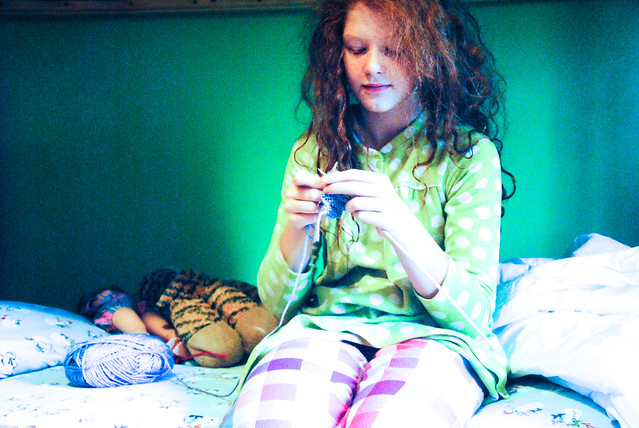
My biggest wish for my kids is that they’re capable of entertaining themselves, setting personal goals, and working on projects — I don’t care whether the projects are practical or just for fun, whether they’re done alone or collectively, I just want my kids to look for ways to entertain themselves rather than be entertained. (Knit! Craft! Run around the block! Jump on the trampoline! Play the recorder! Invite a friend over! Learn how to code! Etc.)
Here’s what I came up with yesterday: a list! (You know how I love lists!) Kevin is encouraging the kids to write down a daily plan with daily goals, large or small, and I’ve devised these questions to frame that planning. Also, I’m using this myself. And it’s a good tool for reflection and conversation, at the end of a day.
Today, what am I going to …
〉 Make
〉 Do
〉 Practice
〉 Read
〉 Think about
Who am I going to spend time with?
〉 Friends
〉 Family
〉 Other
What am I doing for …
〉 Fun
〉 Rest
〉 Must-do
〉 Money
〉 Exercise

And that’s it! Of course, categories can overlap, and you needn’t necessarily fill in goals for each category every day. Anything you notice missing or would add yourself? Let me know, please.
xo, Carrie
PS The women at 4Mothers asked me to reflect on my 2014 word of the year, and the blog post is up today. (My word was “success.” And no, I haven’t picked a new word yet. Have you?)
Friday, Dec 12, 2014 | Adventure, Dogs, Exercise, Family, Parenting, Teaching, Writing |
I’m nearly done marking, and find myself reflecting on how better to structure my course next year, should I be invited to teach again. I’m also thinking about how I might structure a higher-level creative writing course: what elements are missing from my current curriculum that perhaps belong in a separate course altogether?
My goal for next year would be to teach grammar in a creative way, because without the tools to build complex yet clear sentences, it is virtually impossible to construct complex stories. And all stories are complex when you break them down: there are so many elements that go into storytelling, many of which become instinctive when one has practiced writing for years and years, but which are actually very tricky to manage–slippery to manage, evasive, elusive, invisible, unrecognized, subtle, and unavoidable. Setting, plot and sub-plot, voice, character-building, relationships, dialogue, mood, verb tense, movement through time, descriptive language, meaning, thematic layers, back-story, interior and exterior action, emotion, perspective. Have I touched on everything? Probably not. Beginnings and endings. Deciding when to tell what you know. Eliminating that which is extraneous, even though you love it dearly. Editing. Rewriting. Not becoming attached to any part of what you’ve made, so that you can cut it out, if necessary. (Writing is not like parenting: writing requires a ruthlessness that I would never draw on, as a parent.)
And here’s the issue: to manage all of these things, or any of them, really, you must construct sentences that support what you’re trying to do. There is real technical skill underpinning excellent writing.
So I find myself dreaming up writing exercises that would seamlessly include practice in the craft as well as the art. I think it’s possible. It’s kind of exciting to dream this stuff up, actually.

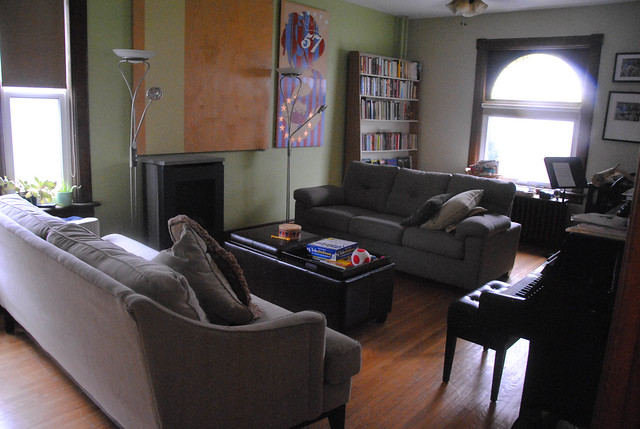
This is not what our living-room looks like at present. This is my aspirational living-room.
On another note …
Things that go well, and things that do not, and things that mysteriously fit into both categories at the very same time:
– helping children practice instruments in the morning, before school
– walking dogs to meet kids after school
– being injured and unable to run and doing an hour of daily core-strength exercises instead
Snapshot 1: “Nope. I’m not going to practice this morning. I’ll practice later! After school!” “But that doesn’t seem to work. Later never comes.” “But I don’t want to do it now!” “But it’s always now. It will be now after school.” “Well I don’t want to do it right this second!” “It’s a privilege to get to play the violin. We can’t keep having this conversation.” “Ok! I will play! But you can’t comment!”
A few minutes later …
“Why are you so excited when CJ practices, but not with me?” “CJ lets me help him.” “But you can’t help me. You never played the violin.” “Your teacher can help with the bowing, but I can help with the notes.” “I don’t want to talk about it now…”
Snapshot 2: Kids running down the sidewalk after school, excited to see dogs. “Wow, you guys are fast today. You’re the first kids I’ve seen.” Small dog in pink sweater decides to stop and produce on someone’s front lawn. I remove mittens, pull plastic bag from coat pocket, stoop to clean up. What happens next happens all at the same time. Pack of schoolchildren appears. Dog slips collar and begins trotting toward street. Neighbour girl excitedly runs to pet dog who has slipped collar, and who is not the friendly dog! I toss mittens, grab for loose dog, try to hand other dog’s leash to daughter while not dropping half-filled plastic poo-bag, and warning (in what I hope are non-frantic tones) the neighbour girl away from the (undeniably cute) dog who is not friendly. Time skips in jagged leaps. Pack of schoolchildren passes, unharmed. I see myself kneeling on the quiet snowy sidewalk, half-filled poo-bag in one hand, skittish dog in the other, trying to figure out what’s gone wrong with the collar. “Mom, you almost threw your mittens in Suzi’s poo!” “What? There’s more poo?” “It’s right there.” “This is way too much drama for me!”
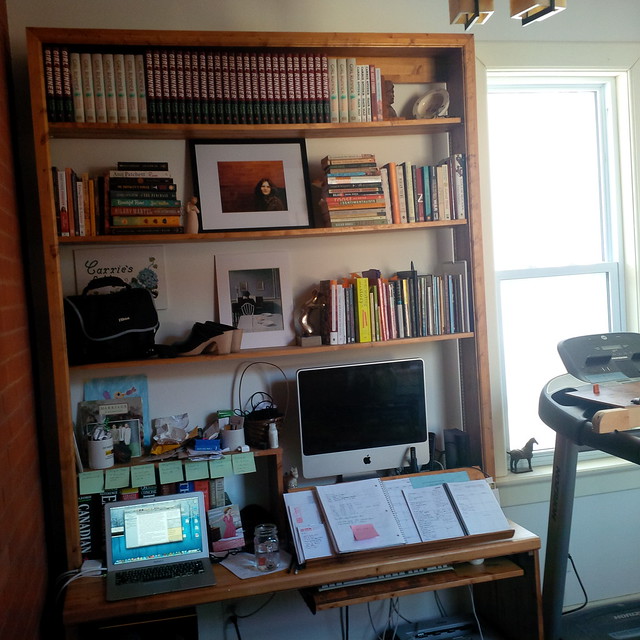
Snapshot 3: The remains of supper are on the table. I’m lying on a blue yoga mat between the couch and the bookshelf that doubles as a computer desk. Kevin is perched on a stool near my knees, replying to work emails on the computer. I’m doing repeats of bridge, which I kind of hate, kind of intensely. Fooey is kneeling on the couch, leaning over the back, observing me from above. AppleApple is moving around restlessly on the beanbag chair near my head, observing me from above. Dogs arrive on scene, enormously excited at the discovery of a human trapped at the licking and sitting-upon level. Imaginary announcement over imaginary PA system: “Could all family members please report to the yoga mat behind the couch? Calling all family members…” The pay-off will be running again. And, possibly, abs of steel, and glutes that could crack a Christmas walnut. Bad image. Time to stop writing.
xo, Carrie
* title is tongue-in-cheek; but you got that, right?
Page 8 of 22« First«...678910...20...»Last »