
Routines
This is a week of transition, of return to routine. Our evenings are relatively quiet for most of the month, thankfully, as the soccer season ends and gives us a respite of a few weeks. This is good, because the kids are tired. And grumpy. (Oh yeah, I’m tired too.) Meanwhile, I want to keep track of what’s working, what’s changed, and what habits we’ve carried over from summertime.
Music practice: This happened quite rarely over the summer, when everyone takes a break from lessons. Lessons started this week, and so did regular practicing. AppleApple makes her own schedule and sticks to it, mostly practicing immediately after school (piano and French horn; no cello this year, as orchestra has been removed from her class’s curriculum, sadly). Fooey and CJ practice before school (violin and piano, respectively). Fooey goes first, and I accompany her on piano when she requests it. CJ is in his second year of piano and needs me nearby to help with finger positioning, musical details, and, mostly, moral support … and the will to continue. Yesterday, I tried combining his practice time with some light exercise (for me) because, frankly, it’s quite tedious to hang around calling out “quarter note!” and “check your hand position” and “sounds like a sharp!” (I am my father, good grief). Anyway, that whole exercise/musical instruction combo didn’t really work. I kept having to drop the kettle bell mid-lift and those things don’t drop well. Tangent alert, post-tangent. Sorry.
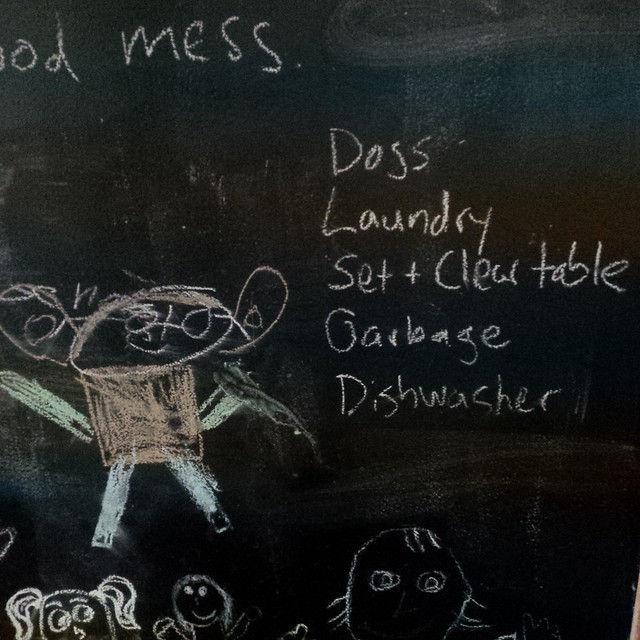
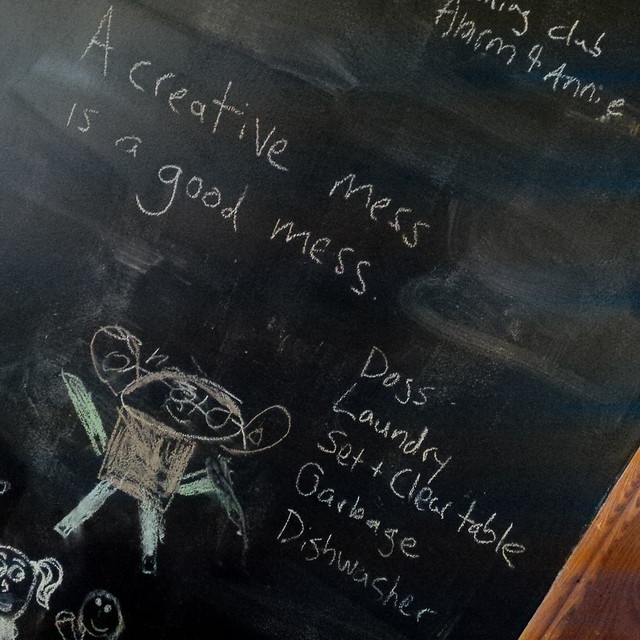
Chores: I have a list on the chalkboard of the kids’ chore categories: Dogs; Laundry; Dishwasher; Garbage; Set and Clear Table. Let’s break it down.
Dogs: AppleApple is supposed to feed the dogs. But they’re eating fancy food after a (let’s not talk about) bout of stomach woes, so Kevin has been doing that. She is also supposed to walk them from time to time, which happens occasionally. Fooey is supposed to keep their water bowls full. That happens only when I notice and remind her. She does clean the fish bowls regularly, however.
Laundry: I wash and dry a load or two (or three!) of laundry every day. Each of us have a labelled basket in the basement into which our clean laundry can be sorted. It’s each individual’s job to carry his or her basket upstairs and fold and put the laundry into drawers. Sorting the laundry into the baskets is the kids’ job. CJ is too small to sort effectively, so he is in charge of folding and putting away the leftovers that don’t have individual baskets: dishtowels, napkins, etc. A penalty is applied if the laundry is very poorly sorted: this requires oversight and judgement on my part. After all, even I have trouble figuring out whose underwear is whose. (The penalty is to have to sort the laundry again the next day, rather than it moving on to whoever is next in the line-up.) I also don’t pick up dirty laundry from the kids’ bedroom floors: if it gets in the hamper, it gets cleaned. This takes a great deal of restraint on my part. I hate seeing dirty clothes piling up! But I’m doing it for the team.
Dishwasher: Each kid has a designated quadrant of the dishwasher to empty. In summer, the rule was the dishwasher had to be emptied by 11AM; if you forgot, you emptied the whole dishwasher yourself the next day. I must say this method of setting child v child was enormously effective. Fooey in particular would gleefully announce at 11:01 that so-and-s0 had forgotten. On week days during the school year, the dishwasher has to be emptied before school.
Set and Clear Table: We’d meant for this chore to be shared equally, with the boys setting the table and the girls clearing every evening. But that never happened. Instead, what’s happened is that I ask whichever child happens to be around to set the table, hang the unfairness and griping. And everyone carries his or her plate to the kitchen after eating. It’s not much, I admit, but it’s better than nothing.
Garbage: Albus is supposed to sort the recycling, and carry the bins in from the curb on garbage day. That did not happen much over the summer, and I forgot to remind him about the bins when he got home from school yesterday. Yes, the thing about chores is, people need reminders until it becomes habit.
Breakfasts: We’re aiming for high protein breakfasts to get everyone off to a good start. Kevin is making a giant pitcher of smoothie in the morning: fruit, yogurt, kefir, almond milk. I’m also keeping boiled eggs in the fridge for breakfasts, lunches, or snacks.
Lunches: Albus and AppleApple have been packing their lunches for awhile now — it’s habit. Fooey decided to start this year too. She has been working on her “knife skills,” and can now slice up an apple like a pro. (On day one, the apple looked like it had been hacked apart with a hatchet.) I get the kids to write food requests on our grocery list, posted on the fridge. Anyone know where to find seaweed snacks for cheap? Everyone loves them!
Suppers: Our current routine involves me and Kevin texting back and forth around 3:30/4PM with meal ideas. Kevin can pick up ingredients on his way home. Obviously, these last-minute meals tend to be quick and easy. Last night we made pad thai with shrimp and tofu; it took us under an hour, and that was all we served, literally a vat of pad thai. Side note: Albus is excellent at making meal suggestions (that’s the hardest part of meal planning, IMO: trying to think up something different/healthy/appealing to feed everyone every single gosh-darn day). I also really like the Cookstr website for recipes, and I sign up for their weekly email newsletter, which is frequently inspiring.
Homework: This applies less to the younger kids, but Albus started high school this week, which comes with more homework and tests. He also gets home from school relatively early. I’m encouraging him to take the opportunity to do homework immediately on arriving home: grab a snack, sit at the dining room table, enjoy the quiet house. AppleApple sets her own daily/weekly/monthly homework schedule, and is diligent about making plans and sticking to them.
Exercise: I plan to continue running two mornings a week with friends, and doing one early morning boot camp, and one kundalini yoga class. I would love to swim one morning a week with AppleApple, but I’m not sure either of us can manage the early hour. I’d also like to run on the weekends and do a hot yoga class once a week. AND I’d like to start a mini running club with my kids (and any friends who would want to join), after school, running around our block in a 1-kilometre loop, so kids could decide individually how far they wanted to go. For this to happen, I will need to schedule times and dates.
In fact, for anything to happen, it must be scheduled. Inertia is a powerful force in our daily lives. Advance scheduling is the antidote. (I’m not against spontaneity, you understand; but the truth is that I’m far more likely to spontaneously watch a show on Netflix or scroll through my Twitter feed than I am to, say, go on a nature hike with my kids after school, or catch up on work-related emails, or grab two hours for myself to do yoga. You know? You know.)
And I’ve now spent well more than 15 minutes blogging … a spontaneous blogging spree. This will have to last a few days.
xo, Carrie
A balance between focus and relaxation…
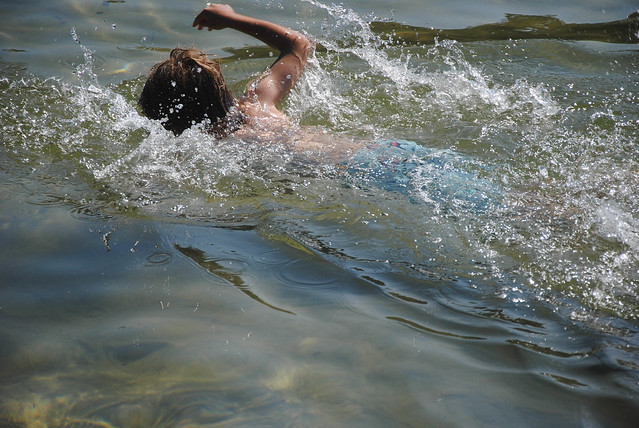
This morning, I meditated, after a long spell of not taking that time.
Coincidentally, or not, this morning, my kids started their new school year.
My focus for this session of meditation is “focus.” This is good, and useful, just now, when I feel scattered and need to be reminded that multitasking is neither efficient nor the way I want to be in the world — instead, I wish to be present inside of the moment I’m living, whatever that moment may be.
I find myself resisting the impulse to be lulled into behaviour that is repetitive and familiar, but does not serve me. I have to resist these impulses almost constantly. Name them? Reaching for the phone when it vibrates (as it has done frequently today); keeping the phone nearby and on vibrate (do I need to do that?); falling into the social media hole; forgetting what I sat down to do; neglecting to set a real achievable goal.
So, today, after meditating, I set a real achievable goal: re-read Mary Oliver’s A Poetry Handbook and take notes in preparation for teaching, which starts next week. I set a timer for an hour, which helped set the focus.
Blogging is on my list of real achievable goals for today, too. I’ve given myself 15 minutes.
I also reminded myself, during this morning’s meditation, to resist the urge to wish I were somewhere else, doing something else. Resist longing for what you do not have.
The key to productive creativity is to find a balance between focus and relaxation.
I think of Alice Munro writing her stories at her dining room table.
Did Alice Munro give readings and presentations? (My schedule is filling up quickly.) I think she did not, or she did not make it her focus. Perhaps this made her writing life clearer to her, her writing time her own. Perhaps she refused, and set boundaries that I am either unwilling or unable to set. I am in the thick of it with my children, too. They need me actively involved in their lives, taking notice, staying alert to changing situations, changing relationships, changing bodies, changing desires.
So it is impractical to wish to be free for a length of time — a few weeks, a month — in order to focus entirely on the writing. A writing retreat. Away? I can’t imagine it being possible, right now.
And yet, I am longing for something like that. I don’t know how it could happen, but perhaps it will if I am open to the idea.
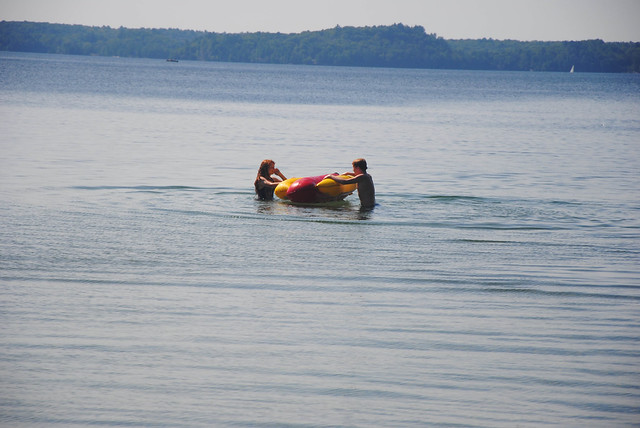
Coming back from the cottage, I am aware of the noise and hurry of the city, and I am missing the quiet, missing the closeness to nature. That said, last night I went for a walk and it was so good for me — it didn’t need to be a run, I decided, I just needed to be outside, and a walk satisfied my restlessness and soothed my mind. Before going to bed, I stood briefly on our back porch and listened to the rain and felt the cool air, and noticed a spider with a red spot on its body, which had constructed a large and intricate circular web from post to post.
Today, when I sat down for my meditation, I could see out the window, in a treetop rather far away, a squirrel racing through the branches, dipping and almost falling as it hurried away or toward something.
Nature is close, everywhere. I only need to notice it.
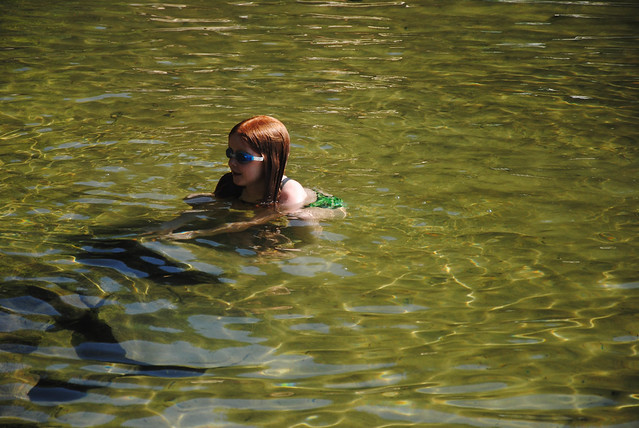
What I hope for this fall is to be present wherever I find myself, in whatever situations come calling, large or small, brief or drawn out. I hope to be inspired. I hope to be productive. I hope to be peaceful.
I see myself walking in the humid evening air. I see that I don’t need to run, I don’t need to push myself to extremes, necessarily, to tap into a stream of calm that is always present outside, in the natural rhythm of the earth and seasons, days and hours. This is what I seek.
xo, Carrie
The gift of rest
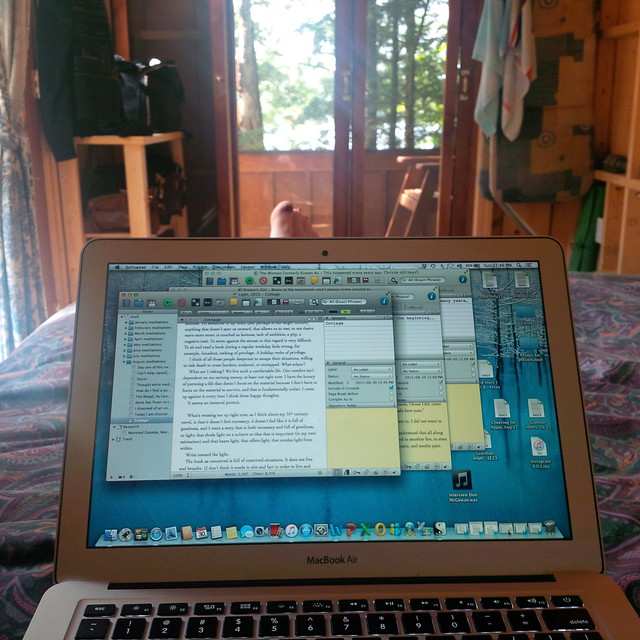
Friday, noon. I sit in perfection on the deck of a cottage overlooking a calm lake, pines and birch and cedar moving in a light breeze, the sound of children playing on the rocks below, wading in the shallows. An iridescent dragonfly flutters up and away. The sun is hot. I am wearing a swim suit underneath a brown faded sundress, and a half-drunk cup of coffee is at my elbow.
It feels like this could last forever.
Of course, it can’t and won’t. But there are times when a moment gives the illusion of settling and holding and the mind and body relax so completely that there is no thinking about later, tomorrow, work, duty, responsibility. Ambition vanishes too.
Because what am I part of if not something much greater than my mere human ambition can imagine?
I want for all the gift of rest, respite, dignity, play. At a moment like this, I can imagine no greater gift than somehow creating space for rest and respite, for all who live on this earth. Yet instead we seem most adept at inventing barriers, walls, borders, crises, battles, weapons, dogma that excludes, ideologies of fear and control. There is too much to grieve. I become overwhelmed. I grow weary and distracted. I can’t think clearly.
I sit and watch the lake water move in patterns of eternal symmetry.
Perhaps, I think, my mind is being cleared. Perhaps I will return home less weary, more aware of what matters to me, which patterns I wish to nurture, and which I wish to discard, in order to be a participant in a world where all of these gifts may be shared.
Relief. Simple pleasure. Ease. Rest. Hope.
xo, Carrie
PS I reviewed Lawrence Hill’s new novel, The Illegal, for The Globe and Mail, and it’s online now, and will appear in tomorrow’s paper. The book is a fast-paced, prescient read on a subject that could not be more timely — the movement of people across borders.
Adventures with family
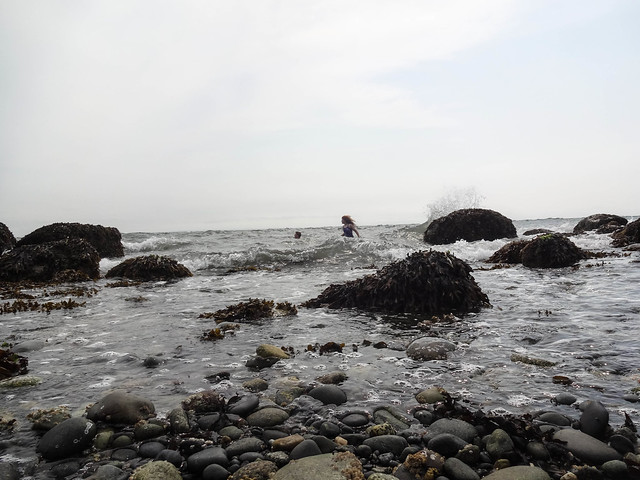
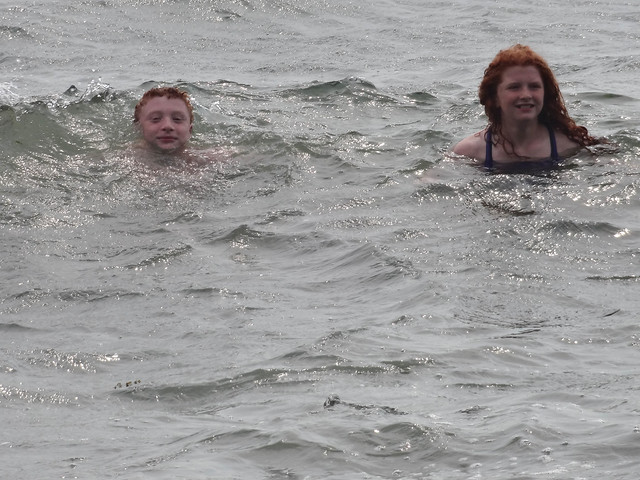
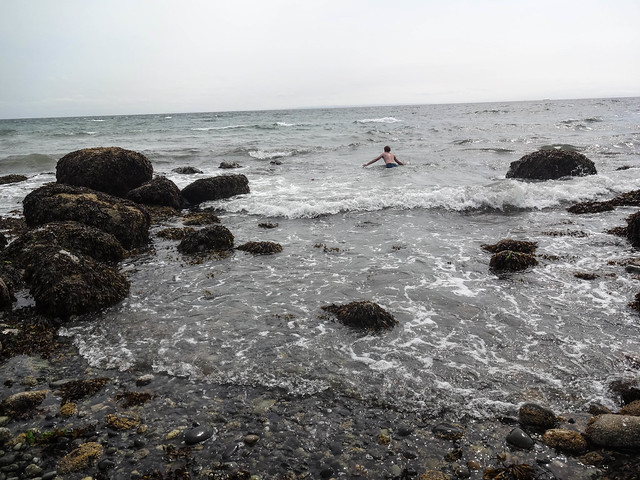 One of the best things about our family holiday was seeing the kids settle in and really enjoy each other’s company. I still can’t believe how easy it all felt, to travel so far and make collective decisions, with late bedtimes and no set routine to guide us.
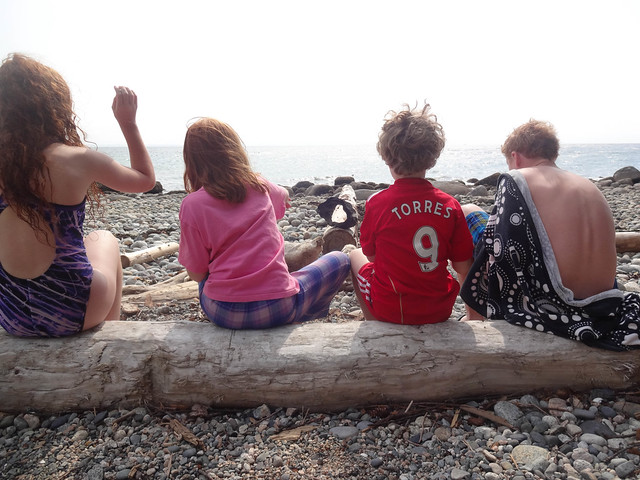 In truth, we’re not the world’s most adventurous family, and nobody was disappointed if a day consisted of a little walking, a little swimming, and a made-up game, like the above, where we attempted to throw pebbles through this perfectly shaped hollow log. Points for multiple consecutive through-stones.
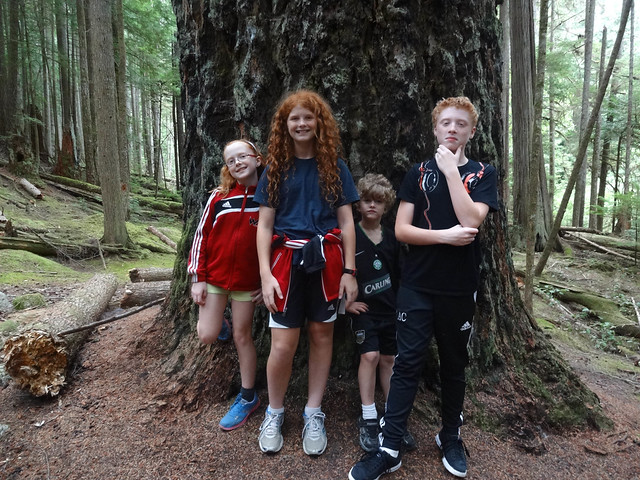 This was perhaps the most adventurous outing we attempted: we followed a map drawn by our host to a nearby logging road and hiked a trail in search on a large and ancient tree. And we found it! The kids agreed to pose while I tried to take the perfect family photo. And tried. And tried.
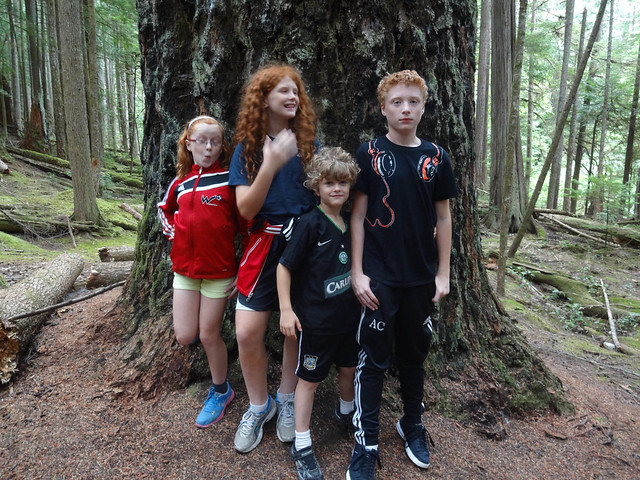
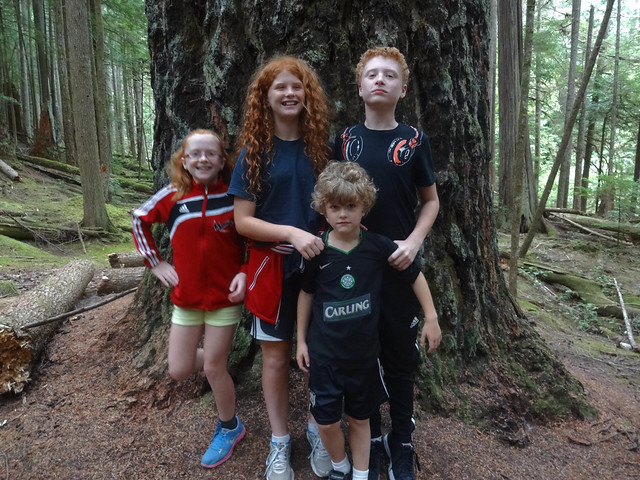
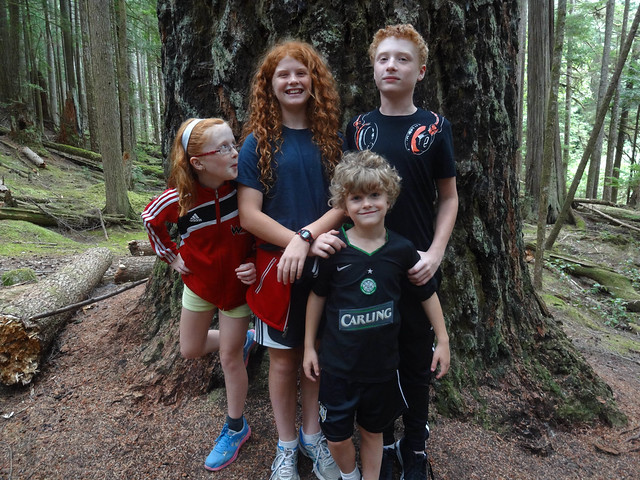
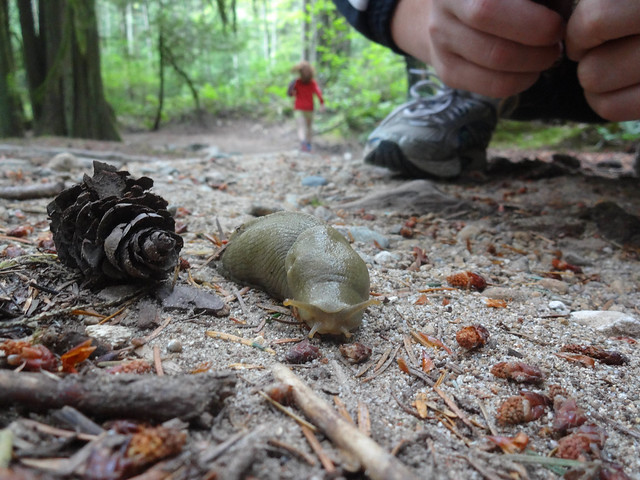
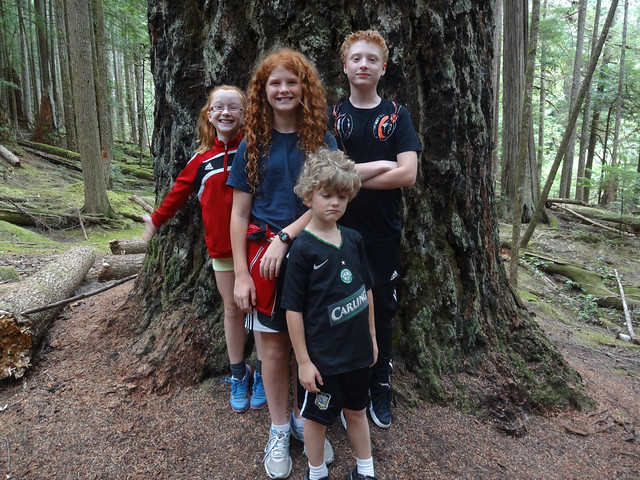 And gave up, eventually. Too much personality on display, and who would want it otherwise? The forest was eerily empty of any sign of animals (neither cougars, nor bears, nor even squirrels could be seen). But as we were leaving, this marvellous slug was spotted on the path. Everything’s bigger on the West Coast, it seems, even the slugs.
 xo, Carrie
Selfies with children on the Sunshine Coast
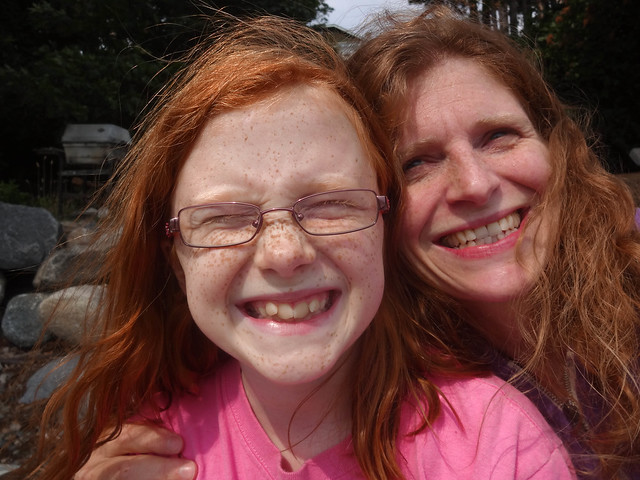
Here is a portion of a conversation I had with Kevin the evening after my reading at the Sunshine Coast Festival. Let me set the scene: we were sitting outside on a deck at a glass-topped table covered with the remnants of a delicious supper we’d prepared for our family, of grilled and shredded chicken, refried black beans, tortillas, and a salad made entirely from vegetables grown in the garden of the house where we were staying: zucchini, lettuce, tomatoes in a ranch dressing.
The kids had gone inside, probably to watch the Food Network. We don’t have TV at home, and while we were at the house on the Sunshine Coast the kids became entranced and mildly obsessed with shows they found on the Food Network, which was all they watched. Their interest extended beyond the television, and they played and continue to play (especially the younger two) games based around preparing imaginary and elaborate dishes that include bizarre ingredients, and judging their relative success and merit. Just this morning, for example, while I sipped coffee and read the newspaper, I was offered fish and shrimp covered in caramel (um … ok?), and beans and rice topped with peach salsa.
That was a long aside.
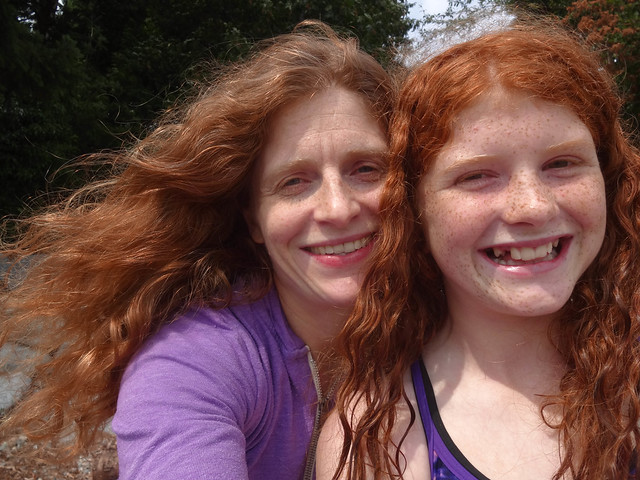
Back to the glass-topped table, outside on the deck, at the house overlooking the Georgia Strait where we stayed while on the Sunshine Coast. I’d held the stage for an hour that morning, reading from Girl Runner and talking about my research for the book, and I’ll admit that I was feeling pretty high. It’s rare, at a festival, that you’ll be asked to hold the stage for a full hour (most often, authors are paired with other authors and a moderator, a format that works well when the chemistry is good, but tends to elevate one or two voices above the rest, if the chemistry is even a bit off). In all honesty, I was pretty nervous going into that solo hour, even though I’d prepared obsessively and practiced my presentation in advance. It is an honour to be given an hour of anyone’s time, let alone an hour’s worth of warm and generous attention from a sizeable audience. Trust me, in a writer’s life, this cannot be taken for granted. It’s a gift.
And that is essentially what I said to Kevin, while we stared out at the ocean and marvelled at being here, even if just for a few days: “It feels really good to get to do what you feel you are meant to be doing — it feels so good. So useful. To think of all those people giving me an hour of their time and attention. It is such a gift. This is a most lucky life.”
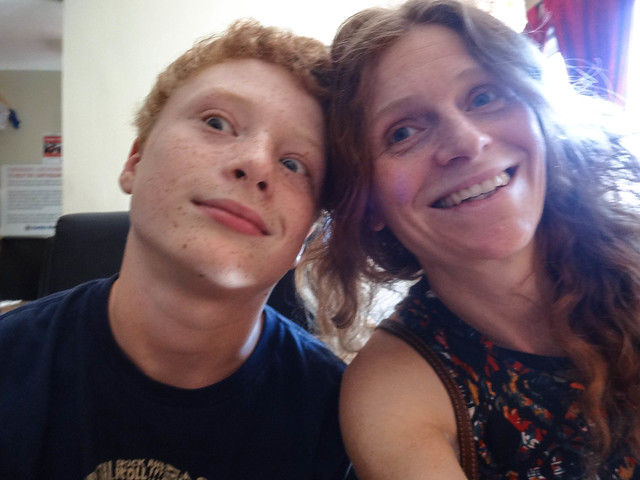


I think my strongest longing, as a human being, is to be useful. It’s why I so enjoyed parenting small children, and why I wanted to be a midwife. But children grow, and I’m not on the midwife path; instead, here I am, forty years old and still writing. And it doesn’t always feel useful. It often feels frivolous, self-indulgent, narcissistic. I try to apply my skills in wider ways, and to other causes. But it always comes back to this: I love writing fiction. I’m good at organizing ideas into a coherent shape. Out of everything I can do, this is what I can do best.
So I sat at the glass-topped table with my husband, and I savoured the moment, my heart and mind filled with what felt like inexpressible thanks. And now I’m trying to express it, because that is what writers do.
xo, Carrie