
Book recommendations
There are times when the world is too much with us, and a gut response is not sufficient, what’s needed is time and reflection and perspective. I’m not ignoring what’s happening in the larger world. I’m interested, I’m engaged, I’m paying attention, but I don’t have anything useful to say about it, here.
As of today, I’ve got two teenagers under this roof, and I think their growing independence and autonomy is stoking my growing impulse to step back into the shade of obscurity. I don’t know what the purpose of this blog is anymore, which is why I post here more and more rarely.
I still want to keep this space open, for when I do have something to say. But I don’t want to say something just because this space exists.
Today, I want to tell you about the wonderful books I’ve been reading.
I finished My Brilliant Friend, by Elena Ferrante, and immediately dove into the second book in the four-book series, translated from the Italian. I’ve heard this series compared to Karl Ove Knausgaard’s My Struggle, but to my mind, they are unrelated. Ferrante has a wider world view than Knausgaard, even if she is examining in detail a very particular time and place: she is depicting the assertion of power itself through the generations. It is the story of a friendship, and of two girls (now young women, in the second book), and it is told from the perspective of one of the women, but it is not about the rigidity of an individual point of view (which Knausgaard’s series seems to be explore), but about the flow of power and knowledge and ritual that shape an individual in ways that are beyond her control, even if she is aware of them. Ferrante observes patterns, large and small. The patterns of place. The patterns of family, of neighbourhood, of wealth and poverty, of knowledge, of culture. This is extremely rich and immersive writing, but it is also propulsive in its pacing. I won’t be reading another book until I’m finished the whole series, but at the same time, I don’t want it to end. It will be like saying goodbye to a friend.
I am thinking of My Struggle in relation to this book because I recently finished reading the third book in that series, Boyhood Island. I can’t read this series quickly. It’s like being trapped inside someone’s mind, someone who has a limited understanding of how he is being received in the world around him, and the effect is claustrophobic, and sometimes even alarming. But I remain interested. I will continue reading through this series, but at a much slower pace. I have no sense of urgency in my quest. It’s more of a commitment to see a thing through.
Another recommendation: Outline by Rachel Cusk. She is the British writer who was born in Canada and whose book was a finalist for two major Canadian prizes this season; there were complaints about how Cusk scarcely qualifies as a Canadian, and that may be true, but I’m glad she made the lists or I wouldn’t have discovered her. I devoured this book. I loved it unreservedly. It is highly stylized, enormously intelligent, and although told in the first person almost erases that person entirely, so that everyone around her leaps into the world fully fleshed, but she never becomes more than an outline on the page. It is the strangest feat, an accomplishment of great discipline. It made me question the purpose of the first person narrator, and the purpose of the writer, too.
Meanwhile, I’ve been reading out loud to the kids in the evenings: especially the two youngest (ages 7 and 10). So far we’ve read Tales of a Fourth Grade Nothing by Judy Blume, and we’re nearly through From the Mixed Up Files of Mrs. Basil E. Frankweiler, by E. L. Konigsburg, both set in New York City, both stories about siblings.
All for now.
xo, Carrie
“You who let yourselves feel”
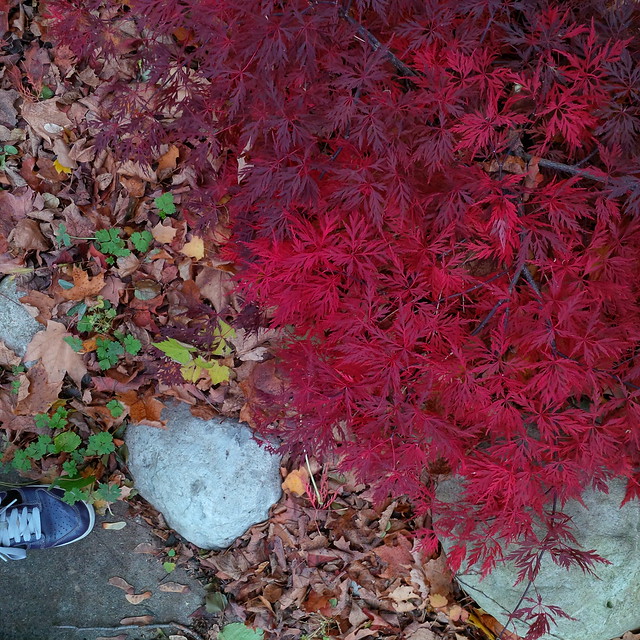
For inspiration and comfort, let me direct you to this poem, below.
Part One, Sonnet IV
You who let yourselves feel: enter the breathing
that is more than your own.
Let it brush your cheeks
as it divides and rejoins behind you.
Blessed ones, whole ones,
you where the heart begins:
You are the bow that shoots the arrows
and you are the target.
Fear not the pain. Let its weight fall back
into the earth;
for heavy are the mountains, heavy the seas.
The trees you planted in childhood have grown
too heavy. You cannot bring them along.
Give yourselves to the air, to what you cannot hold.
— By Rainer Maria Rilke
Translated by Joanna Macy
(To hear Joanna Macy read some of her translations of Rilke’s poems, visit the On Being website, where there is also an episode featuring Joanna Macy in conversation with Krista Tippett. On Being is one of my favourite Sunday afternoon kitchen accompaniments, on those rare Sunday afternoons when the house is quiet, and I’m actually at home.)
xo, Carrie
Creative people make lots of mistakes
 I’m using this graphic without permission, because I don’t know exactly where it came from — a friend posted it on FB, and the link took me a website called Mind/Shift, but I didn’t see the graphic there. It looks like it’s by an artist named Sylvia Duckworth — thank you, Sylvia, for drawing me.
This is me.
At times, I’ve done a good job of conforming and I think I can work with others, but basically, this is me. (I’m wondering whether my siblings might all agree that this is them, too. And even a couple of my kids. And my husband. Anyone else feel like you’re looking at a self-portrait?)
I’m in the midst of a decision, and it feels like many of these parts of my personality are demanding airtime: hate the rules, dream big, make lots of mistakes, work independently, risk taker, think with my heart. Instinctively, I understand that to achieve anything, I must fail. It’s the only way to learn. I just don’t think of it as failing, I think of it as problem-solving, circling around an issue, coming at it from a variety of angles, experimenting, playing, rejecting what doesn’t work, trying again, ever-hopeful, dreaming big. But here’s what’s worrying me: if I want to succeed, I’m afraid that I have to look successful — already successful, already complete, already the man with the plan. (And yes, I know I’m a woman; do women find it harder to present like a man with a plan? Here’s an interesting article on the stress women undergo when trying to step into positions of leadership.) I’m afraid that I have to present like I know what I’m doing. Expertise inspires confidence, yes? And I do know what I’m doing, but I also don’t know what I’m doing, and I wouldn’t be interested in doing more of it if I thought I knew everything already — I’m interested because I don’t know, and because I want to learn (yes, as the graphic points out, I’m also easily bored). Because while I intend to get really good at a bunch of things, I never want to feel like I’m done learning.
(Counter-intuitive idea: maybe that’s part of mastering a subject — when you know enough to know you’ll never be done learning. To quote Donald Barthelme: “It is appropriate to say that the writer is someone who, confronted with a blank page, does not know anything.”)
On Saturday, at Waterloo’s Wild Writers Festival, I put a roomful of generously attentive people through a writing boot camp: an hour of intensive labouring and pouring out over the empty page, following guided prompts dreamed up by my imagination. I was amazed, as I always am, at what was waiting to be discovered in the unknown, such fascinating stories leaping onto the page; and I hope the experience for most participants was the same. A sense of excitement, adventure, of who knows what is coming next? I wonder, however, whether the workshop would be as welcoming if you weren’t a creative person — or, more accurately, if you didn’t see yourself as a creative person? Here’s an interesting stat from an article I read on Mind/Shift (titled “Can any school foster pure creativity?”): 95% of second-graders self-identify as creative; but only 5% of high school seniors believe they are creative. I recognize that the writing workshop I devised on Saturday might be a really difficult undertaking if you didn’t identify as creative; but what latent creativity is hiding inside even those who no longer believe they are creative? What if virtually all of us are hard-wired to be creative, at least to some degree? What is the purpose of creativity? Could it be essential to human survival?
Play, beautiful beings. Play on.
xo, Carrie
Too good not to share

In France, Girl Runner is being published under a different title next spring (March, 2016, by Gallimard): “Invisible sous la lumière.” I love the poetry of it. And I just received the cover. Look at the focus and passion in this runner’s eyes.
It reminds me of a photo of Myrtle Cook, who won gold for Canada in 1928 in the 4 x 100 metre race. The photo, below, was sent to me by Myrtle’s son, Don McGowan. She’s clearly posing for a photographer and not at the start-line of a race. Nevertheless, I’m struck by the intensity of her expression, the challenging gaze tempered by an almost-smile. I asked Don what his mother had wrapped around her right wrist (it looks like a band or bracelet of some sort) and he didn’t know, but said his mother was very superstitious, and the band might have been related to that. Any guesses?
 xo, Carrie
Play, play, play


No, I haven’t eaten lunch yet. Yes, it’s almost 2PM. Yes, this is a common occurrence when the working hours of my day (i.e. when the kids are at school) get away from me. No, I should not be blogging right now. Yes, there are excellent leftovers in the fridge! Yes, I’m looking forward to eating them shortly. (Potato soup and cornbread, if you’re wondering.)
Yes, I came here specifically to share with you a couple of things.
Yes, I’m going to do that now, before microwaving that soup! (It was delicious last night, and I love leftovers.)
Item # 1: As a last-minute addition to my schedule, I will be leading a writing workshop at this weekend’s Wild Writers Festival in Waterloo. Here’s the link if you’re interested in attending. [There is a temporary problem with the link, but the Wild Writer folks are looking into it, so please check back if it doesn’t work right away.] Also, please check out the rest of the program, some of which is completely free to attend. If it didn’t conflict with my own workshop, I’d be going to hear Tasneem Jamal’s panel (free!); and before I even knew I’d be leading my own workshop, I’d already signed up for one with the amazing graphic artist, Meags Fitzgerald. (Even though I can’t draw! Eep!)
Item # 2: While cooking the soup and cornbread yesterday, I listened to a recent On Being podcast. I had to keep pausing to take notes. It’s an interview with Mary Catherine Bateson, who is the daughter of Margaret Mead, and who grew up aware of herself as an “observer/participant.” She is also the author of “Composing a Life,” and like the title of her book, so much of her thinking resonated strongly with me.
I leave you with two separate but linked ideas that I scribbled down between peeling potatoes, both from the wise mind of Mary Catherine Bateson:
“One of the things we press on [our children] is competition. Because we have so much bought into the idea that competition is a law of nature, and the only source of creativity. And incidentally that is not a true biological fact. There is competition as a part of the evolutionary process, but there is a tremendous amount of cooperation also involved, even at the cellular level.”
“Play is a very important part of learning.”
xo, Carrie
PS I would like to take time to parse these ideas, and to explain how I intend to integrate them into my current state of mind and being, but it’s now 2:02, and yes, a person needs to eat!