
Last Day of School

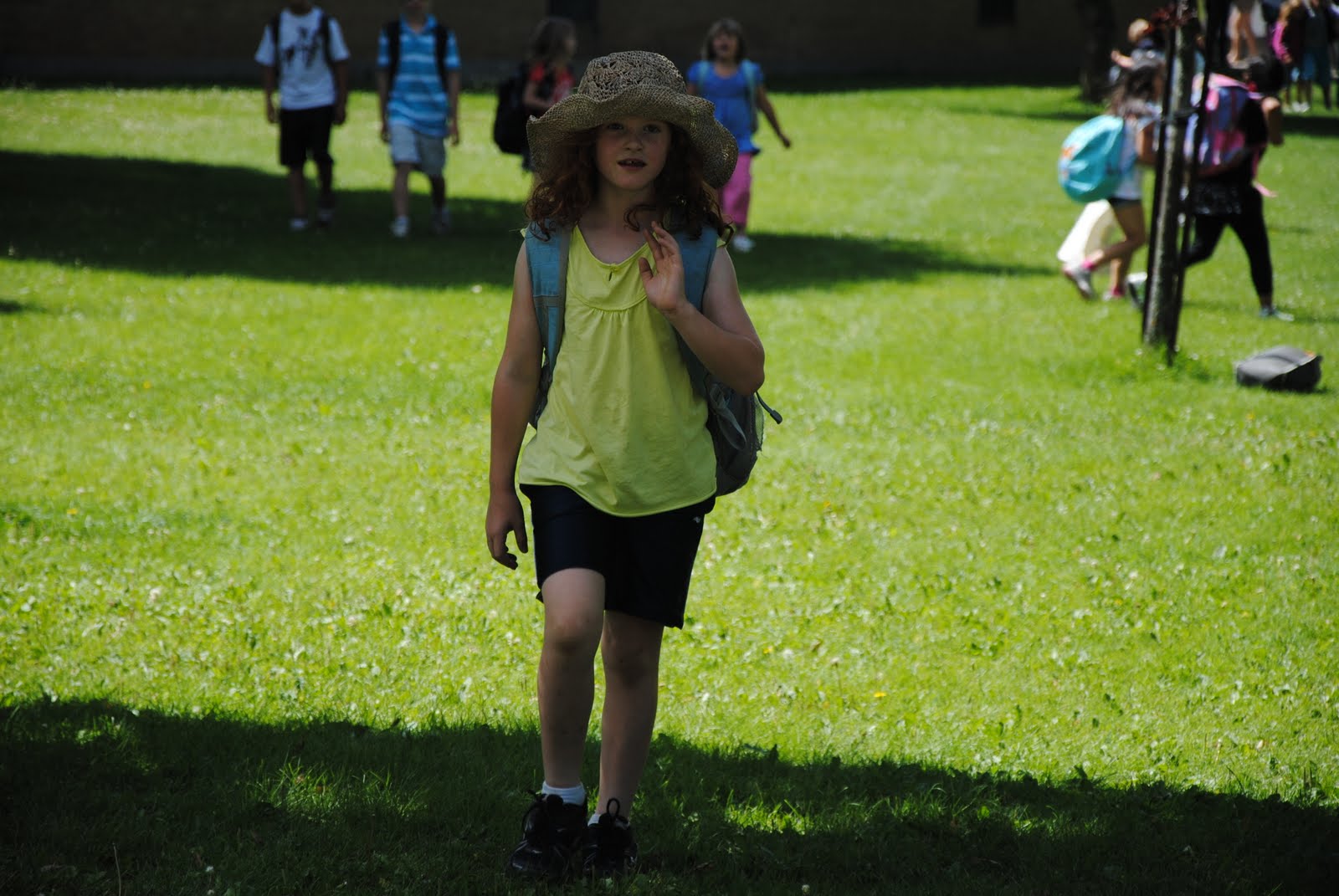


 Goodbye to junior kindergarten, grade two, and grade three. Albus looked like a weight had lifted off his shoulders. “We’re going to have a water fight at B’s house!” he told me, and headed off down the sidewalk with some friends. AppleApple almost had to cry about her dear teacher, who is leaving the school. The kids had some special teachers this year. I’m deeply appreciative of all the energy and effort that goes into caring for my children all day long.
Midwife to Stories

Too tired for anything but blogging …
 I want to write about writing, but it may be that I’m just too tired tonight to write about anything at all. Therefore, insert photos! This 365-day project has had the unexpected effect of being like a tutorial in portrait photography (don’t know why it took me till day 150 to figure that out). Last night, Kevin and I watched The Young Victoria (a very pleasant romance, if you’re into Victorian costume drama), and what kept diverting my eyes? The lighting. How is her face lit? It looks like natural lighting, but is it? And if not, what is the director using to give the appearance of natural lighting? Etc.
:::
It’s nearly July. The big kids have one day of school left in grades two and three. And my Fooey has completed junior kindergarten. (See photo, above, of her getting ready to go to school this morning).
:::
Last week, I only exercised one day out of seven. Wow. That was not good. And I felt it. I felt tired, which made me feel less like exercising … which made me feel even more tired. So, with great intentions I went to bed at a reasonable hour last night and set my internal alarm for early morning yoga. Slept without stirring for approximately seven hours, and woke when my husband tapped me on the back. Apparently his internal alarm had sounded. Mine, not a peep, not a polite brrrrng-brrrng; nothing. Which meant I woke just as morning yoga class was about to begin; but, being awake and well-rested, I hopped out of bed, ate a banana, and headed for a run. It was surprisingly less tortuous alone than I’d anticipated. I even heard a rooster crow in the park’s zoo. I didn’t think about much, just ran. It wasn’t super-early, so people were out and about, lots of construction workers heading to sites in the area, friendly hellos from other runners and cyclists. And I enjoyed the endorphins, and felt ready for my day in a way I hadn’t all last week.
My goal is to exercise four times a week: two runs, two yoga classes. I will report back. I enjoy setting goals; don’t always meet them, but enjoy setting and re-setting them. Life is flux.
:::
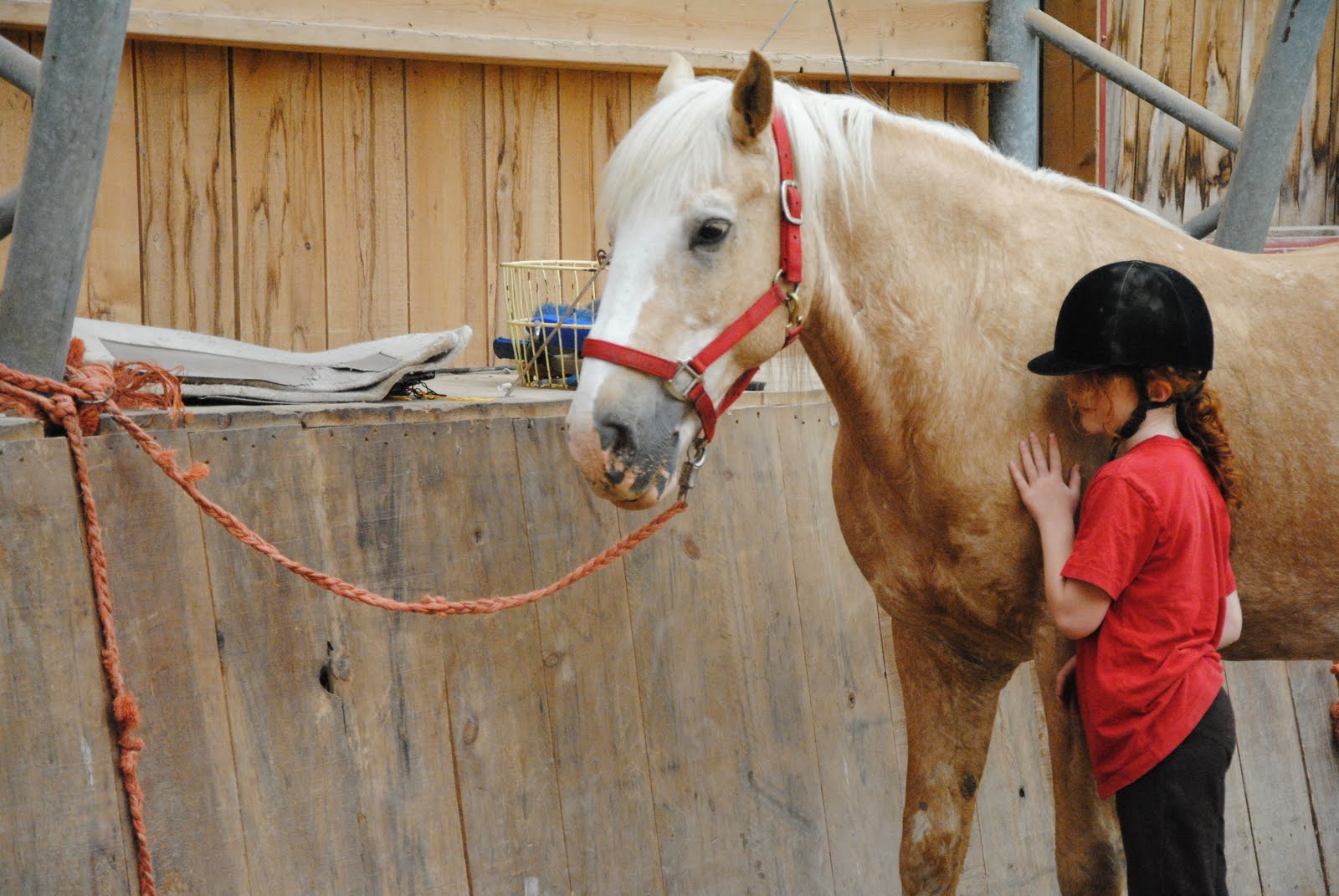
Photos above include AppleApple on her last day of horse lessons (at least for this round), with Sunman, who was her regular ride. I love how comfortable and affectionate she is with all animals, even ones that are so much larger than her.
We also had some awesome rainstorms this weekend; guess I was over-optimistic about the laundry-hanging on Sunday.
Homemade Yogurt


 I’ve decided to blog rather than nap during quiet time this afternoon. Is this wise? Well, I was out with friends till midnight last night, and dragged myself out of bed to make last-minute school lunches this morning, and I hung today’s laundry while it was actually raining (spitting, more accurately), so I’m not sure wisdom is the word of the day. But getting ‘er done is. (Um, that phrase just insisted it had to be used). So, I made it through the morning with two exuberant children and nothing that a cup of coffee couldn’t fix, the big kids left with delicious nutritious meals in their backpacks, and the sun is now shining. This speaks to the luck of whim and of deliberately not making detailed plans.
:::
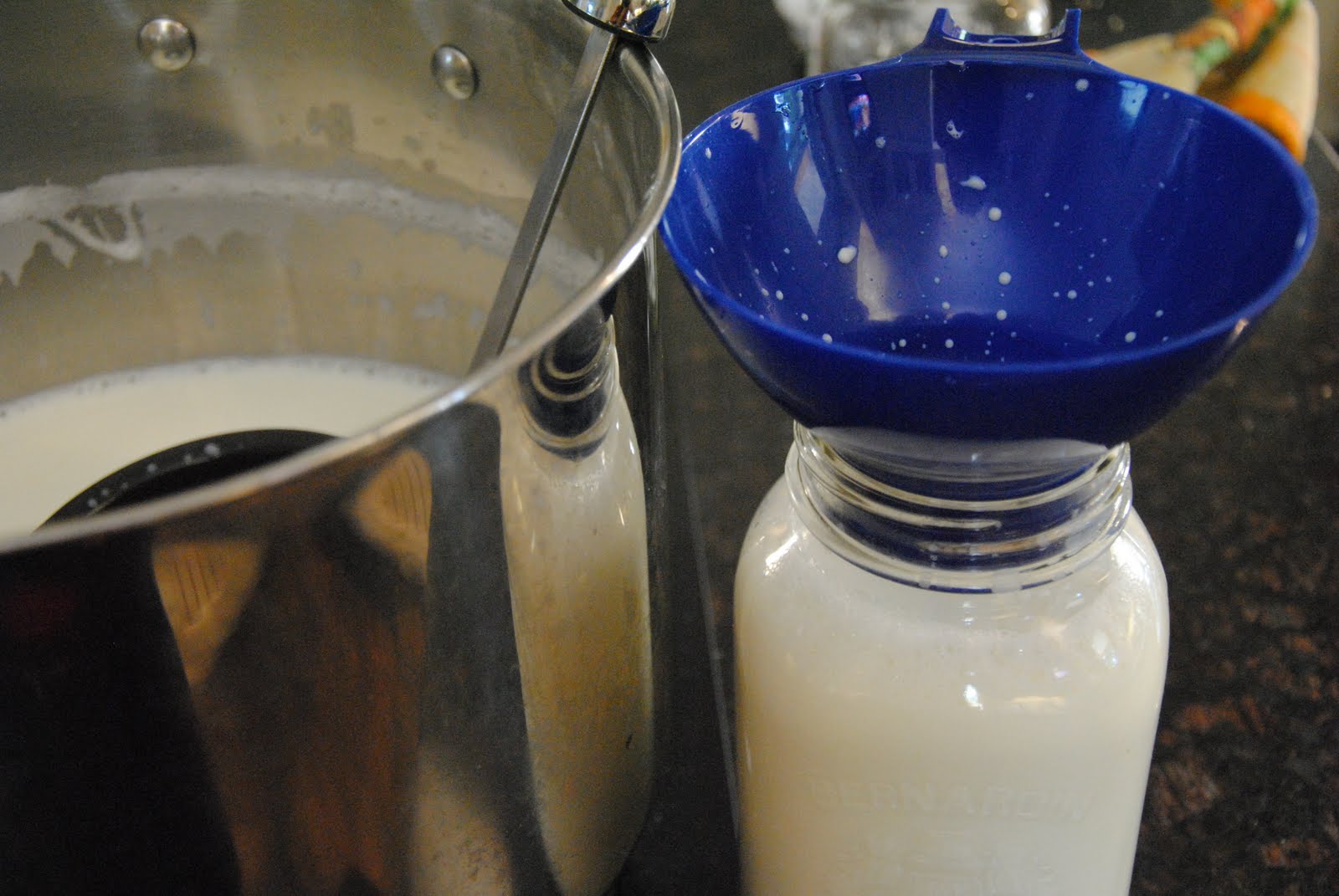
So, I know that many of you are already making your own yogurt (and a big thank you to all who have offered tips and instructions!), but for those of you who aren’t, or who are curious to try, I am here to tell you: It is easy! I’ve been making four litres of milk into yogurt (four litres of milk equals four litres of yogurt). This lasts our family about a week and a half. We eat the yogurt for breakfast; we eat it in place of sour cream on beans and rice, etc.; and I’ve been combining it with strawberries to make above-average popsicles.
:::
Homemade Yogurt
What you’ll need: whole-fat milk; yogurt starter; cooking pot; candy thermometer; insulated container; jars with lids.
Directions: In a large pot, gently bring four litres of whole-fat milk to a simmer (or try a litre if you’re experimenting and nervous about potentially spoiling that much milk). Heat the milk to 180 degrees F, stirring occasionally to spread the heat, and to make sure nothing is sticking to the bottom. This takes some time, and I have not rushed it yet; and have had good results. For consistent results, I recommend using a candy thermometer affixed to the side of the pot. Meanwhile, “sterilize” several quart canning jars by pouring boiling water into them and letting them sit for a few minutes (I realize this does not actually sterilize them, but it’s as strict as I get in my kitchen; if you do something else, please let me know). The boiling water can be re-used: when you’re done sterilizing the jars, pour the hot water into a large plastic jug (or other container), and place the jug into an insulated cooler (which in this instance will be a heater).
When the milk has reached 180 degrees F, remove it from the stove, and cool. This goes faster if you set the pot into a sinkful of cold water. When the temperature has dropped to 110 degrees F (or more precisely is below 120 degrees, but above 90), stir in the bacterial starter. Translation: stir in some fairly fresh yogurt. You can freeze yogurt in ice cube trays for this purpose. I’ve erred on the side of more is better. I put in about 1/4 cup per litre, or even slightly more.
The Home Creamery is a good reference book on making all things milk-related, and it recommends 1/4 cup of starter per quart of milk.
Now, pour the prepared milk into jars leaving some space at the top, add lids, and place into the warm innards of the heated-up cooler. Don’t lift the lid for seven or eight hours. In the wintertime, you may need to check that the water is hot and the temperature approximately 90 degrees F; right now, not so much.
What you’ll get: And when you do finally peek, it will look like a little miracle has taken place right here in your own kitchen. Yogurt! Firm, sweet, tangy, creamy yogurt.
:::
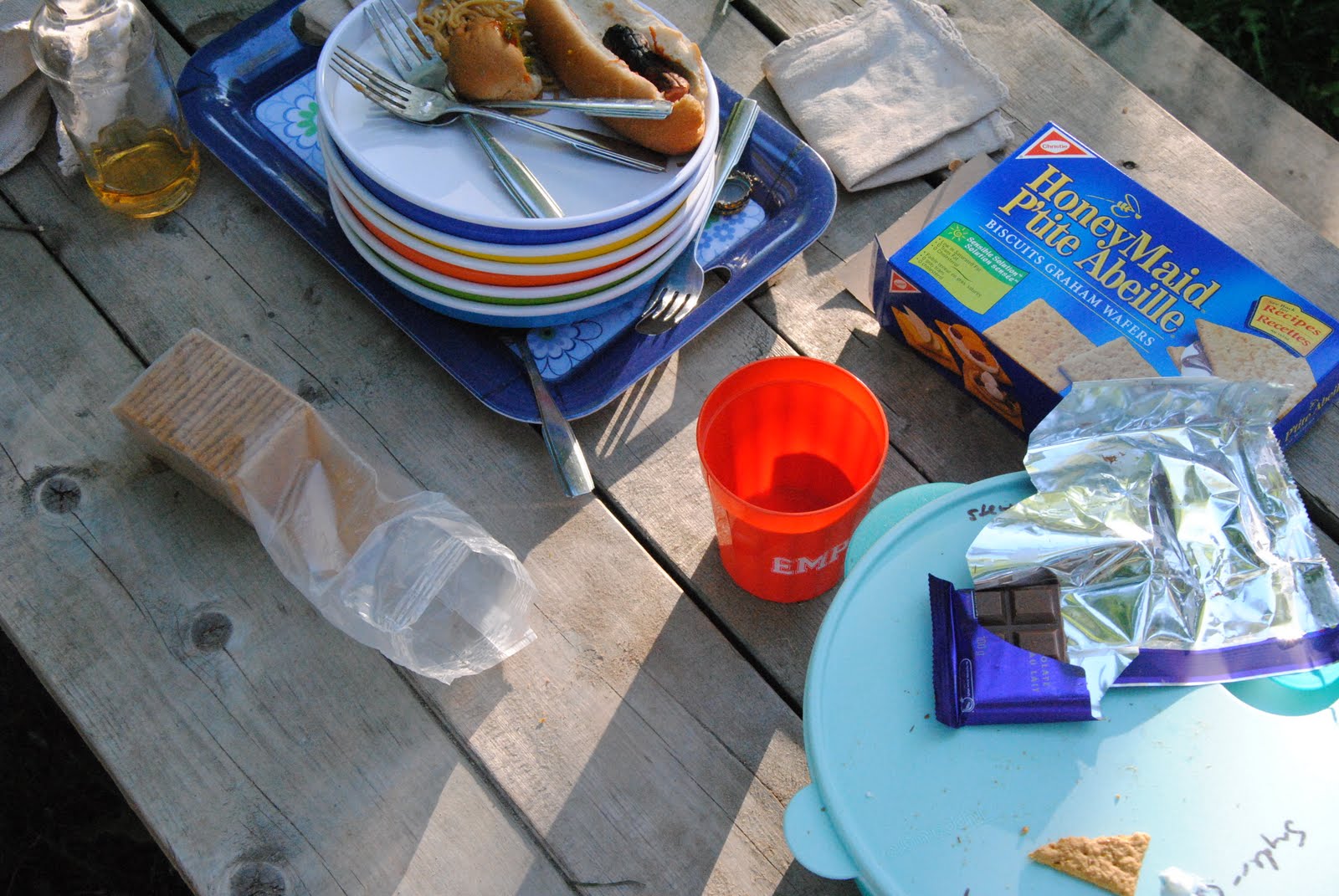
It is easy to keep making something that tastes this good, and is as good or better than anything I can buy (my homemade bread falls into this category, too). On the other hand, it is rather less easy to keep making things that are less popular with the children (and with us) than storebought. So, I must confess that I’ve shelved a Green Dream or two, and have not made crackers since the first batch, which seemed to wane in popularity after a day or two; and we bought graham crackers for our firepit cook-out; and I haven’t pursued making pasta or cheese or …. you name it. Much food continues to come into our house packaged in plastic bags and cardboard boxes. SIGH.
Bit of a mess around here …
 CJ is only pretending he wants to nurse, come night-time. What he wants is to get himself cuddled into my arms. He will then say, “Mama, I gonna tell you something!” (He pronounces something like some-sing.) And then he launches into elaborate made-up stories told at high volume, about little lions and little moths and sometimes Master Yoda makes an appearance. Books are thrown off of shelves. Little moths are “grumpy.” Little lions drink chocolate milk and are happy. Milk is spilled and Mama cleans it up and she says “thank you!” (Would that this were so).
Tonight, when I laid him in his crib (and he’s still up there, wide awake and protesting loudly), I said, “Goodnight, bub.” This sent him into paroxysms of hilarity. “I not bub, I CJ!” Just repeating the word “bub” had him in tears. The world is funny. Things sound funny.
:::
Tonight’s yoga class was killer. There was something in that room–anxiety, fear, something like that. It was really hot. And I was tired. And there were lots of people there, including some who were trying out hot yoga for the first time. A lot of people were suffering through the class, and it was easy to read on everyone’s faces and in their postures, including my own. But my problem was my mind. It just would not settle. I did not believe that I could manage, and over and over again I had to pull myself back to remembering that, yes, I could, and I have many times before. Toward the end, we all settled, somewhat, as the instructor found us a pose that brought us some peace with the inner turmoil. I recognized what I was feeling: I had been telling myself that I was feeling sadness, but I noticed that I was enjoying what I was feeling too much for that. Aha! I was feeling self-pity. Ugh. Do I ever hate self-pity. And there I was, wallowing around in it, making excuses. Now, this isn’t to discount the legitimacy of experiencing sadness. But there must be some way to experience it that isn’t indulgent. Self-indulgent. What is the point at which enjoying an emotion is a cue that it’s become not healthy? Aren’t some emotions there to be enjoyed?
I haven’t had quite as much energy recently. I wonder whether it’s more mental or physical. I’m not sure. But it is now nearly 10pm: all four children are still awake; AppleApple is weeping because she can’t find her Pooh Bear (just found him–phew!); Fooey is trying to sleep on a blanket on the floor because she’s a cat; the dishes are completely undone; I need to pack a picnic for the whole family for a “special people picnic” in honour of Fooey tomorrow; I feel the need to blog (talk about self-indulgent!); we have to take a snack for AppleApple’s soccer team tomorrow night, and have nothing suitable on hand; and we have no coffee in the house!!!! No coffee! Now that’s an emergency. I just sent Kevin on a quick run (in the truck; eco-confession) to the nearest grocery store, which is open till 10. There. Happy ranting.
Back to the dishes.