
Long long weekend

It’s a long weekend here in Canada, and oh, are we ever ready for it. The whole city seems ready for it. Late afternoon it suddenly got hot and everyone was in sandals and t-shirts and planning their escape. We won’t be escaping, but that’s okay. We’ve got a soccer tournament, gardens to plant, a big birthday to celebrate, and I’m playing in my first soccer game in twenty-seven years. (re soccer game: If all goes well, I’ll report back. If all goes humiliatingly, well, I’ll probably report back too.)
Hope to get some good photos of soccer girl and gardens and birthday. I’m borrowing some cameras for a story I’m writing. Curious to see how they perform.
But just now, I’m headed outside to pull laundry off the line. Happy weekend to all!
On readings, writings, and riding the big (metaphorical) waves
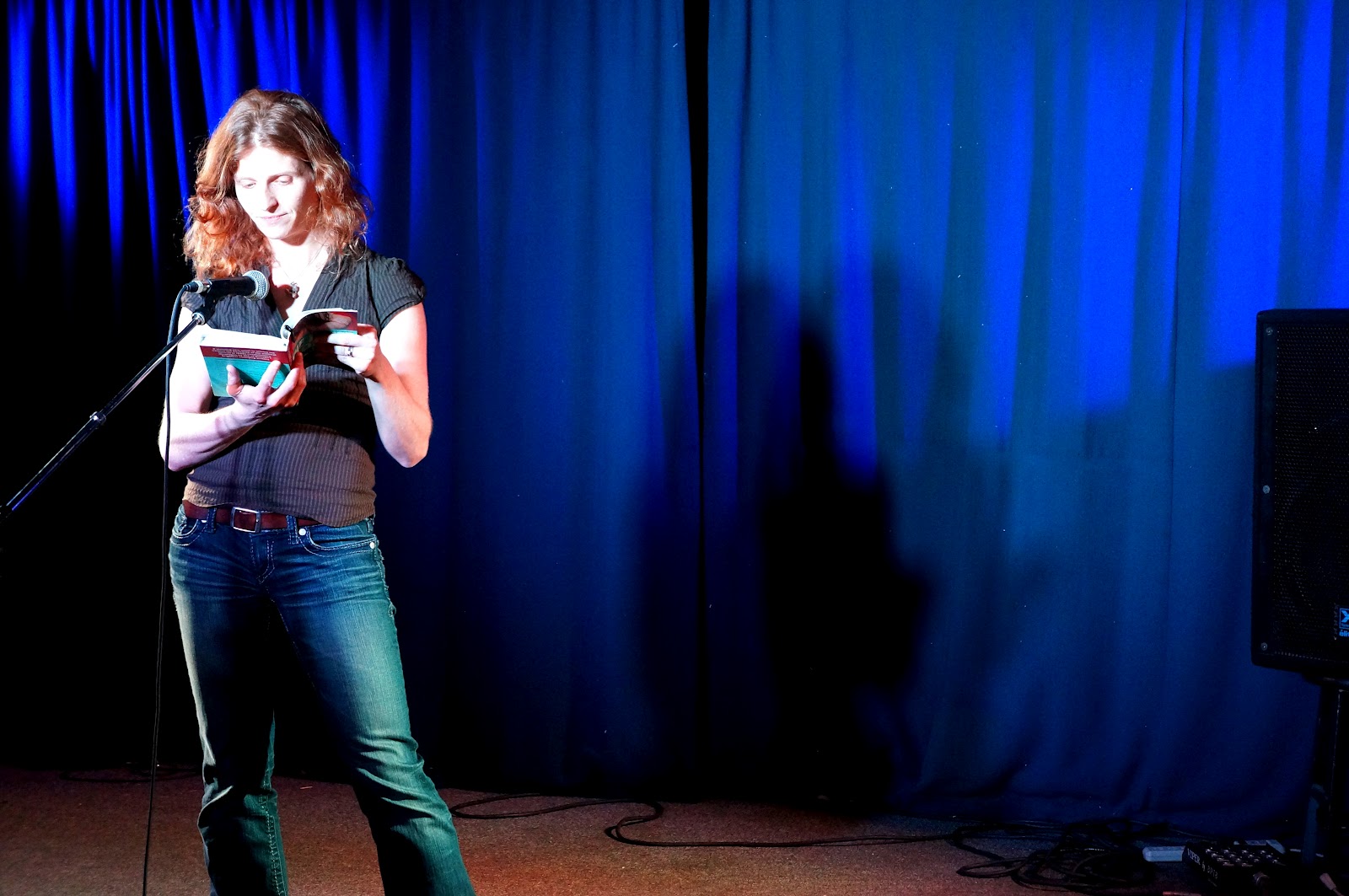 |
| at the Starlight on Tuesday, photo credit Zara Rafferty |
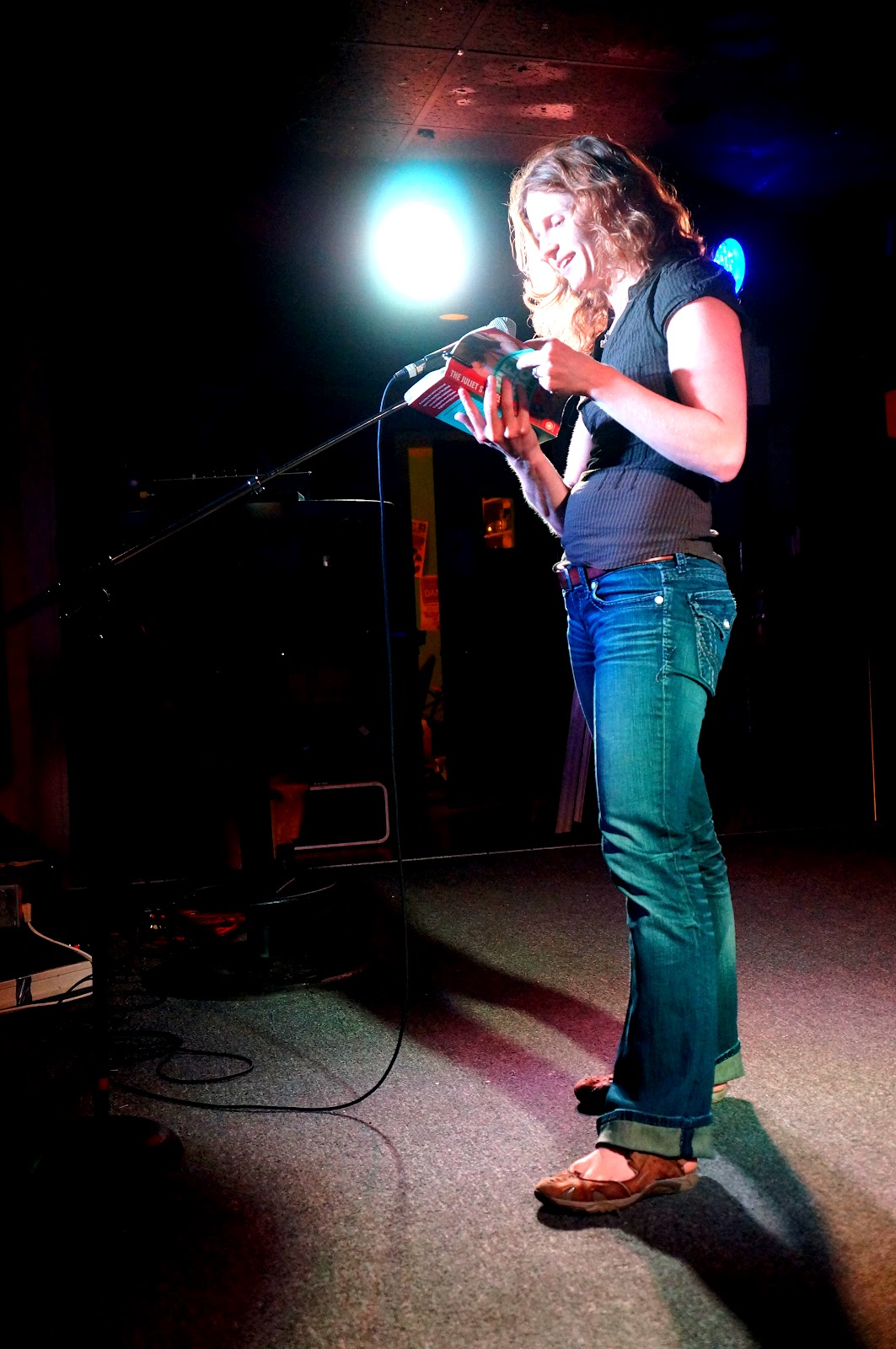 |
| photo credit Zara Rafferty |
No, I’m not a real surfer. But life feels a bit ocean-like these days, rolling, never steady. I spent yesterday in Toronto. It turned out that parking was easier to find than anticipated, so that bike never left the back of my vehicle. (Although parallel parking on Queen St. West at rush hour was an exciting opportunity to test my driving skills.)
Some fine moments from my day …
:: smiling at people passing on the sidewalk, some of whom seemed shocked to be making eye contact with a stranger
:: meeting another Snyder from Kitchener-Waterloo at Book City, and trying to piece together our geneological connection
:: eating Korean stew with my lovely little sister on Bloor street; and hanging out together, not in a rush at all
:: making an it’s-a-small-world connection with Daniel Griffin (who also read last night at Type)
:: mingling with the awesome crowd at Type Books before the reading, and putting faces to blog-names
:: being introduced by the lovely Kerry Clare
:: reading a story to a group of people who were really listening
:: getting teaching-creative-writing advice from Heather Birrell (who is a high school English teacher, and who also read last night)
:: finding all the dishes done when I got home
Some less-fine moments …
:: worrying about my dress
:: the chilly wind that swept Toronto all of yesterday
:: forgetting someone’s name during the book signing (AUGH! This happens virtually every time, and every time I curse my name-bank-blank-spot. This is how bad it is: I have literally blanked on the name of a family friend, known for twenty-five years, and seen on a regular basis. I don’t know how that’s even possible. And I hope it doesn’t indicate early onset dementia.)
But this is all to say: Life’s good. It’s messy and it’s good. It’s crazy and whirling and I couldn’t quite believe that I was up at 5am this morning for a spin/kettlebell class, and there’s dirt all over the basement, and I have a basket of laundry waiting to be hung, and no, I will never catch up on my emails — or, really, on anything at all, ever — but this is it. I wouldn’t want to be doing anything less. I love the doors open policy that brings five boys into my house on a Wednesday after school (and leaves behind sweaters not belonging to my kids; be sure to check our lost and found pile, parents). I love seeing my kids excited about moving dirt into new garden beds (yesterday’s major project, overseen by Kevin, bless him). I love lifting kettlebells over my head (is that too weird?). I love getting to read my stories out loud.
Keep the waves coming.
Reminder: reading tonight, Type Books, Toronto!

Just a quickie this morning, as I’m headed to the big city to do some work, meet my sister for coffee (I hope), sign some books, eat some supper, and read at Type, as it’s apparently affectionately referred to by those in the know. See poster for details. I’m also looking forward to the Q&A afterward with Kerry Clare.
I’m hoping to park somewhere relatively central and then bike around Toronto. Is that insane?? My bike fits in the back of our truck, and I’ve got a helmet and a good lock. Last time I went to Toronto, I ended up hiking all over and feeling very sweaty and late; I’m hoping that by cruising, even very slowly and cautiously, on my old junker of a bike, I will at least not be late. It looks like rain, however. Pray for me people.
Hope to see some friendly faces tonight.
(Last night’s event here in town was just lovely, met a ton of new people — lots of writers — and had some funny interactions with a slowly sinking microphone, which livened up my little set. And Heather B rolled with our family’s usual Tuesday afternoon chaos, bless her. And my soccer kids had great games, including a goal for the one who’s usually in net!)
Here’s a link to the review of Juliet in The Walrus, if you haven’t read it (and feel so inclined). I like how they call The Juliet Stories “Carrie Snyder’s new novel.” Which could be something we end up talking about tonight at the Short Story Shindig. What is this thing I’ve written anyway?
The morning is fleeing!
stop and drink the nectar
The morning is fleeing! I’m running out of time. Stop, Carrie, breathe for a moment. Drink the nectar.
Ahhh.
This afternoon, I’m hosting my literary friend Heather Birrell, with whom I will be reading tonight at The Starlight here in Waterloo. She’s been forewarned about the fact that somehow we’ve neglected to vacuum for, like, weeks, and that there are toys and papers and dishes and stuff on pretty much every horizontal surface, floors included, and she assures me that she’ll feel right at home amidst the chaos. Well, she’s got two young daughters. And a brand-new book. I think we’re good.
I want to tell you about her book. It’s called Mad Hope, and the title comes from a line in a pitch-perfect story, “Geraldine and Jerome,” which is set in the waiting room of a medical clinic and links up two unlikely-to-otherwise-meet-and-interact-characters. I happened to read it in the waiting room of a medical clinic (don’t worry, I’m fine). Be warned, if you’re planning to pick up this book and read it in public places: these stories will make you cry. Or maybe it’s just me.
I’m thrilled to say that Heather invited me to be an early reader of these stories, so I know exactly how damn good they are. And the book has been getting rave reviews all over the place. I’m going to get Heather to sign my copy today. You can too, if you happen to be in Waterloo and come out to the Starlight tonight; or in Toronto tomorrow, where we’ll be reading together again at Type Books.
And to add book news upon book news, my many-moons-ago boss, Noah Richler, has a new book out this spring too. It’s called What we talk about when we talk about war, and it’s about how our current government has been steadily distancing our country from its tradition of peacekeeping, preferring the warring nation metaphors instead. Noah will be in Waterloo on May 30th at the Laurier Centre for Military Strategic and Disarmament Studies. That just happens to be a free evening for me (!!), and I’m looking forward to hearing Noah speak. Join me? I’ll post more details closer to the date.
One last thing. Noah’s written a really lovely mini-review of The Juliet Stories, published on the 49th Shelf. In it, he talks about hiring me as an intern at the National Post, and his description of who I was then gave me a really lovely “how others see us” moment. Because who knows how others see us? (What I perpetually fear is that maybe I’d rather not know … it’s a personal hang-up. I need to get over that.)
Party night
party night
My thoughts are all over the place on this Monday morning. I’m wondering: should I blog our week in suppers? Skip over that and write about my weekend of solo parenting? Share news about upcoming events and unexpected Juliet feedback?
Last night, I set my alarm for swimming. I woke at 2am. I’d been dreaming about sleeping (again!). I decided to turn off the alarm and really sleep. I have three early mornings planned this week; given that I also have two evening readings, self-preservation starts to come into play. It was a little easier to turn off the alarm given that yesterday, late afternoon, I ran 12 pain-free kilometres, keeping up a good pace and plotting my return to distance running. That counts as my first real distance run since my injury in January. It’s short, as far as distance runs go, but it was a blast. Next week … 14 km??
Uh. Where was I? Oh yes, self-preserving.
Tonight, I’m ferrying children from dance to soccer practice while Kevin has an early soccer game. Tomorrow, I’m at the Starlight in Waterloo (come, too!), from 7pm onward. Readings start at 7:45. And on Wednesday I’m headed to Toronto for an event at Type Books called the “Short Story Shindig” with Heather Birrell and Daniel Griffin, and hosted by Kerry Clare; 7pm (come, too!). This is all very exciting, but doesn’t go terrifically well with excessive early morning exercise.
As I said to Kevin this morning, “This isn’t the year of the triathlon. This is the year of The Juliet Stories.” (Which may be the first time I’ve admitted that, even to myself. I really really liked the year of the triathlon. I felt so hard-core. Sharing my book feels less focused, less goal-oriented. Maybe I need to start thinking of readings as races. They definitely affect me in similar ways — I’m nervous before, wired and happy during, and it takes me a little while to come down afterward.)
So. Slightly less focus on exercise, slightly more focus on evening events.
Now. Let me tell you all about my weekend with my kids. We had so much fun! Why can’t we have this much fun all the time? Is it because I’m usually trying to get too many other things accomplished? That can’t be entirely it, because we seemed to accomplish quite a lot, even while finding time to relax. Our weekend included …
:: watching Modern Family on Friday night while sharing an entire bag of Cheetos (which were utterly disgusting, may I just add)
:: trampoline ninja jumping (everyone!)
:: a bike trip to the grocery store for picnic and party supplies, followed by a picnic in the park
:: reading outside while two girls rode giggling past me on scooters and bikes too small for them
:: hanging laundry on the line, baking bread
:: playing on electronic devices; taking lots of photos
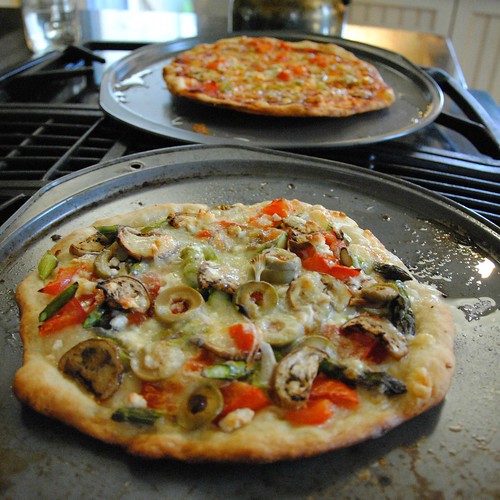
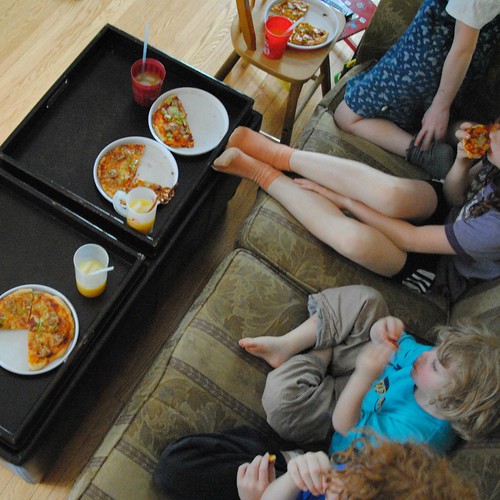
personal pizzas for party night (the one with the olives, asparagus, and eggplant? yes, that’s mine)
:: “Party Night,” wherein we had homemade personal pizzas and punch with ginger ale while watching a movie, then gorged on episodes of Modern Family while simultaneously gorging on boxed cereal and utterly disgusting candy; the rules for Party Night go like this: everyone gets to choose one treat from the grocery store (under $4), and we stay up as late as we want; oddly, three of four children chose boxed cereal (Corn Pops, Frosted Flakes, and Froot Loops, for the record). We have never felt so collectively gross. I blame the milk. Maybe the sugar too. It was surprisingly easy to herd the children off to bed at a not entirely unreasonable hour (9:30ish) …
:: … though AppleApple and I got distracted searching for my old Grade One piano book in the basement, which we never found, but we did find one of my old and relatively simple classical piano books, and ended up staying up for another hour playing songs. The Wild Horseman. The Happy Farmer. One of Muzio Clemente’s simple Sonatinas (she’s learning it!). Minuets from the Anna Magdalena Bach notebook). Bliss!
:: sleeping in
:: making and delivering, on bicycle, invitations for an 11th birthday party (a week from today!)
:: more bike riding and trampolining and laundry hanging; hey, whatever makes us happy
Mother’s day was capped off by the return of Dad, and supper out at all-you-can-eat sushi with my mom, too.
And that is plenty for one blog post. Never got to the unexpected and lovely Juliet feedback. Well. More tomorrow.