Category: Word of the Year
Tuesday, Jun 30, 2020 | Big Thoughts, Books, Confessions, Current events, Good News, Lists, Manifest, Mothering, Parenting, Publishing, Space, Spirit, Spring, Word of the Year, Work, Writing |

June Reflections
- What felt good this month? Honestly, it’s been a challenging month, with a lot of push-pull emotions. But this question is reminding me of all that’s been good, too. It felt good to re-enter the world, occasionally. I sourced several comfortable masks to carry in my purse. Started physio, the result of which is that I’ve been able to go for some early morning runs (personal moments of bliss; I hi-fived a tree branch this morning!). On Tuesday afternoons, I’ve been biking to pick up Fertile Farm’s CSA offerings, just like I did in the before-times. (We’re getting two different CSA boxes this summer, Tuesdays and Saturdays, so our Monday supper challenge is to finish all the greens in the house before their impending replenishment!) Strawberries and asparagus are in season: eating lots. My peonies bloomed, and I cut some of the blossoms and dried them, hoping their scent will last. We celebrated Father’s Day with homemade carrot cake, shared with my dad in the back yard. The back yard, by the way, is AMAZING. I’ve been joining Annabella for double yoga sessions on Saturday mornings. Hanging laundry on the line. I met with my girls’ soccer team on Zoom and we started a fitness challenge (which explains why I’m suffering through burpees every morning). The kids finished school, and yesterday morning, Calvin and I kicked off his summer holidays by drawing and writing together in our journals, like we’ve done in summer’s past, which is very good indeed. And, last but not least, Kevin’s been concocting fancy weekend drinks with herbs from his garden.
- What did you struggle with? My emotions. I’ve felt restless, sometimes bored, distracted by anxieties. Mental fatigue. Making case-by-case decisions about our family’s activities as invitations to socialize begin again: what’s low-risk, what’s doable, what are the compromises or modifications that make normalcy possible? I almost had a panic attack on a walk with a friend last week, when we ventured to a park that felt too crowded with unmasked strangers. I suspect my absorption of US news is affecting my perceptions of safety here in Southern Ontario, where the numbers of new infections are relatively low. Also recognizing that the sameness of my days is causing a crash in creativity. As the months grind onward, I crave variety, challenge, adventure, new sights and sounds. There’s not much growth in the comfort zone.
- Where are you now compared to the beginning of the month? More restless, less focused, but also more optimistic about our collective ability to adapt to post-pandemic life. Work-wise, I finished writing a complete first draft of the 16th century novel. It requires major revision, perhaps even rethinking, so I’ve set it aside to steep for awhile. In its absence, I haven’t landed solidly on a writing project as absorbing. However, I do have big news: this month I signed a contract with a major Canadian publishing house to publish my next novel (tentatively titled Francie’s Got a Gun; not set in the 16th century). It’s been a long time coming, and I’m slipping the news in here rather quietly; look for a more formal announcement once the manuscript is finalized (due date for revisions: January 31, 2021). Maybe by the time the book comes out (2022), we’ll be free to throw a big old-fashioned launch party, which is really the reason I wanted to publish a new book and I’m not even making that up. God, I love a good launch party. I’m going to spend the next 2 years planning it. All of that said, and as this rambling paragraph attests, I’m casting around right now looking for something to occupy my energies, as I wait for notes from my new editor, dip into other writing projects, and hang out with my children.
- How did you take care of yourself? This month, I looked after my physical health. I went to physio on the advice of my chiro. I did a tea cleanse for the first two weeks of June. Also: almost-daily cardio, dry brushing, stretching, yoga, reading for pleasure, weekly sibs check-ins, salads, homemade yogurt, journaling, evening walks with Kevin and Rose, planning some fun events for our summer holidays, meeting friends outdoors and for walks.
- What would you most like to remember? What it feels like to walk uptown again, after several months’ absence: how strange the air feels, how empty the streets, how heightened my awareness of surroundings. Eating ice cream with a friend on one of my first outings post-lockdown. How my brain has struggled to feel safe doing activities that were once so ordinary they required no thought. Also: Black Lives Matter, and the hope for change.
- What do you need to let go of? I need to let go of my desire to control, which is a desire to protect and a compulsion to try to prevent bad things from happening. I’ve noticed particularly in interactions with my children that I’m always on patrol, attempting to prevent disaster, messes, missteps, no matter how insignificant (“don’t leave that jar of pickles on the edge of the counter”; “did you put on sunscreen?”; be careful, watch out, don’t forget, did you remember to, have you thought about …). My watchfulness is not helping anyone. My hyper-vigilance renders me needlessly anxious, and also feeling pointlessly guilty and responsible for anything bad that happens that I haven’t prevented; but it’s also harming my kids, who deserve my trust, and who can really only learn from experience. Painful as that is to recognize. I’d like to stop putting up caution signs and issuing warnings, and just … let go … let go … and I mean this on all fronts, in both my professional and my personal life, I want to walk a path that honours and accepts all I can’t know, all I do not control. God, it’s hard. But stuck together in close quarters, lo these many months, I’ve seen the harm of it more clearly, and I’ll keep trying to open my hands, unclench my jaw, and let go.
xo, Carrie
Saturday, Mar 21, 2020 | Art, Big Thoughts, Cartoons, Confessions, Current events, Death, Drawing, Fire, Lynda Barry, Manifest, Music, Poetry, Spirit, Spring, Word of the Year |
Like many of you, my days — their very substance — have changed. And I’m finding comfort in a daily drawing and writing session, the results of which I’ve been sharing here. Will it last? I don’t know, but I’m debating whether these cartoons and poems should replace the ordinary content of my blog, which is more like this … more like me talking to you (rather than me talking to my notebook), more conversational, a little more “newsy.” The writing I’ve been doing in my notebook is closer to fiction or poetry; and its tone might not fit the blog’s, perfectly.
But, still. I’m making it, and I enjoy sharing it. I will keep sharing it for the time being, and perhaps find another way to do so, in order to preserve this space for, well, this.
How are you? I hope you’re finding ways to enjoy your days, which may feel extra-long and extra-slow; the stretched-out passage of time, in the absence of much happening, reminds me of my days spent parenting small children.
We are good, here. Our eldest returned from his trip to Montreal (where the city had shut down around them); he’s restless, and has yet to settle in to the strangely calm routine the rest of us have invented for ourselves. Kevin is our designated leave-the-house-for-supplies-person. We are grateful for our big back yard. There’s room to kick a soccer ball. Room to refinish a coffee table. My office is an oasis of peace. I’m mainlining meditation, and have been tuning in every evening at 8PM to my friend Kasia’s livestream kundalini session on Facebook. At some point this week, I baked a double batch of cinnamon raisin bread that was divine. Yesterday, I wiped down every major surface with a bleach solution, a tedious and wearying project that opened my heart with gratitude and amazement for everyone whose job it is to wipe down surfaces, to keep us safe. My admiration and thanks are with each and every worker on the front-lines, putting themselves at risk, doctors and nurses, and also cashiers and cleaners. My job by comparison is ridiculously easy: stay home, stay calm. I think often of those who have lost work, who fear the immediate future, the basics of survival. A couple of weeks ago, I was mercifully awarded a major grant from the Canada Council for a novel I’m working on, the timing of which has been a major relief; I’m certain we’ll be okay even if the kids can’t work their summer jobs, even if Kevin’s business shrinks in the near-term. I feel fortunate, too, to share my home with five other people, plus dog. We might irritate each other from time to time; but we also have close companionship. Staying connected, generally, has taken on increased significance. I enjoyed tuning in to my church’s virtual service this morning. Last week, my sibs and I met for drinks via Zoom.
The forced presence and stillness suits me, at least for now. But, as you’ll see from my “poems” below, I’m also aware of underlying anxiety, of uncertainty, of the fear of the unknown that seems to be floating through the atmosphere, bubbling up from the depths.
Below, you’ll find samples of my drawing and writing from the past couple of days. Feel free to read, or skip, as you wish. Sending you presence, light, hope, stillness, and, in place of anxiety, free-floating poetry.
xo, Carrie
PS Add this to your recommended reading list: Washington Post article about a poet in Southern Italy who shared his personal cellphone number on social media, offering to talk to anyone who wanted to call. As Seth Meyers would say: this is the kind of story we need right now.

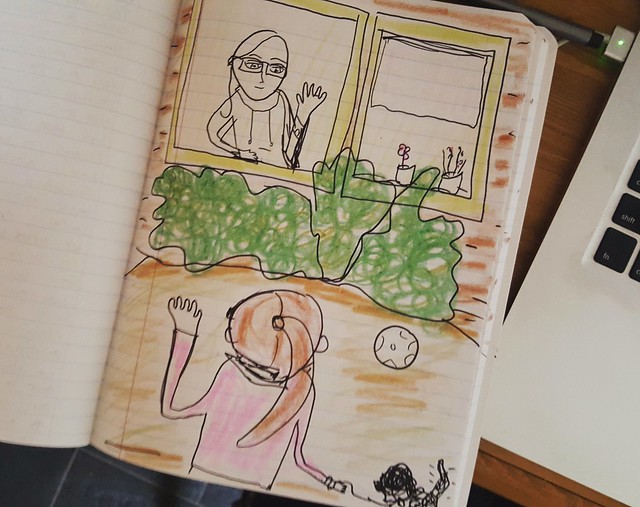
Thursday’s cartoon was drawn to Lindi Ortega’s “Fires.” I think it’s a double self-portrait, of me, right now, waving to me, from a time before coronavirus. But who knows? These portraits seem to draw themselves.
What’s on your mind?
Today’s poem comes to you from a land of uncertainty where nothing and everything has changed from one moment to the next, and the landscape looks the same, only bleaker, and the world is windswept and bleary, all crispness reduced to the edges of dried grass rustling as we shuffle past, keeping a safe distance from one another. When our hands brush briefly, accidentally, before parting, I flinch as if I’ve touched fire, fever, the source of fever — or is it I who am a danger to you? Either way, I bear responsibility for the possibility of infection, and this reminds me that we must be guarded and vigilant, we must restrict our children’s movement and our own.
Is twenty seconds long enough to thoroughly clean my hands?
The pressure in my chest expands. I sneak into the bathroom to take my temperature again, momentary reassurance that I am well. But is this well? I stand in the bathroom looking at the number that presents itself to me, a neutral number, on a neutral device of measurement, and I ask, what about the invisible suffering parts of us, how can we measure and assess those fevers and chills and aches?
There is so much surface that needs to be disinfected, vast and spreading; what’s underneath must be even vaster, almost infinite, the darkness we fall into, the anxious pain that presses against the ribs, trying to get out. I see it everywhere, written on everyone, muted, uneasy, restlessly awake now.
We knew we would die one day.
We thought we would know better what we had dominion over, what we could control. These depths bubbling like lava, like an eruption at the bottom of the sea, like rumour — are not the message we’d been awaiting. We want instruction. A six-step undertaking to cleanse our surroundings. A bleach solution (9 parts to 1).
A tincture, an inoculation. A cure.
Friday’s cartoon was drawn to Bill Withers’ “Lovely Day.” A friend observed that the past two portraits seem to be expressing a fractured self; in any case, the figures are all boxed up and separated, though some of them are reaching out.
What’s on your mind?
My mind empties out and I see behind the overcast grey sky a clean-swept blue; now hidden, but still there, and I imagine the wind pushing at the clouds and opening a smear of light; the clouds torn like paper, ripped like fabric.
Experience has the same effect, working on my mind to rub away the clouds of certainty. In its place, a frayed understanding — that nothing holds, and that certainty is less desirable than I’d imagined, that instead I am happy to settle for being useful, for finding myself, occasionally, in the right place at the right time.
I see that vulnerability is like an invitation, while certainty silences. The rip in the massing clouds reveals the sky, blue, which was always there, if I’d known to open myself, frayed, worn, fragile, as I’ve always been, whether I knew it or not. I let myself be seen. And in return, I see you.
Saturday’s cartoon was drawn to Tom Petty’s “Running Down a Dream.” I drew it with my eyes closed. I took the theme rather too literally, which is why I’m running, sort of, though I couldn’t visualize what dream, exactly, I was running down. So I drew a few little star-like flowers that can be seen near my right elbow, like the flowers I noticed on the spider fern whose tendrils are hanging over our sink (pictured at the top of this post).
What’s on your mind?
This time is this time is this time of now and now and now and it is almost impossible to be anywhere else or with anything else but what’s before me.
I notice the spider fern is flowering, tiny delicate blooms hanging over the sink.
I notice my son’s head smells like sweat, and my daughter’s head smells like coconut oil. I touch their hair.
My hands smell of bleach, though I used gloves, and I wonder if the smell is real or remembered, is it in my nostrils or just the memory of it, the way I can smell cigarette smoke from someone else’s car even after I’ve rolled up my window and driven away, even after I’ve left my car in the parking lot to sit outside the door of my daughter’s piano lesson, how even here I think I can smell the stranger’s cigarette smoke in my hair — and by extension, her poor decisions and regrets and longing; which are, of course, my own.
The piano studio has locked its doors.
We live inside.
We do not drive anywhere. We are in a time of plague and even yesterday seems very far from today, estranged from today.
Now. Now. Now. The sound of my pen scratching — too fast, sloppily — across the page. I’ve only just noticed that I grip it as near to the tip, the nib, as is possible. I only just see it — my pen — as an instrument I am playing, an extension of my body, a tool encircled by five tips of fingers, each with a half-moon circle of curved, opaque nail. There are no straight lines on my hand. The pen is straight and hard and useful to me, it is made for this task and nothing more; but I am made for bending, praying, curling, holding, I am made for giving way. I am made for praise. For contorting myself anew.
I am made for change and ever-change, evermore, now, as before.
Monday, Mar 2, 2020 | Big Thoughts, Family, Good News, Manifest, Mothering, Publishing, Sick, Spirit, Success, Word of the Year, Work, Writing |
Celebration; grief. This is me, right now.
How to hold two extreme emotional states within one mind and body, all at once? I can’t do it. Instead, I seem to have landed somewhere in the middle, in flatness that speaks of protection, flatness that is an antidote to fear, but also to joy.
I can’t reveal more, and recognize that it may seem disingenuous or deceptive to hint at drama without offering details. I apologize. I don’t mean to be locked down, or to seem vague or untruthful; but also, this is too much of me not to speak of it at all. The depth of grief involves a personal situation, close to my heart, and I’m unlikely ever to reveal details outside my very closest circle. The height that deserves celebration involves my professional life; and this, I think, will be revealed more widely in due course, just not yet.
To say that I am distracted would be an understatement.
To say that I am challenged is accurate, but not strong enough.
To say I’m hanging in here, staying focused on what matters, jettisoning temporarily all that can be let go, surviving, feeding myself, breathing, reaching out to ask for help as needed, is true, all true.
I look forward to sharing my good news, in good time.
xo, Carrie
Friday, Feb 7, 2020 | Art, Big Thoughts, Cartoons, Confessions, Dream, Manifest, Spirit, Winter, Word of the Year, Work, Writing |
I often set myself a project that spans the full year. This year, I’m considering chronicling my daily writing life, but I haven’t figured out how best to frame it. Should I keep it short, as in a daily tweet? Today’s would read something like …
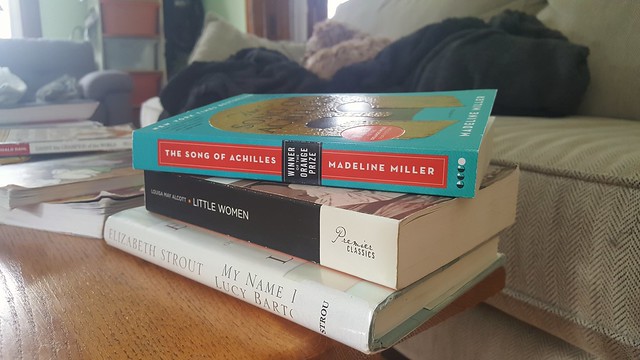
Tired, late night @ Edna King’s show in Guelph. Writing group cancelled this AM; I miss them, we haven’t met in a month. Fell asleep on couch reading Song of Achilles. Drew self-portrait, wrote What’s on Your Mind + blog post. Next, continue revising new novel. #writinglife
But in all honesty, one day is going to look a lot like the next, and a tweet has limited space for the animating details.
The long-form version of today’s chronicle goes something like this …
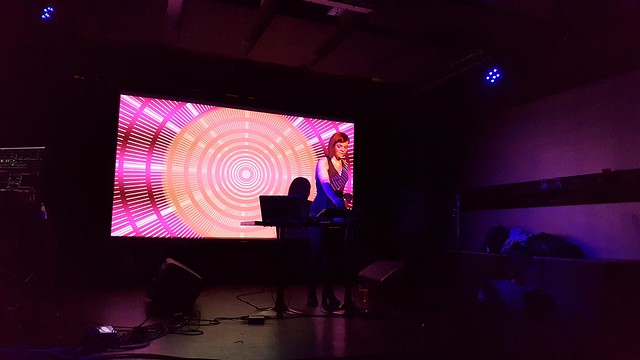
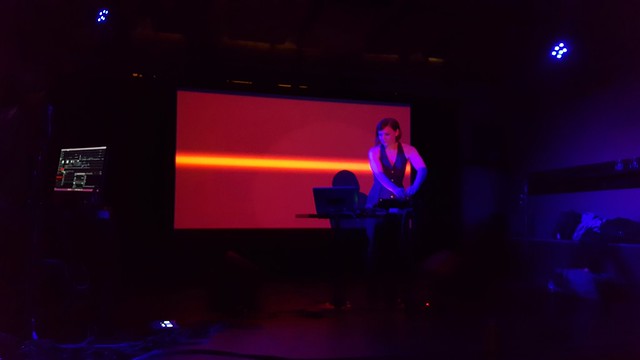
Today, I’ve been staggering around like a zombie after getting 4 hours of sleep last night; not conducive to clear-headed composition. I went to my sister’s show last night, an intense experience (EDM) that sent me into a form of dance/trance, which I spent thinking about my character, Bess, from the new novel I’m writing, set in the 16th century. My eyes were closed much of the time, and I kept gazing into my mind’s eye for Bess, trying to see what she was seeing: the image of darkness and enclosure, the image of an open night sky.
I’m reading Song of Achilles, historical fiction, and this morning, I fell asleep within ten minutes of picking up the book.
I was disappointed that my writing group meeting was cancelled again, as we’ve struggled to find time to meet this year. Our aspiration is to meet every other week, but we’ve only gotten together once in 2020 due to illness, travel, and other meetings and complications. I look forward to those mornings so much. It’s one of the only spaces where I have neither need nor compulsion to explain anything about #writinglife. We’re all in the industry, struggling, staying hopeful, doing the work, and encouraging and believing in each other. I’m missing that medicine.
While walking the dog, I thought about this blog post. I thought: what if I were honest, publicly, about this path I’m on? I’m giving myself a year; one year, in which to research and write with full commitment. January was blissful. I spent many hours of many days simply sitting and writing. It was blissful and it was filled with anxiety. I also sent out six grant applications at the beginning of last month, and four were rejected earlier this week. Truth! Ugh! Painful! Shameful! Humiliating!
But, on the other hand, also in January, I learned that my short story, “16-Century Girl,” published last winter by The New Quarterly, had been submitted for a National Magazine Award.
And, I filled another notebook! I’m working on two separate and very different fiction projects. One is historical fiction, and I’m close to completing a first draft (“close to completing” could mean 6 weeks or 6 months, or even longer). The other project is very new, and I’ve only been working on it for a few months; too new to discuss, though it does have a name: I’m calling it Two Women. I work on Two Women by hand, composing with pen and paper, and I’ve filled three notebooks so far. I’m working on Bess in Scrivener, and I’m composing it as if amassing a great heap of loose scraps, writing forward until I reach the end.
This week, I reached an end, of sorts, for Bess, and started back at the beginning, preparing for a slow, careful, thorough revision by setting up the Scrivener file beside a Word doc with the same text, and going through line by line, scene by scene, deleting, rewriting, composing new scenes. Don’t ask me why I’m taking this route. I’m writing this novel completely on gut instinct and dream-like visualization. The manuscript is short but dense. I’m curious to see whether it wants to be fleshed out further, or whether its structure and tone demands that it remain short and dense.
Also while walking the dog, I had a thought about the auto-fiction short story collection I’ve mostly completed; could each story be punctuated by one of my 4-panel cartoons, as a way of creating a breath between the stories, which are heavy and kind of demanding, and I don’t think anyone would want to sit down and read them all at once? Something needs to ease the transition between stories; maybe the meditative cartoons I’ve been drawing would fit there?
So that’s today, as of 2:03PM. As soon as I press publish on this blog post (if I do indeed decide to publish it), I’m setting up Bess in the side-by-side format, to work through whatever scene comes next. I have to pick up kids at 2:45, but I can return home and keep working on Bess till it’s time to make supper.
The other writing I’ve done today was in my notebook. As is my habit, I answered the question: What’s On Your Mind? as a means of dumping out surface anxieties before getting to work. I also drew a self-portrait — dancing last night — to Lizzo’s “Juice”.
Lastly, I will report that I continue to wait, with seemingly perpetual hope, patience, and possibly delusional optimism, to hear from my agent about two completed manuscripts (one for children, one for adults). Would you like to wait with me? We could be here awhile. But in the meantime, while I wait, I’ll be writing and dreaming and writing and dreaming, in full-on bliss, stealth-attacked by anxieties, and holding dear to prayers and visions. Truth.
#writinglife
xo, Carrie
Monday, Jan 27, 2020 | Art, Big Thoughts, Cartoons, Drawing, Manifest, Politics, Spirit, Stand, Word of the Year |
Choice is power. But the illusion of choice renders us vulnerable to exploitation. I woke from this morning’s 20-minute nap with this thought clear in my mind.
I’d been reading an article in The New York Times (a very long-read, as this manifesto before you threatens to be), called “You Are Now Remotely Controlled.” Upon waking, I sat down with my notebook and began to write. “I’m having an important idea,” I told my youngest, home from school today because his teachers are striking in support of strong public education. “When will you be done with your idea?” he asked, at last. He wanted me to pour him a bowl of cereal. “It’s turning into a very big idea,” I said. He poured his own bowl of cereal.
I want to use this reflection to pull together a number of disparate thoughts / observations / concerns about choice, autonomy, responsibility and shame. I want to reflect on how the illusion of choice shames us into believing that we are willing participants in our own exploitation, that we’ve willingly consented to give away our private lives, and that we deserve what we get. We might even believe that we prefer it this way. Anyone with a car can drive Uber or Skip the Dishes to earn a bit of extra cash; anyone with a room can rent it out at their convenience; anyone with an internet connection can publish a blog for free; anyone with a cellphone can become an “influencer.”
But it’s this illusion of choice, this illusion of independence and personal autonomy, that makes us vulnerable. It is only when we know we are oppressed that we can fight back. If we are kept in a state of confused distraction, if we feel shame about our personal choices (which may in fact be “choices”), we will remain disorganized, overwhelmed, stressed out, and isolated, even while believing ourselves to be ever more connected. Sure, we’re connected — but to what, and by whom?
I can’t stop thinking about something Trump said while still a candidate for the presidency: “I love the uneducated.” I think he instinctively understands the moment in which we’re living, which makes him especially dangerous. We think he’s joking when we says things like this, but he’s actually incredibly transparent: he’s stating his game plan (and it’s not just his). As citizens of democratic countries, we not only want to imagine ourselves free, our identity relies on it. Paradoxically, this makes us vulnerable to manipulation too; when identity is at stake, recognition of a different version of reality can be too painful to accept. The less we know, the less equipped we are to understand and interpret our triggers, which are attached to our pain, let alone to distinguish between facts and “fake news.”
It’s my observation that the gig economy is a function of this moment in time, too. We’ve been sold the idea that contract employees are willingly trading security for independence. But the gig economy only makes sense if those employed by contract can earn enough to live at a similar standard to those employed in traditional jobs. And it’s clear we can’t. Also clear that the gig economy puts pressure on the individual to support themselves in ways that go beyond their capacity as individuals to fulfill — to negotiate higher wages, save for retirement, etc. Further, the gig economy has the effect of eroding traditional jobs — with labour so cheap, and labourers so plentiful, who can afford tenured professors, for example?
What “You Are Now Remotely Controlled” focuses on, though, is the power that data mining — which feeds artificial intelligence — gives to private corporations, whose interests fundamentally put them at odds with our interests, with the public good. Instead, we become consumers to be activated by “remote control.” Our phones are always with us. (Mine is plugged in beside me right now, ringer on.) We can’t imagine life without this device that only recently entered our lives — I didn’t carry a cellphone on my person till around 2010, yet I went into full-on panic when briefly separated from my phone due to a mix-up this past weekend. What would entertain me while I did chores? And what if someone needed to reach me? I was like a smoker separated from her pack of cigarettes.
Okay, so I’m addicted to my phone. I confess it. Aren’t most of us? Despite surviving the majority of my life without it, I seem convinced that my well-being depends on it. Yet it is this device, according to “You Are Now Remotely Controlled,” that makes it so easy for me to be monitored and manipulated — it is an important tool, among many other tools in the “internet of things” that is turning us into robots.
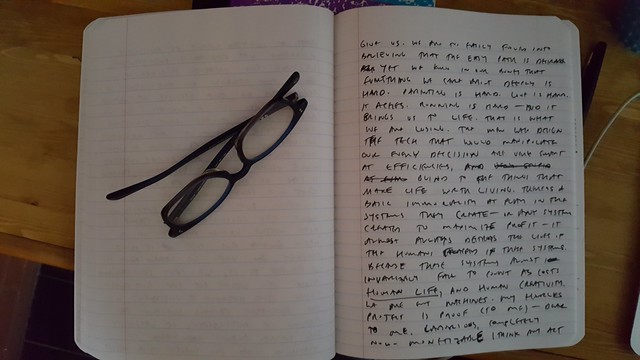
I am writing the first draft of this reflection by hand, in my notebook. The act of writing by hand becomes, in our era, an act of rebellion against the norm. A notebook cannot be surveilled. It is not connected to anything but itself. (Not to mention that my handwriting is virtually illegible, even to me.)
Surveillance capitalism traffics in prediction. The better a corporation is at predicting what we want / how we feel, the better it is at telling us what we want by understanding what we’re feeling. We are not, in fact, private autonomous individuals making multiple choices independently every day, we are highly predictable creatures with our inner lives, habits, routines and decisions being carefully monitored and collected digitally.
I’d like to connect the NYT article to a program that aired on the CBC’s Ideas on Friday evening, which was so compelling that I didn’t turn it off, even after I’d finished the dishes. It was part 2 in a series called “Why journalist Emily Bell is calling for a civic media manifesto.” Bell observes that it is legitimately becoming more difficult for us to find trustworthy news sources, especially at the local level. (Note that the two sources I’ve used for this post are The New York Times, which is probably the biggest independent newspaper in the world; and CBC radio, a public broadcaster funded by the Canadian government.) As anyone who works in journalism knows, the industry has suffered massive job losses and cuts over the past decade; we also know that bloggers are no replacement. A journalist without independence (or without adequate independent funding) is not free to do their job. “Influencers” are an example of personal journalism that is manipulated, easily and cheaply, by corporate interests. Why? Because an individual is personally vulnerable. An individual lives on a knife’s edge. She has children to feed, her reputation to protect. Freelancers need to get hired again, and again, and again.
This is what the gig economy thrives on. It’s the illusion of choice that I flagged way back when, at the beginning of this very very long essay.
An individual will sacrifice a great deal in order to feed her children, keep a roof over her head, and ensure she’ll get hired again. And she’s exhausted. There’s only one of her. How can she afford to anger the rich and powerful? When I worked as a sessional lecturer, I talked to a department chair about the insecurity built into the system: they tried to explain that I was fortunate to be given courses for two consecutive terms. That’s eight months of work. The standard for contract lecturers, in my experience, is to be given a contract for a single term (four months of work). And then you have to reapply, or perhaps, if you’re lucky, you’ll be offered a contract again, seemingly out of the blue. There is no stability. I was trying to explain, in return, that this made it very difficult to plan ahead. And they explained that the budgeting system made it impossible for them to make better offers. As I sat in their office, I thought, We are two human beings trapped in an inhumane system. How many people at the university were employed as contract lecturers, I asked them? And they said there was no data available on that. They suggested I could find the data myself, contact fellow adjuncts and contract lecturers and try to organize, to protest. I was flabbergasted. I was one person. I had limited resources, was already overstretched and underpaid. I was exhausted.
The NYT article suggests that protection for individuals requires governments to pass stronger laws, supported by the slow but certain democratic impulses of their citizens; this may be the solution. But is it too late? As Emily Bell points out, large data-mining corporations now possess more information than any single government. What would regulation look like? Who would enforce it? Who has the power? I fear totalitarianism by stealth. I fear all that we are accepting without question.
“Who will write the music, and who will dance?” writes the article’s author, Shoshanna Zuboff.
I can think of a number of policy changes that would help. A living minimum wage would go some distance toward reducing inequality. Strong public education with well-paid teachers is foundational, too. (“I love the uneducated.”)
But in Shoshanna Zuboff’s words I hear something that’s already within us — it’s our capacity for creativity, our capacity to write the music, real music, not computer generated. Algorithms are inherently boring. They are designed to predict the future; in other words, they’re predicated on predictability. It’s why I find Amazon’s suggestions for books I might like so boring — what I want is a human being who loves reading, in a bookstore, handing me a selection that’s a bit off the wall and unexpected, something I wouldn’t have chosen for myself. Human beings have the capacity to surprise ourselves and others. In surprise is delight. An algorithm offers, instead, a solution. But our brains don’t necessarily want solutions and efficiencies — we want absurdity, we want to be able to laugh and to weep at what we intuitively understand is not fixable. We crave mystery, though it can be difficult to recognize that — a page-turner, I would argue, takes us toward a solution, but we read it because we love the process of getting there.
Here’s a good example: Little Women is a beloved and much-read book not because of its tacked-on happy ending, but because of its imperfections — because we know the happy ending feels tacked-on (as Greta Gerwig’s film’s version brilliantly subverts). But if Jo and Laurie had married, I doubt Little Women would still be read, and relevant, today. We love Little Women for its complexity, for the messy emotions it evokes in us, and because it reminds us of our own imperfect lives. When I was a kid, I read it over and over again, and I couldn’t stop thinking about it — how it could have turned out differently for Jo, how unfair things were, how it lit in me a longing for a different ending, and yet how I had to accept it, nevertheless. This is the pleasure, the delight of the “wrong” solution, the solution unknown to the algorithm.
Something else. When we can buy anything and receive it instantly, we are denying ourselves another pleasure, that of anticipation, of weighing our desires against our needs, of imagining what the wanted thing might give us. We have been lulled into believing that the easy path is desirable. Yet we know in our bones that everything we care about deeply is hard. Parenting is hard. Love is hard. It aches. But it brings us to life. That is what we are losing. You know that feeling when you walk into a room and everyone is staring at their screens? And they glance up and their eyes are blank and they look numb? The men who design the tech that would manipulate our every decision are very smart at efficiencies, and at making us want more and more of whatever is being sold; but what makes life worth living? There’s a basic immorality at play in the systems they create — or any system created to maximize profit: an indifference to what’s being destroyed. And what’s being destroyed is the humanity of the humans lured into and trapped in these systems.
I gave up being a contract lecturer not exactly because I didn’t like teaching, but because I despised the system, and could not support it, if I could afford to choose otherwise. So I calculated what we could afford, and I chose otherwise. But the truth is that I didn’t really want to be a tenured professor either; I could see that their roles were untenably uncomfortable too, in many ways. It makes me wonder what to wish for.
The problem with systems designed for maximum efficiency is that these systems almost invariably fail to count some losses as actual costs; the losses that count are the ones found on a ledger. The loss of an individual’s security is not counted as a cost. Nor is the loss of an individual’s creative life. Nor the loss of pleasure, relationships and community-building when an individual is stretched to the limit just to survive, or when an individual has as colleagues other individuals who are treated as second-class.
We are not machines. We can’t live like we are. We won’t thrive. Here’s my own personal proof: I’m close to completing a project that I started a year ago in February, which I call “The Hourlies.” Each month, I’ve taken a 24-hour period and drawn a cartoon depicting each waking hour. It’s laborious, time-consuming, very dear to me, and completely non-monetizable. It’s also an enormous accomplishment in which I take great pride.
Drawing a cartoon is an act of creative rebellion. And each act of creative rebellion is an antidote to the paranoia, despair and fear that we’re being fed daily.
You know, Trump is half-right in his paranoia and fears — we are being monitored and many news sources are untrustworthy; he’s tapped into real fears and that gives his message currency and power. It’s just that he’s also the logical conclusion of what happens when we let paranoia, disinformation, ignorance, gossip, fear, greed and self-interest become our guiding principles. So let’s not do that, even though we could, even though we’re being pushed to. If we become like Trump’s example, we will live only on the surface of our lives, sating our base desires, but cold to the best of ourselves, to our openness, generosity, curiosity, and our imaginations, where images live.
Images can be used to manipulate us, too, of course; Trump knows how to draw a crude portrait that calls out our basest emotional responses — disgust, envy, greed, rage and fear. But images nevertheless remain my personal source of hope.
I think we can fight images with images.
Images can become stories, poems, drawings, songs. Images can be made into something that helps us see and know that we are human, we are alive, we are not machines. Visit with your own personal imagine. Let the joy of surprise and creation pull you away from your devices and screens, at least for a little while, every day. Call it your own personal rebellion against the surveillance economy. Get a cheap composition notebook and a black pen, and let yourself be led.
Maybe our creativity will disrupt the cruelty of efficiencies. Maybe policy will follow.
Thank you for reading all the way to the bottom.
xo, Carrie
Friday, Jan 24, 2020 | Art, Big Thoughts, Confessions, Manifest, Meditation, Peace, Spirit, Swimming, Word of the Year, Work, Writing |
My word of the year is MANIFEST.
I chose this word despite feeling discomfort about its complexity, and despite recognizing that I don’t completely understand its multiple meanings nor how the word will be useful in shaping or framing my outlook this year.
Sometimes a word just wants to be used. This word kept coming up. I kept seeing it and hearing it. And it arrived with a clear image. A manifestation is what’s visible. To make manifest is to show. Within the word is its reason for being, its implicit shadow: everything that is latent, hidden, unconscious, unseen, unknown and mysterious under the surface. The image I see is of surfacing. I’m in a deep body of water, carrying an offering to the surface. My offering is small, no bigger than a grain of sand, and I have a long way to go from the ocean floor to the open sky. But I enjoy the work. I’m swimming happily toward the surface with my grain of sand. When I pop through, I’ll float on the surface for a little while, resting, holding my grain of sand up to the sky in case a bird wants to carry it away. It won’t be long till I dive down to the bottom, again, to find another grain of sand.
Something that is manifest is readily perceived by the senses; it is what’s shown.
A manifestation can also mean the spiritual made real.
There are things that are declared, or announced, before they spring into being; to make manifest is to bring into being that which did not exist. My life’s work, I think. Because I also believe that what isn’t yet seen does exist, just not in tangible form. My life’s work is to go underground and surface, again and again.
When I frame my work as a spiritual quest rather than a career, it makes sense in a way that soothes and comforts me. It makes sense in a way that other framing does not and never has; I’m left cold and anxious, seething with envy and practical concerns, when I try to frame my work as a career, something that is transactional in nature, something I do in order to receive something in return—money, success, fame, or even simply a decent living. Nope. That’s asking my work to be something it fundamentally isn’t.
Accept what is before you. Be led. Open pathways for others, but don’t be angry or worried or dissatisfied if the path you see for them is not the path they see for themselves.
A story should call us, should lead us, we should follow it; if we’re dragging that story behind us like a dead weight, we know it’s not alive. It makes sense to me to visualize and live my life, as much as is possible, in this way—being called, following where I’m being led, whether or not it makes sense or is logical or dutiful or practical or immediately rewarding. I can’t know what I’m making. I can’t know what I’m doing in the moment of doing it. I’m just swimming, swimming, swimming toward the light carrying this little grain of sand.
xo, Carrie
Page 10 of 24« First«...89101112...20...»Last »