Friday, Jan 28, 2011 | Recipes |
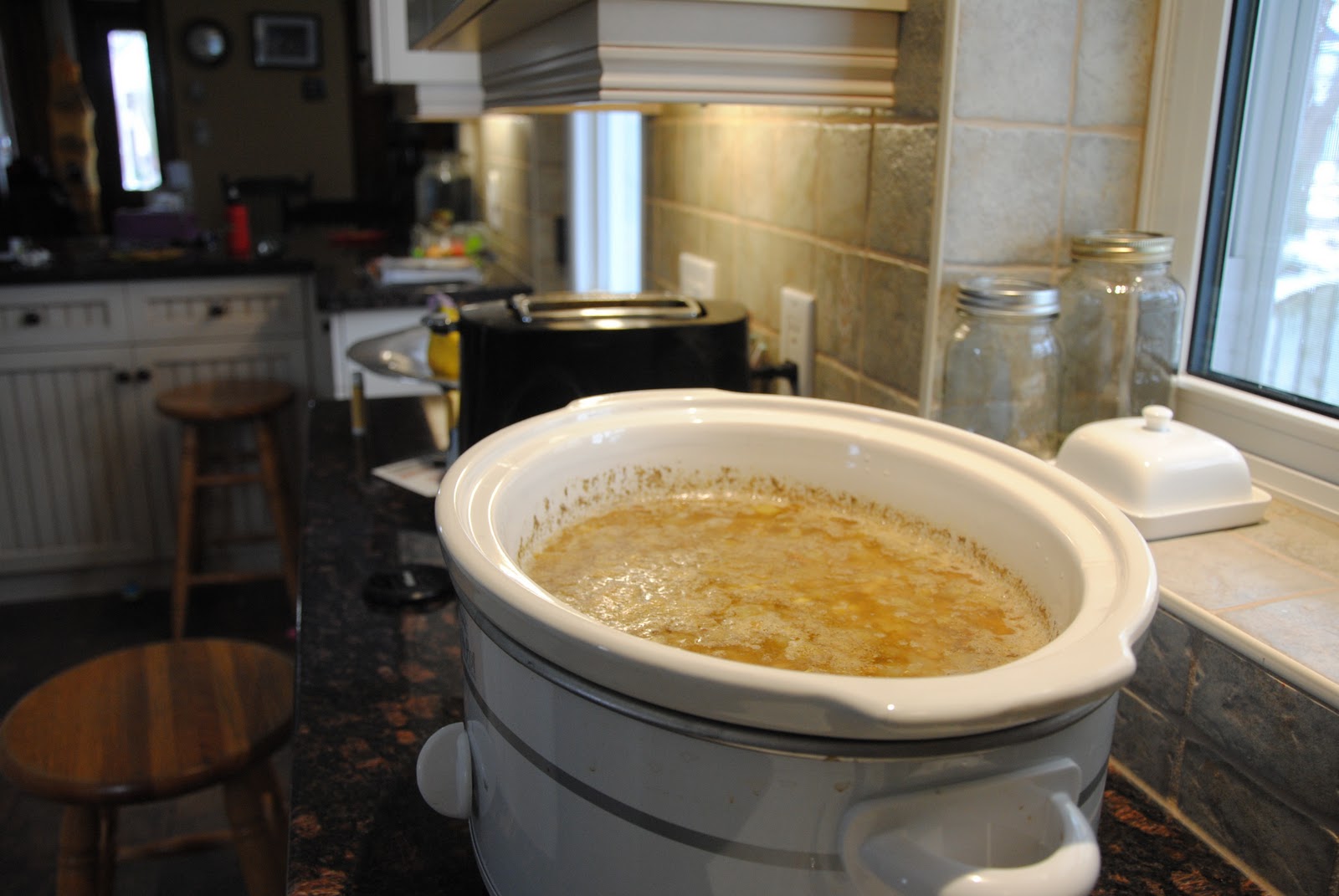
Lentil soup in a crockpot. It’s easy to throw together in the morning, fills the house with delicious smells all day, and makes a satisfying meal over rice or with pitas. Top individual bowls with yogurt or sour cream or crema la vaquita, or crumbled feta or queso duro blando. Either soup could just as easily be made in a pot on the stove, with a much-reduced cooking time–about an hour from beginning to end, or until the lentils soften. (You’ll note, too, that both soups can be prepared not only as vegetarian, but as vegan).
Here are two recipes for the price of one. My kids love both, although AppleApple is not a curry fan, thus making the curried soup a more difficult sell.
Curried Lentil Soup
In a small amount of olive oil, saute 2 chopped onions, 2-4 cloves garlic, and 1 tbsp minced ginger (subsitute 1/2 to 1 tsp ground ginger), and approximately 1 tsp salt. Toward the end, add 2 tbsp mild curry powder and cook off the raw flavour. Scrape into slow-cooker, adding water to the pan to get every last bit out. Black pepper may be added to the mixture, too.
Rinse 2 cups of red lentils and 1 cup of green lentils, and add to the slow-cooker. Now here’s the ad hoc portion of the recipe. If you like your soup thicker, add about 8 cups of water or broth. If you like it soupier, use more liquid. I use a 3kg container of frozen homemade chicken stock, and add water, following the whims of the day.
Cook on low, covered, all day (8 hours or so).
Finally, just before the soup is ready to go to the table, stir in the juice of one lemon (or a couple tbsp of cider vinegar). Don’t skip this step! It’s what finishes the flavour sensation. If you have fresh cilantro, chop and add a bunch at this stage, too. If not, it’s still going to taste really good.
Harira
In a small amount of olive oil, saute 2 onions. When softened, add 1 tsp each: powdered ginger, cumin, turmeric, and ground black pepper. A bit of extra cumin won’t hurt, either. Fry for about a minute, then scrape into slow-cooker, adding water to loosen every last yummy bit.
Rinse 2 cups of green or brown lentils. Add to slow-cooker.
Toss in 1 whole cinnamon stick. And one can of tomatoes–diced or pureed or whole (I use a quart or half-pint jar canned last summer; size doesn’t matter). If you happen to have a bunch of fresh cilantro on hand, toss it in, stalks and all (and fish out before serving).
Again, the amount and type of liquid added is up to you. I use chicken stock if it’s handy, but water is a-okay. Add between 6-10 cups. If you’re using water, you’ll need to add approximately 1 tsp salt; with chicken stock, you may not need any. Taste before serving and re-season, if needed.
Cook on low, covered, all day (8 hours or so).
Finally, just before serving, stir in the juice of one lemon. Really, it’s the secret to many good recipes. Cider vinegar makes an excellent substitute.
Note: You are most welcome to add diced carrots or shredded zucchini or other veg to either recipe! I refrain, because that level of mixing and mushing of ingredients does not please my children. I find the most popular slow cooker recipes are those with a short ingredient list. Raw or other cooked veg can be served on the side.
Wednesday, Jan 26, 2011 | Writing |
Post-yoga thought: guidance. Sometimes it takes pushing to get to where one wants to go; sometimes all the pushing in the world won’t do it. I’ve had some doors open for me, over the years; and some stay firmly locked.
I’m not a huge fan of waiting for things to come. I prefer to be active. I’m an action verber: a do-er, a go-getter.
But I’ve pushed a whole lot to get to where I am right now (thinking about my writing). And I think it’s time to sit quietly and wait for guidance. That sounds extremely hokey, at least to me, it does. But I think so. I think it’s time. In a good way.
Monday, Jan 24, 2011 | Money, School, Spirit, Word of the Year, Work, Writing |
Heart.
Because my heart, speaking literally, powers my body as I work toward the goal of completing a triathlon and/or half-marathon this year.
Because I live in my head. Because I want to allow myself to respond spontaneously, without checking in with my head. If the heart says do this, I want to. At least, most of the time. Okay, even some of the time. (I’m a little bit afraid of giving myself over to my heart; I sense that mistakes will be made; I sense also that mistakes must be made).
Because of love, compassion, empathy. Because in my efficiency, I am sometimes deficient in these most important gifts.
Because it’s a challenging word, filled with challenging ideas, for me.
Because I want to explore other aspects of myself, even if it means just pushing ever so slightly against the seeming-solidity of who I am, right now.
But I’m keeping spirit, last year’s word. I nominate it to be word of the decade, an umbrella under which I will develop different aspects of the spirit. What does spirit mean, to me? It means the life unseen, not of this world, and yet expressed within this world, through words and deeds. It means: there’s more to life than what can be seen. It means mystery. It means being moved. Being open. Being emptied out to make room for God, for the divine.
My poetry book club met for the third time on Saturday evening. We were unable to get copies of the book we’d planned on reading, a collection by Giller-winner Johanna Skibsrud (Gaspereau Press, we suspect, is even now hand-sewing the binding in readiment for shipment by ox-cart); so instead, we all brought favourite poems to share. We were giddy. It was ridiculously fun. We are getting to know each other that much better. And best of all, there’s poetry. I was deeply moved by a number of the poems, unexpectedly moved, caught off guard: ah, there’s my heart, opening.
Being moved by a poem. It feels of enormous significance to me, right now, as I struggle to balance my ambitions and my sense of self, to figure out what matters, and why.
To create something that moves someone else, it’s a strange talent. It might not even be a talent, but a gift, given and taken away on a whim. It’s also a strange thing to want to do: to express the mysterious, to give it shape and form, and to share the beauty, joy, grief, loneliness, ache with others. It’s not a profitable enterprise. It’s not of this world.
Hello, January.
My new year’s anomie seems to be somewhat late-flowering; 2010 was a fine, fine year, and it seemed, at its end, that perhaps nothing needed changing, not a whit. Four weeks in, and it suddenly seems everything needs changing.
I’m conscious of my underlying desire to be independent, financially; not because my survival depends on it, but because, as Fran Lebowitz says in an interview in Bust magazine: “Here is the key to independence: earn your own money … This is true of life–people who are paying you, whether they are paying for you like parents who pay for children or paying like a boss pays an employee, they’re in charge of you. You don’t want someone to be in charge of you? Don’t take their money.”
Now, I am in a marriage I consider happy, in a partnership I consider equal; nevertheless, the fact that I earn next to nothing, that I rely on Kevin to support our family financially, bothers me, and it has for a long time. I read that Fran L. interview on Saturday and it went click in my brain: the key to independence. (I read it out to Kevin, too, and he understood). I wish I could say that writing were my key to independence; but it’s not. If my family relied on my earnings, I would have to do something else, use my current skill-set in a different way; and I can’t think of any job I’d want to do that would use my current skill-set. And so, I continue to return to the question: do I want to retrain? Do I want to gain a new skill-set? Do I want to equip myself for an entirely different job?
It’s not that I imagine myself never writing, were I to earn my money differently. It’s that I imagine myself writing the way most writers write: look around–most writers, even successful writers, have day-jobs. The most successful writers, those earning a reasonable living from their writing, work their tails off pitching stories, writing grant requests, and working freelance from job to job until they become Mordecai Richler and editors come to them with story-requests (and I happen to know that Mordecai Richler was an extremely hard-working and not at all precious writer).
I’m not much good at pitching stories. I work pretty slowly. My overall interest, when I write, is to make something lovely, not to earn money.
And that is why I come back to the idea of retraining and earning my living in another way. Earning my living, period. I’ve given myself the imaginary deadline of CJ entering school, which is in a year and a half, when he starts kindergarten. I will be thirty-seven, not too old, I think, to start something new.
I’m not sure that heart relates remotely to this dilemma. Or, maybe it does and I haven’t puzzled out how, yet.
Wednesday, Jan 19, 2011 | Recipes |
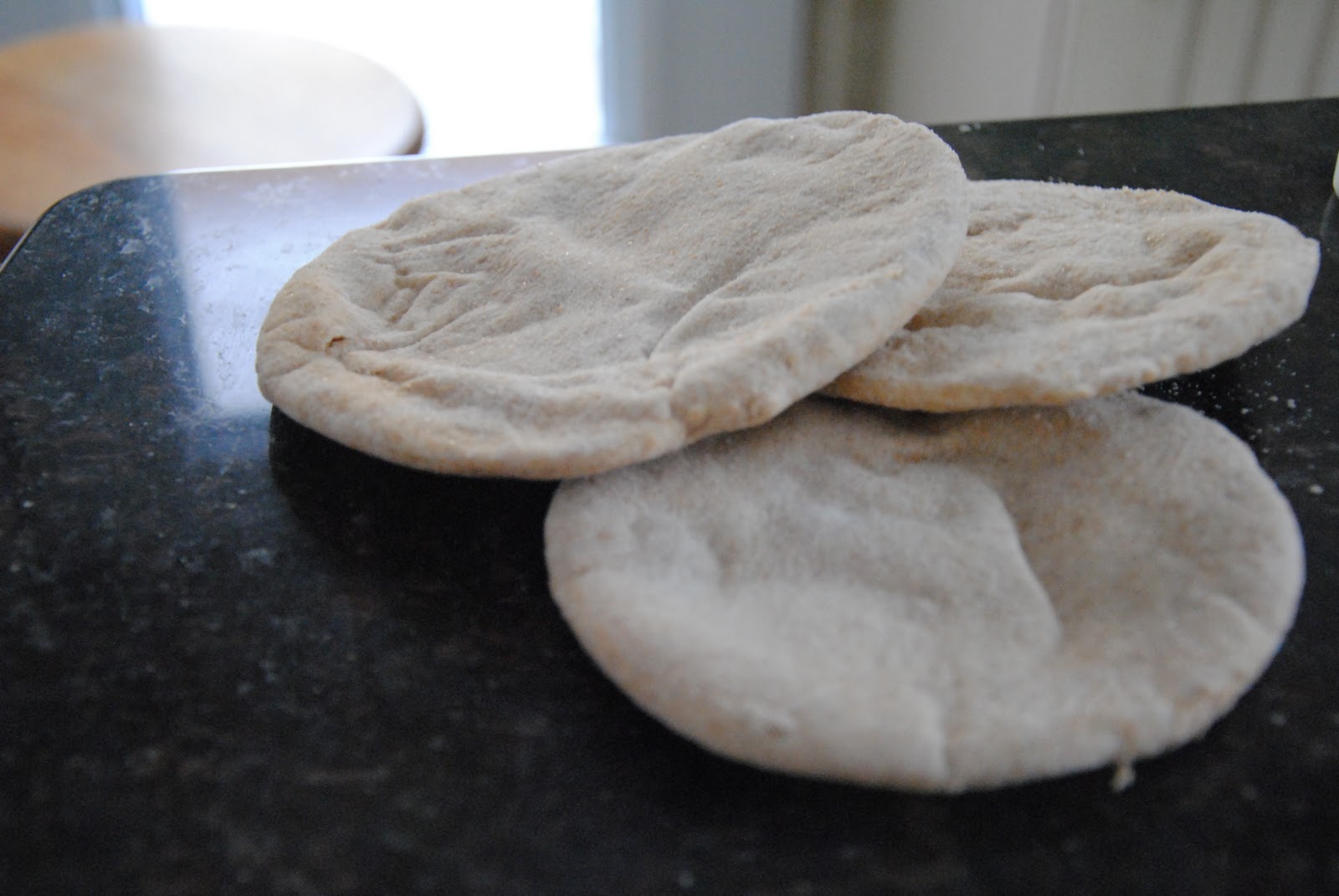
This recipe makes about 32 small toaster-sized breakfast pitas. The dough is like butter. Well, it’s made with butter, maybe that’s why. Soft and pliable and dreamy to work with. My only reservation is that it requires a lot more yeast than conventional bread. [Note: since originally posting this recipe, I’ve experimented with less yeast, and have adjusted the yeast measurement accordingly].
Homemade Breakfast Pitas
Combine in a mixing bowl: 6 cups bread flour (whole wheat or some combo of white/whole wheat works well), 4-5 tablespoons honey, 3 teaspoons salt, and 6 teaspoons yeast. Add 4 tablespoons melted butter and 2 1/2 cups room-temp water. Stir well until blended. Knead for 5-10 minutes or until the dough is smooth and elastic (add flour or water as needed to reach desired consistency). The dough should be moist-ish, but not sticky.
Let rise, covered, in an oiled bowl, for an hour or two.
Preheat oven to 450.
Punch down the dough, divide in half, then divide each half into 8 pieces. Cover and let rest for 20 minutes. Then, flour a clean surface, divide each dough lump in two, and, using a rolling pin, roll each small lump into a flat circular shape, about 1/8-inch thick, or thicker, if you like a thicker pita. (It’s a lot of dividing, so note that each half makes approximately 16 small pitas).
If you have a baking stone, use it. If not, flip over a cookie sheet (or two), sprinkle with water, then place as many pitas as you can on the back of the cookie sheet–I fit six on each tray. Bake until the dough puffs up, about 4 minutes. Remove and cool on rack. Apparently, if you leave the pitas in the oven too long, they won’t unpuff.
Note: If you want to replicate the store-bought breakfast pitas, try adding, in small amounts, dried fruit, seeds, and/or spices at the combining or kneading stage of the recipe. My kids can’t agree on which fruits/seeds/spices would be acceptable, so I’m sticking with the plain recipe for now. Plain also works well as a flat hamburger or sandwich bun.
Keep the pitas fresh by freezing them. They thaw out quickly in the toaster. Slather on honey and peanut butter, and in our house, at least, the day has a happy beginning.
(adapted from the Joy of Cooking)
Tuesday, Jan 18, 2011 | Running, Writing |
Little wee writing thought to record for future use (I hope) … I’ve noticed that I write the good stuff, the inspired stuff, in small batches, often unexpectedly, though also often when I have the time to hang around and spiral slowly down deep. The corollary of that phenomenon is that I spend many a writing day fooling around, sitting around in front of the computer, slightly bored, not inspired, and writing nothing of any substance or use. (And I don’t mean blog entries, because I consider those relatively useful, and, even, occasionally, substantial). I mean, I write nothing of use. Period. Type, type, type, only to realize that a particular story or a particular take on a story is not meant to be; worse, that it isn’t a necessary story. It doesn’t long to be. (Though sometimes these ideas get recycled many years later). (So, maybe not useless, or not always useless).
Ahem. Nice circular thinking here, OCM. Very clear-headed at 10:41pm, after a good night run around the snowy neighbourhood.
My point. I had one. I want to give myself the freedom to do something else on those writing days of useless effort. Because the writing will get done–it gets done when a necessary story arises and must be told. It does. That’s how I write the keepers. Yet I feel guilty because only a few days each week are meant for writing, and I go to great effort and some expense to clear the house of children, in order to write. And then along comes a writing day when I’m not inspired, not at all. What the heck to do? Can I free myself of the guilt and …. and there my imagination pulls up short. And, what? Go for a walk or a run? To a yoga class? Play the piano? Read a book? Write a letter? It has to be something spontaneous, not planned, something flexible. It doesn’t have to be the same something every time, either. I’m terrified of losing my discipline; but maybe all this discipline is robbing me of experiences, of sources, of alternative creative outlets that could create connections in my mind; and it’s the connections that invent necessary stories.
Maybe there are some new year’s resolutions waiting for me after all. I am a generalist, and I wonder what it would feel like, what it would take, to be passionate about something more specific. Being a good writer is a fine and lovely thing, but being a good writer without a subject is futility itself. The book I’m writing has a very specific subject, and it’s occupied my mind for a number of years; and I’m seeing an end in sight. What comes next? What are my obsessions, my subjects, my loves?
Word of the year … I’ve got one; but I’m holding out for another post to share it. I don’t have that post in me tonight.