Monday, Feb 9, 2015 | Adventure, Book Review, Friends, Fun, Girl Runner, Good News, Winter |

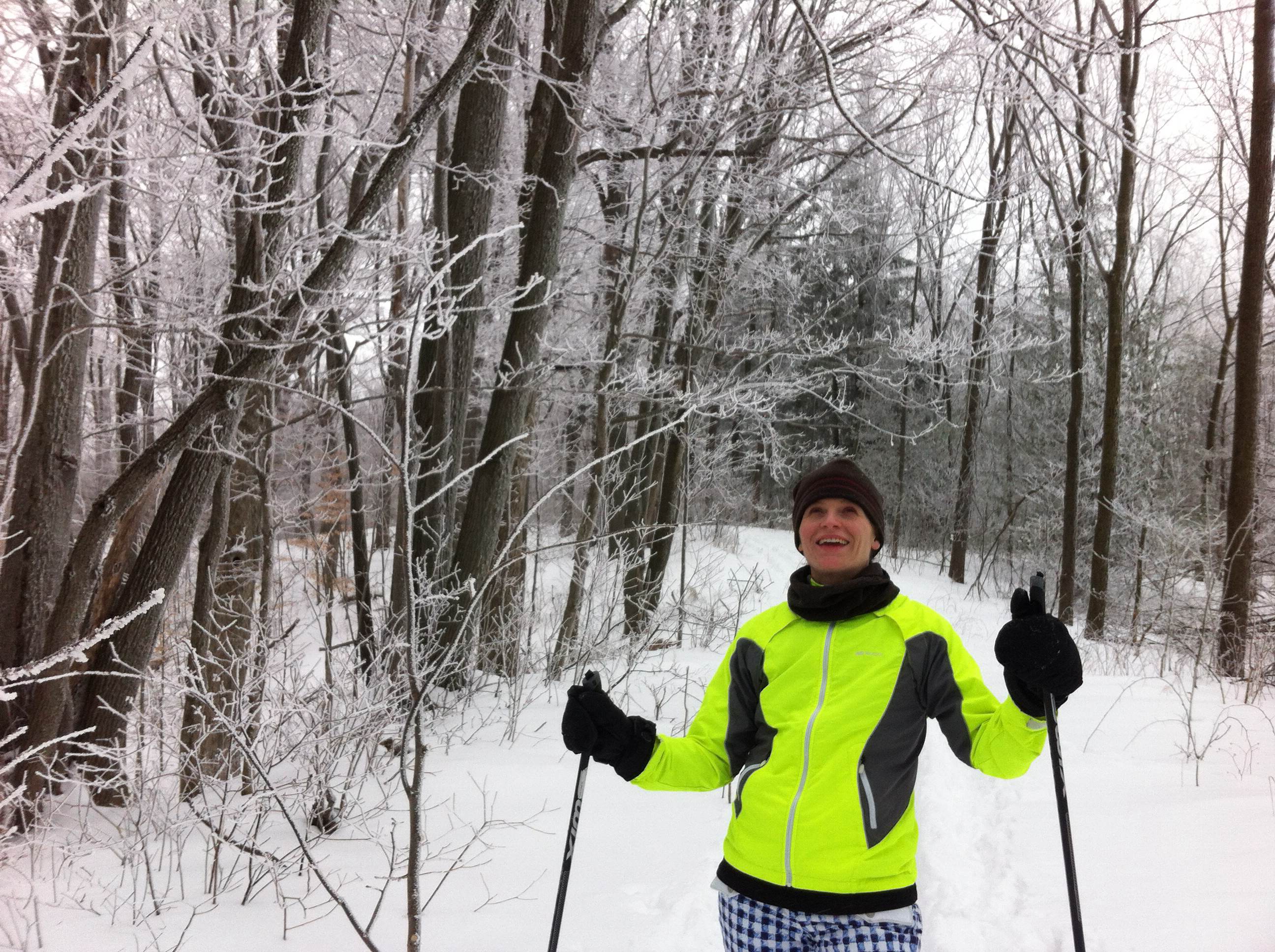
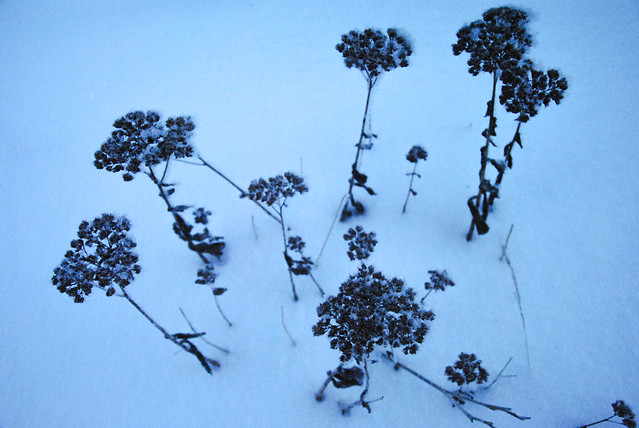
photo by Sarah L.
My day is split into chunks of time. Often, I set the timer to remind myself not to let time slip away. Forty minutes of spinning. Thirty minutes of napping. Fifteen minutes of meditation. Ten minutes of blogging.
Today’s post includes a bit of horn-tooting (for which I dearly want to apologize, and am telling myself that I needn’t and probably actually shouldn’t, and so am compromising with this lengthy expository aside).

A friend sent me a photo from a review of Girl Runner in Bust magazine (US): Look, they gave me 5 out of 5 boobs! Or could be nipples! But definitely bust-related!

Also, the lovely people at Two Roads in the UK made this graphic with actual quotes from the Daily Mail review, and look — no nots between the nice words. (I still haven’t read the review because I don’t read reviews, and I’m not just saying that; I really don’t. We can chat about this later if you want, but basically, I find it stirs me up inside, for good or for ill, and whenever possible, when it relates to my writing life, I like to avoid being stirred, shaken, or otherwise muddled.)
In other parts of my life, I don’t object to being stirred. Fun is stirring, for example. And this was a weekend when I didn’t feel I needed to try to have fun or be fun; fun was just there, inviting me out, into the world, to share in its exuberance. See the above photo: cross-country skiing yesterday with friends in a winter wonderland, the trees blossoming with hoar-frost.
Ding-ding-ding. That’s my time.
xo, Carrie
Friday, Feb 6, 2015 | Book Review, Books, Feminism, Girl Runner, Parenting, Word of the Year, Writing |

I keep track of my book-reading life in a separate section of this blog (under Extras), but as this is the year of WRITE, I’d like to highlight the connection between writing and reading by sharing some of my book-related reflections here, too. Because really, it can’t be a year of WRITE if it’s not also a year of READ. (And if you ever want advice from me on how to be a writer, here’s the only decent answer I’ve got: PRACTICE your writing like you’d practice the piano; and READ all the time, everything you can get your hands on, especially but not exclusively in the styles and forms you admire.)
So. Reading life. Below are three books I’ve read recently. But first I want to tell you about the newspaper article I read this morning in the Globe & Mail, an interview with two young women, both 13, both in grade 8 (and therefore the same age as my eldest, who is a boy). It’s the most clear-eyed, clear-headed perspective on sex education that I’ve ever come across. I love these young women! (Their parents must be pretty awesome too.) I’d like to have my older kids read this interview and then discuss it with them. Here’s a brief excerpt: What do you wish boys would understand? “Boys need to understand that women aren’t sex objects or lesser people. … Girls aren’t this whole other world. Boys and girls actually aren’t that different and they should be treated like they aren’t that different. Otherwise nothing is going to change.”
::
What I’m reading …
〉 Fingersmith, by Sarah Waters
* Christmas gift from Kevin to me
I’ve become a Sarah Waters fan. This book seriously creeped me out, but I could not stop reading it. It’s set in Victorian England and it’s gritty and dirty and full of evil plots and human foulness, and lots of things I’m actually quite squeamish about, but I was completely taken in. Plot twists? By the dozen. Never saw ’em coming. Waters is phenomenally good at storytelling, and at capturing the intimate details of an historical time period. I’m taking mental notes as I read her. I wasn’t sure what the message at the core of the book was, exactly — it seemed emptier at its core than The Little Stranger — but I didn’t really care either. I just wanted to devour the book and piece everything together. When I have time, I will definitely be reading more of Sarah Waters. (Problem is, I couldn’t put the book down, and was up late on a few nights, turning pages….)
〉 Fair Play, by Tove Jansson, translated from the Finnish, with a foreword by Ali Smith
* bought on my Kobo
This book challenged me. I really wanted to love it, and found that I could only like it. It is a series of small stories about two characters, loosely (or perhaps not so loosely) based on Jansson and her partner, a woman who was an artist. I kept mixing up the main characters’ names; they didn’t seem that different from each other, and that was one of the problems I had with the book. The other problem was the structure of the stories, which at times seemed overly and overtly plotted, even while most ended with a severe abruptness that seemed indicative of an undeveloped thought. Yet, even while my writer brain critiqued the stories’ structure, I was nevertheless drawn into this slightly odd world being portrayed, of two artists and friends (the specifics of their relationship are never explained, but they do live together at times and often share a bed), who share their lives and their work with each other. I can’t imagine having such a close friendship with another artist, one who would criticize my work even while I’m making it; that’s a level of collaboration that I really can’t fathom. I can’t fathom knowing another woman quite this well, I suppose, too. It’s a bit strange, as I’m thinking about this now, that we totally normalize pairing up and sharing our lives and space with a sexual partner, but a platonic friendship with the same depth of understanding and time spent together seems strange (or it seems strange to me, anyway). The exception to the strangeness was that brief period in my life when I had roommates, and it seems connected specifically to youth, pre-marriage. There were so many things I liked about being that close to my friends — sharing food, social lives, plans, down-time, the daily small miseries and joys. I know there were downsides too, and irritations; Jansson depicts these well. This book made me long for closer friendships — closer than is possible in my current life, which revolves around raising kids.
〉 A Sense of Style: The Thinking Person’s Guide to Writing in the 21st Century, by Steven Pinker
* ordered on Amazon.ca as an impulse buy when purchasing photo albums for Christmas gifts
The opening chapters of the book are well-written and fascinating, and support my own style of writing, which he calls “classic prose.” I really loved seeing Pinker diagram and break down sentences to show why they work (or don’t), in terms of the basic structure. We can only hold a very limited amount of information in our short-term memories, so the order in which our brain receives new information matters in terms of the ease of making connections between parts. That’s why a poorly written sentence stops us up, makes us puzzle over the parts as we try to connect them in the sense the author has intended. And a well-written sentence simply skims by, clear and well-lit. In a sense, it explains to me why it’s easy to overlook excellent writing: because it’s easy to understand, a reader assumes it’s a) easy to write and/or b) simplistic. But in fact clear writing, or classic prose, a) takes great skill to write and can be used to b) effectively communicate complex ideas. Pinker gets bogged down in his final chapter, which put me to sleep night after night, in which he logically and rationally argues over points of grammar and usage. I found his arguments sensible, on the whole, until he started arguing for rather than against particular grammatical sticking points — then he sounded just like the grammar police he was railing against. Point being: grammar is not a science. Grammar is an agreed-upon set of rules that aid clear communication, and when not-agreed-upon, well, that’s where history and tradition butt up against popular usage. Unfortunately, I come away from the book without a clearer idea of how to teach students to punctuate their sentences “properly.” I simply could not wrap my head around Pinker’s “grammar trees,” in which he diagrammed sentences using different names to categorize the parts of the sentence than the names I’m familiar with. I don’t know if this is because I’m stupid about theory (which I am, in some ways), or whether grammar is just too complicated no matter how clear you try to make your explanation, especially when you’re getting down to the nitty-gritty bits. I couldn’t imagine trying to take Pinker’s trees to my students in an attempt to make common grammatical errors clearer to them.
Now, your turn. What are you reading?
xo, Carrie
PS A review of Girl Runner from the Daily Mail in the UK arrived in my inbox this morning. I’m too chicken to read it, but Kevin promises me it’s good. Apparently this is an accurate excerpt: “Original … moving … engrossing.” (Dunno what words came in between those, but I sure hope “not” wasn’t among them …)
Thursday, Feb 5, 2015 | Blogging, Friends, Word of the Year, Work, Writing |

Whenever I float the idea of not blogging anymore (and it’s an idea that keeps bubbling up, with somewhat alarming frequency, actually), I know exactly what I would miss most: connections. A friend texted after my last post to say it had reminded her of a cartoon she’s kept for years: a woman stands alone, thinking, “I wonder if I would be happier if I put as much effort into accepting myself as I do into changing myself.”
That got me thinking.
What if I were to focus on accepting myself? What would that look like?
It would mean I wouldn’t shame myself for wanting to share my thoughts out loud. I would stop calling it a compulsion (a pretty judgemental word).
It would mean I might see my writing in simpler terms. I would accept what I’m able to create and do.
It would mean, maybe, too, that I wouldn’t be so frustrated during these rough patches (like right now) when I’m squeezed for writing time and my days are spent looking after sick kids, out of routine; because these days are gifts too, and my work is not only to write write write, but to live live live. To be alive is to be with others, to be interrupted, to fail, to be frustrated, emotional, achy, tired, weak, and surrounded by the fruits of your labours, which sometimes feel really heavy. If I accept myself, I accept that my days are broken. I accept that I have limits and limitations. I accept, too, that I’m on a path of my own choosing and virtually everything I do is in service to something or someone I care deeply about–how fortunate is that!
I have a question for myself: if I focus on accepting myself, would I discover that I am an ambitious woman, or a woman who is content with muddling along? Can I be both?
xo, Carrie
Monday, Feb 2, 2015 | Blogging, Confessions, Spirit, Winter, Work |
When I’m meditating, which I’ve only just started doing regularly, for ten minutes a day, I tell myself: This is all you need to do right now. You don’t need to do anything else.
It is such a relief to the mind to have that bit of rest — focused rest, not sleep — when the mind is aware and present and yet not obliged to do anything but sit and observe.
I name what I’m feeling: worry, usually, or the desire to make a list and get organized, to remember all of the things that need doing. I name it and I say, you don’t need to do this right now.
It is such relief.
I really don’t know what life is about, honestly. I don’t know if there are big gestures that a person should be aiming themselves toward, in life. When I’m sitting still inside my mind, I think, no, life is not about big gestures. It is not about effort. It is about ease. It is about stillness. It is about being witness to.
But how, I think, could I accomplish anything without effort? I am such a believer in hard work. Yet I know, too, that much of what I’ve accomplished seems to come instead from grace. It isn’t that hard work hasn’t gotten me somewhere — hard work and discipline perhaps creating the necessary space for grace. But then I think, well, no, grace isn’t dependent on work or effort. We can all of us be graced by grace, that is the nature of grace. And then I wonder whether those who stand and wait, without an apparent plan, without the desire to change or be changed, aren’t actually on to something more profound than I am, with my striving and reaching and stretching.
Another question: What is this compulsion to share what I see and experience?
Could I not go there, to a place of stillness and grace, and return quietly? Apparently, this blog post would suggest that no, I cannot. But I’m thinking about it. Rather hard thinking, in truth.
All of the following probably fits into the category of wanting to change or be changed, but I don’t know how to address what I’m feeling in different terms: I would like to learn how to put aside the striving and access the ease of presence. I would like to learn how to clear more space for my mind to be still and focused. I would like to learn how to love the world more, to name what I see without judgement.
Happy snow day.
xo, Carrie
Friday, Jan 30, 2015 | Big Thoughts, Word of the Year |
“Attention without feeling, I began to learn, is only a report. An openness – an empathy – was necessary if the attention was to matter.” — Mary Oliver, Our World