
Daily diary: the it’s still January edition
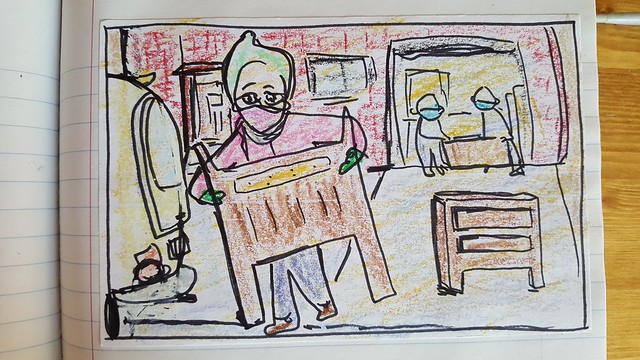 01/23/21
A sunny Saturday, and cold. I spent lots of time outside today, walking with Angus to pick up eggs and veggies from Claire, then deliver some items to Mom. I also delivered tea to friends in the neighbourhood. This afternoon, I scored an entire set of bedroom furniture from a neighbour, for CJ’s basement room. I’m still hyped up on the high of a) seeing people b) free furniture c) exercise outside.
 01/24/21
I drew today while listening to a Tara Brach meditation, where she invited us to think lovingly, compassionately toward someone else, feeling what they feel, feeling what we could offer. The smell of baking bread is in the air, and I’ve been behind all day. Late to all my tasks, all day. (What tasks? Getting out of bed, breakfast, church, playing piano, drawing, baking bread, riding spin bike, shower, making supper … so really …).
 01/25/21
Today, I started a two-week “tea cleanse” with my word group. I’m the de facto facilitator and have spent a lot of time thinking of how we can use these moments of pause, as a group. I hope others try my daily writing practice: “What’s on your mind?” Today, I drew out a rewrite plan for my 16th century novel after writing “What’s on your mind?” and revised a tough essay. So it (the quick-journal practice) worked for me, at least for today.
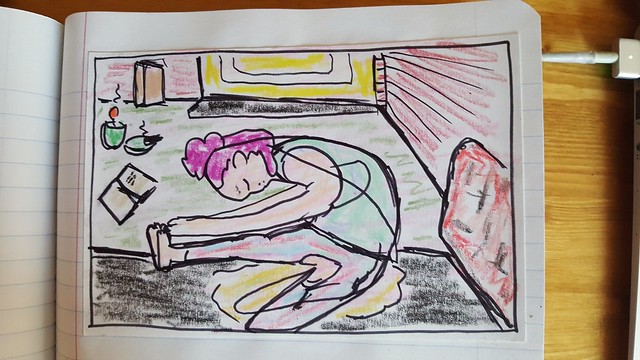 01/26/21
Kasia’s kundalini tonight celebrated and called forth REST — as winter calls us to slow down, reflect, eat soup, drink tea. Be warm, gentle with yourself. Such a big writing day, starting with talking Grandma, then revised a big story, with feedback from my writing group. All this energy and activity has nothing to do with rest, but I’ll need the reminder soon enough; being gentle on to myself when I’m tired is one of my greatest challenges.
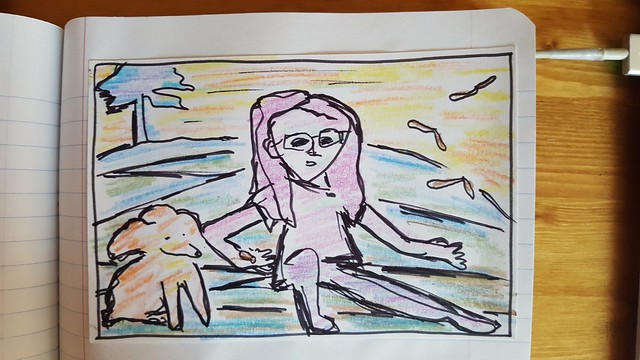 01/27/21
Today’s cartoon is inspired by the movie “Soul.” We watched it as a family tonight, for our pizza party, after we all earned our 10 stars on our reward charts. How to live every minute? What is a spark and how is it different from a purpose? How to see this water we’re swimming in as the whole ocean? (We had root beer floats, movie snacks aka candy, a homemade pudding cake, a fruit tray, wings and garlic bread, along with the pizza. We went all out.)
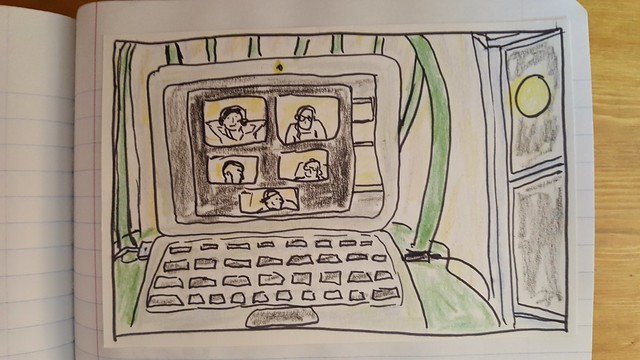 01/28/21
Everything has been slightly ahead of me today, but I’m doing it, I’m doing it all. Decided during kundalini (going seriously overtime), that I would draw my sibs night gathering. Everyone came! On time! I’m drinking a beer, which is a novelty right now. The full moon has been my companion all day, big and bright on the horizon this morning as I rode the spin bike, and rising out my window tonight while I was doing kundalini, and now, while I write and draw and laugh with my sibs.
 01/29/21
Tired today. It’s a Friday tired. I do insist on getting up by 6AM to ride the spin bike every week day, even when I’ve stayed up late the night before. Woke feeling — not dread, just this: apathy. The very opposite of flow, today’s word for our tea cleanse. I don’t feel capable of giving my mind over to writing, so I’ve drawn, played piano, walked Kevin’s cellphone (forgotten at home) to his office, passing all the unnervingly shuttered shops uptown, thinking “this is nuts.” But it’s the same as it’s been for some time, no worse. So it must be me, not the circumstances. This is the day when I need REST, I need to remind myself to be gentle. Sometimes the flow eddies and slows, maybe it even looks frozen, but — have patience, rest — under the surface, down deep, it’s still there, moving. Believe it.
xo, Carrie
Hope in the trippy time warp

We’re in such a trippy time warp here in continuing lockdown (with cases heading in the right direction again, so there’s hope). But there’s always hope! And I’m noticing that hope comes in the form of a small change or surprise or pleasure that can be found, really, in any day. Even the dullest of days.
For example: supper! It happens every single day, but we all look forward to it. I currently have the time to put more thought and preparation into the evening meal, and it is worth it. We gather, talk, eat good food. It’s simple, it’s satisfying.
Another example: snow falling from the sky!
And: the days getting incrementally longer. It’s 5:19PM as I type this and it’s still light out!
Also: group activities!
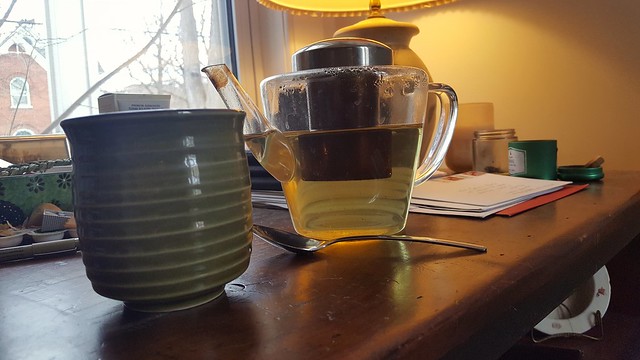
With my word group, I’m doing a 2-week tea-cleanse, in which we brew and sip teas throughout the day, and connect with our words and with each other via email, and maybe, too, via psychic powers.
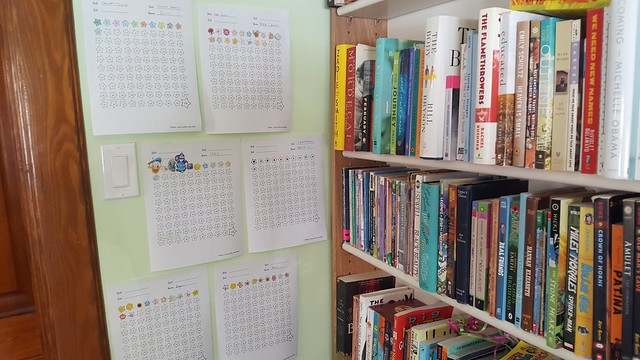
With my family, we are doing reward charts! Who knew? It began when I offered to print up a chart for our youngest, who needed encouragement to practice more often (online school is sapping his motivation). As soon as people spotted his reward chart, it quickly spiralled. Now everyone has one (mostly with the goal of practicing a musical instrument every day, although Kevin gets a pass—he’s drawing instead). When everyone earns 10 stars, we get a pizza party! Individuals can earn a separate reward for every 25 stars. The rules and rewards were discussed and agreed upon and planned for at some length; and tonight is the night: Pizza Party! Whoo-hoo! We even had a sign-up sheet so people could bring something extra (like a fruit tray, or Scotch mints, or a cake). We’re planning to watch a movie too (“Soul”). [Update: What a wonderful movie to share as a family; laughter, music, and the exploration of big existential questions. You should watch it too!]
Finally, on the group activity front, I’m connecting virtually as much as possible through yoga classes on Zoom, texts with friends and family, Zoom calls with my Grandma, and writing time with imaginary characters (that counts too, right?). Today I tried a midday movement class out of New York city that, frankly, seemed to be inviting me nap for an hour on my heated studio floor while making fractional movements with my arms and legs. So maybe that was a one-time thing. But I tried it!
Explore: that’s what’s giving me hope, and purpose, and spark right now. Try it, sign up, reach out, say yes to something different and new, even if it’s just challenging yourself to cook a meal with the weird passed-over ingredients haunting your cupboards (my supper plan for Thursday!).
I’d love to hear what’s giving you hope, in small surprising ways, right now.
xo, Carrie
Views from inside another lockdown
 01/14/21
Our morning routine is sturdy and pleasant. Exercise, shower, breakfast. We’ve worked out a shower schedule, since there are six of us vying for a spot. I’ve been eating chia seeds and oats soaked in yogurt, or scrambled eggs on homemade bread for breakfast. Everyone is at their desk (or couch, or bed) by 9AM. Peaceful. And motivating, too. I’m wasting less time in the mornings getting to my own work.
 01/15/21
Today, I wrote for so long that two of my pens ran out of ink! Something that brings me pleasure each day is to check in on my plants. I’ve got two new ones that I repotted from cuttings, and it gives me such a kick to see the progress their little shoots are making, day by day, slowly, slowly, rising and unfurling into shiny new leaves.
 01/16/21
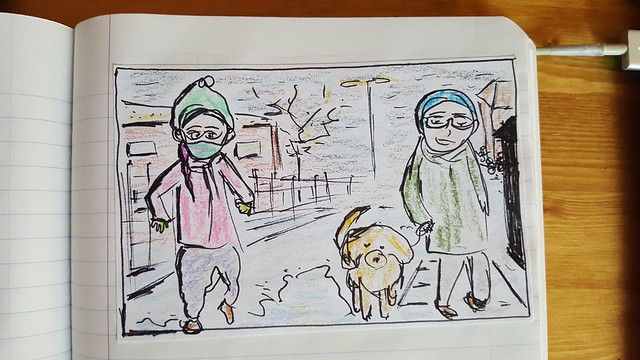
If I’m getting “better” at drawing, as a few people have commented recently, does it change my approach to this project? I’d like to keep this fun, unselfconscious, an adventure into the unknown, into the hidden parts of myself that only my hand and pen can discover; like what’s shown today, above, in my awkward hesitant shape, revealing the vulnerability I felt (but didn’t want to admit) during this conversation with a friend.
 01/17/21
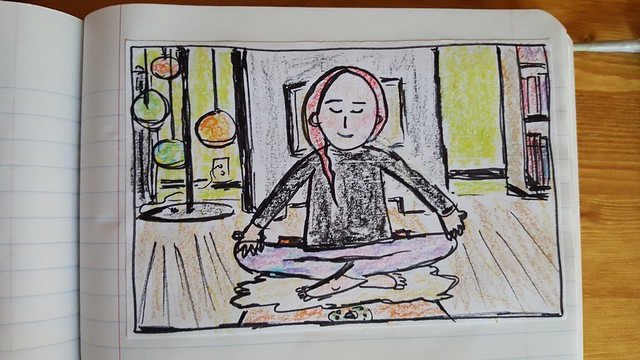
Many lovely grace notes on this quiet Sunday—baking bread, playing hymns and singing harmony with Annabella, church on YouTube and Zoom followed by watching the Liverpool game while everyone sat around in the living-room—but it all revolved around breath. Controlled. In, out, long, smooth.
 01/18/21
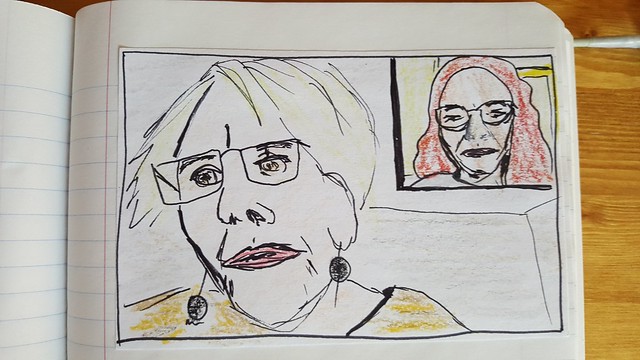
Talked to my Grandma this afternoon, asking questions about specific times and experiences in her life. We will keep talking. I want to ask her about big things, like, how do you feel about death? How did you survive the upsets and shocks in your life? (Talk about self-conscious: I do not like the drawing of myself in the corner of the Zoom screen, and nearly scribbled over it before posting here; but decided to let it stand.)
 01/19/21
Sometimes I can’t keep my eyes open and I unroll my yoga mat and lie down in a very particularly way on my studio floor (which is heated), and I nap—for no more than 24 minutes. More stories via Zoom from my Grandma this morning. I’m listening. I have time to listen.
 01/20/21
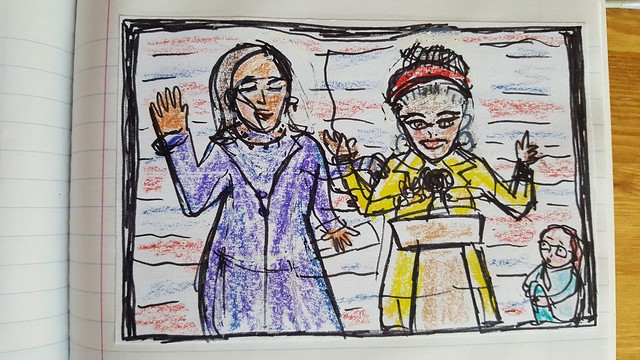
I paused my day to watch Kamala Harris take her oath of office, and was later transfixed by Amanda Gorman’s recitation of her poem “The Hill We Climb.” We aren’t broken, we are unfinished, she proclaimed. I write these words on my heart. (I’ll admit, I held my breath till Joe Biden was sworn in, and then—relief.)
 01/21/21
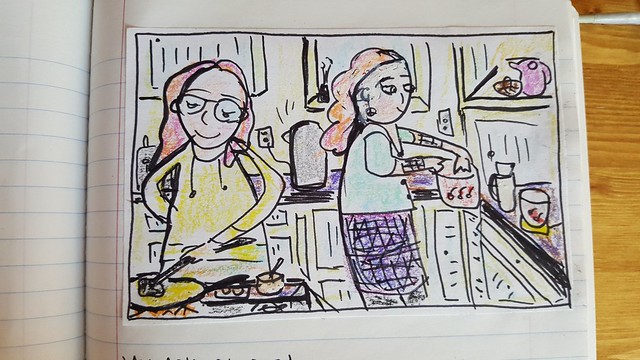
It can get very busy in the kitchen at breakfast time: for accuracy, this drawing should have at least two more people squeezed into it. I spent the morning talking to Grandma again, and she told me about celebrating the inauguration last night, even watching the entire TV special, sitting through all the musical acts, even when she didn’t love the songs. Someone chose them for a reason, she told me. We talked about change today, and next time we are going to talk about death.
 01/22/21
I’ve scarcely left my desk all day; but after supper last night, our whole family walked uptown. It was the first time we’d all been out together since lockdown. I get very panicked and queasy seeing new businesses opening now, and trying to survive. Like, the worst feeling! I wonder why?
*
I should have taken photos of my drawings in full natural daylight, but I forgot till it was too late (too late being just after 5PM). I notice a lingering and annoying dissatisfaction with the imperfection caused by the poor lighting. The colours are faded and distorted, for one thing! But I’m too tired and it’s too much end-of-the-week to start all over again (plus, I’d have to wait till tomorrow to re-take all the photos!). Hey, it’s Friday evening, and we’ve got take-out on the table, from Sari-Sari Filipino Cuisine. Look them up, if you live in Kitchener. They post their menus daily on Facebook, and the food is delicious and inexpensive, and served in the most generous portions.
Happy weekend, everyone.
xo, Carrie
Note: About a week after originally posting this, I photographed all the drawings again, in natural daylight, and uploaded them to replace the ones that had annoyed me so much. Is the post measurably better because of this? I don’t know, but I feel better!
A journal in cartoons and captions
 12/30/20
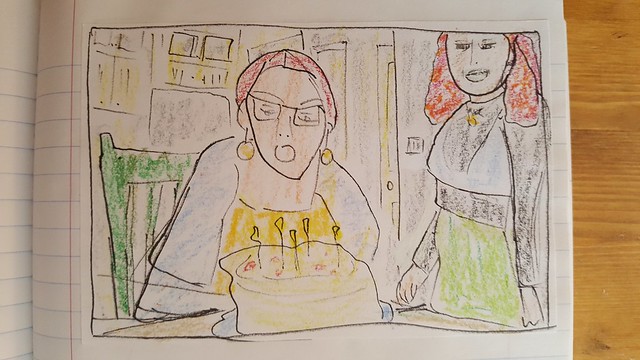
Everyone looked after me all day. My favourite part was going around the table and hearing what everyone considered to be the thing they were most proud of in 2020. (Mine was painting my door yellow, and transforming my office into my studio.)
 12/31/20
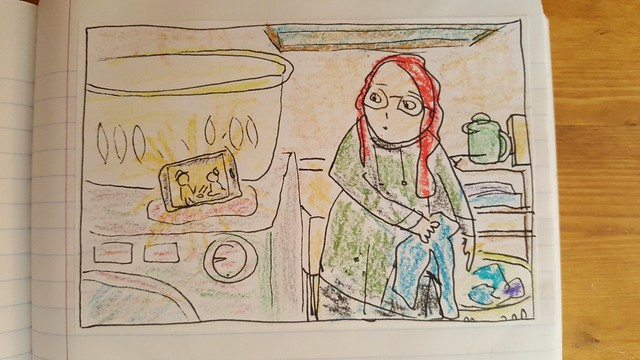
I’m glued to Murdoch Mysteries, a Canadian show on Netflix that thankfully has about a thousand episodes (give or take). When I learned there were many seasons yet to watch, I ran out of my studio hollering: “Winter is saved!”
 01/01/21
Kevin’s new year’s eve bonfire kept burning out last night. “I smell like smoke,” I told Heather on our starting-the-new-year-off-right walk. We came upon a statue that was like a horror movie, a man’s face replaced with an owl and maybe a possum (?); squirrel and duck for hands. We laughed so much.
 01/02/21
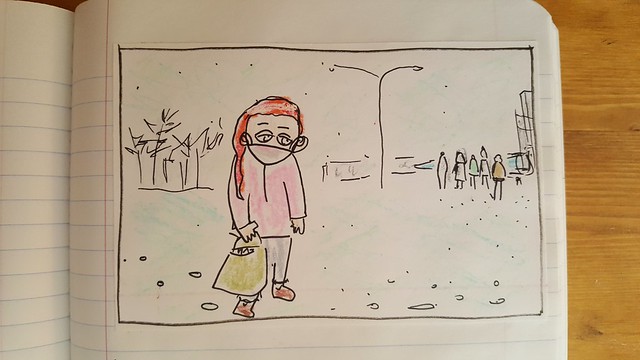
We drove to Claire’s farm to pick up eggs and meat, and Claire showed us the pigs in the barn. Back home, we started a new 30-day yoga cycle with Adriene, called “Breath.”
 01/03/21
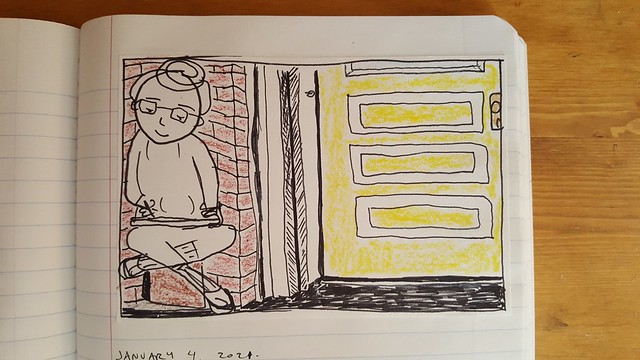
Strange what my pen and hand tell me—not always what I want to hear. Mostly, I walked with my family this morning, on a spontaneous walk through fresh snow. But this was how I felt, trying to reach across the barriers of self/other.
 01/04/21
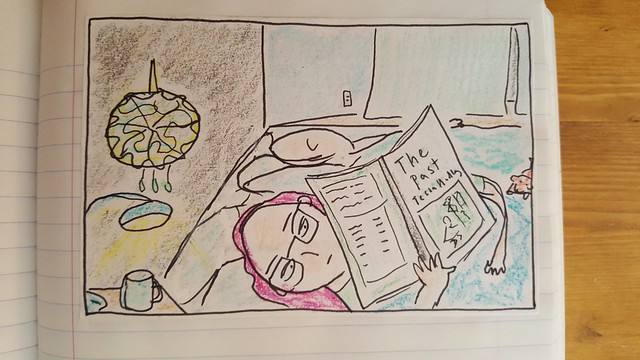
Welcome to my studio. I enter this small warm room, close the yellow door, and feel—welcomed in. Happy to be here, at this desk, to look out these windows, to feel excited, wondering what I’ll find today?
 01/05/21
I’m trying to read a book before falling asleep, rather than scrolling the news on my phone. My theory is that my dreams will be better, more interesting. But last night, the children in this book found a dead dog and my sleep was restless; tired today. (Soundtrack on repeat: “Exile” T. Swift and B. Iver)
 01/06/21
It’s a lot to ask, that stories drop into my hands from their perfect mutability in my mind. I ask for grace and energy, I ask for a stronger work ethic, I ask for magic; but it’s desire I need, to answer longing with scratches on the page.
 01/07/21
Yesterday, as Trump’s followers over-ran Congress, I was doing that terrible thing where I was watching a livestream on my laptop, scrolling my phone, and texting people, as if by consuming too much information, I’d find an answer to the question—what is going to happen?
 01/08/09
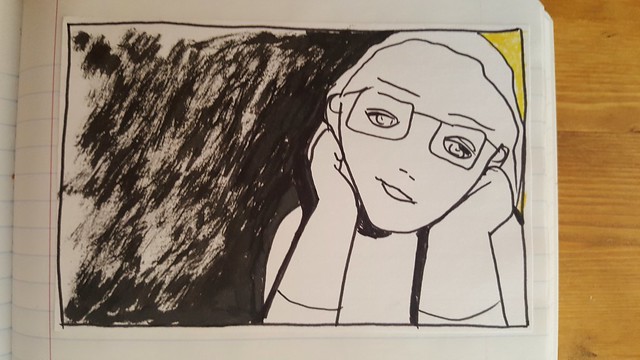
I promised myself I’d sit down and draw even if I felt completely empty. That would capture the day too—an empty page, some pen scratches and scribbles.
 01/09/21
My drawings this week all kind of look the same, I told Kevin on our after-dinner walk with Rose. Not much is changing. We are in liminal space—waiting. Not transition, but waiting. Waiting. Waiting. Waiting.
 01/10/21
Today I made a list of things I want to do every day: go for a walk, the longer the better; burn and create energy with intense cardio; yoga; cartoon; play piano; afternoon tea break. I’d also like to meditate and read; and of course write. And cook. (But not clean.)
 01/11/21
Good news: started my day in my studio and wrote part of a story almost immediately! Not-bad news: I can’t draw cars. This one looks like a bus, sort of. Above: me and Nina going for a walk, early Monday morning tradition.
 01/12/21
Panic attack reading news of a stay-at-home order starting Thursday in Ontario. Felt like I was drowning. But what changes, I asked? Put on headphones and draw—follow pen into memory, shape, imagination. You’ve got resources. Sources.
 01/13/21
Sidewalks slick with ice, we walked, skated, slipped, slid on a short dog walk after supper. Waiting for us to pass was a fox in the little park across the street. It sat perfectly still, alert, focused on our presence, till we were gone.
*
And now we’re all caught up. What do you think of my new journaling method? I’m on month two, and I’ve noticed a growing interest in attempting to draw background and setting, as well as figures. I’ve noticed, too, that this exercise slows me down and changes the flow of my attention, no matter what I’m feeling.
xo, Carrie
You must ask for what you really want

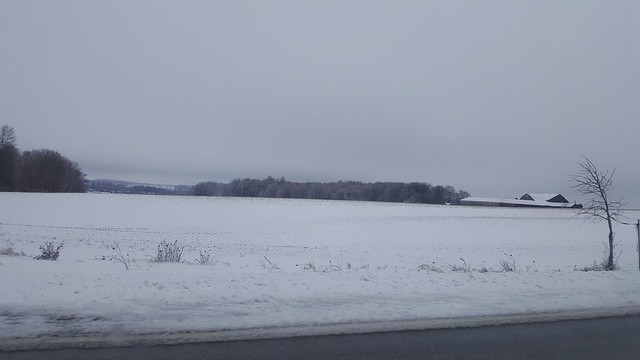
It’s a new year, and here we are. Oddly, I’ve chosen to anchor this post with a photo taken on a drive to the country, though I’m so rarely inside a car these days that it’s hardly representative. Mostly, I’m inside my studio, inside my house, looking out my window.
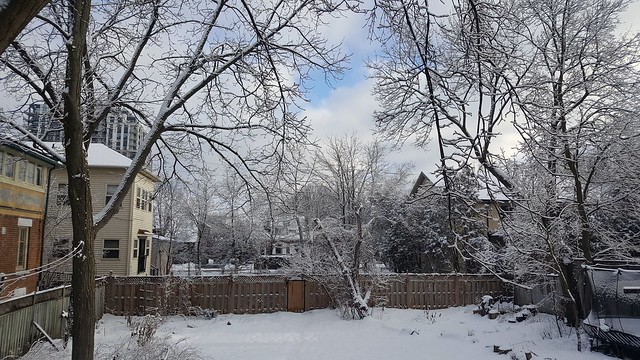
Today is sunny. I should really go outside for a walk, though the blue shadows are already long, even at 3 o’clock in the afternoon. We live in a northern country. The seasons tell us what to wear, how to be. January has often been a month of contemplative reflection for me. But I’m not sure I can take more contemplative reflection than I’ve already got on the go. I live too much inside my head already. Inside this house. Inside these studio walls.
Go outside, Carrie! Soak up some sunshine!
Do not go back to sleep
You must ask for what you really want
Do not go back to sleep
-Rumi
How can I ask for what I want when I don’t know what that is?
Have you ever asked yourself what you really want? I find it is an impossible question to answer. I’ve sat here looking out the window at cars and people and dogs passing by, and I just can’t think what it is that I really want. The answer could be so very small, or so very big. I might want a cup of tea, for example; or I might want moral authority. (Is that even something a person can want or aspire to?)
Or maybe I want something that I don’t even know that I want. Maybe I want to be surprised. The thought of being surprised brings forth significant anxiety, I realize, typing those words; and yet, I think I do in some way want to be surprised—preferably happily surprised. It seems to be an element lacking in this current arrangement of life under lockdown. As a creature of habit, I’m mostly quite content following my daily routines, which are healthy and nourishing, and yet, and yet—
I want a little more energy and determination. I want to laugh with a friend.
I want to go outside and partake of this brisk, bracing season.
xo, Carrie
PS There’s more to that poem, in the translation that’s on my bookshelf:
The breeze at dawn has secrets to tell you.
Don’t go back to sleep.
You must ask for what you really want.
Don’t go back to sleep.
People are going back and forth across the doorsill
where the two worlds touch.
The door is round and open.
Don’t go back to sleep.