Category: Spirit
Friday, Sep 28, 2012 | Books, Exercise, Family, Friends, Kids, Photos, Readings, Running, Spirit, The Juliet Stories, Travel, Writing |


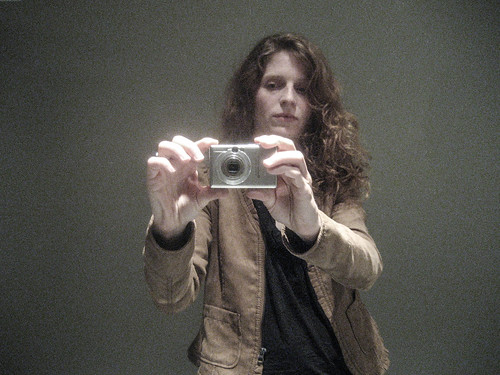
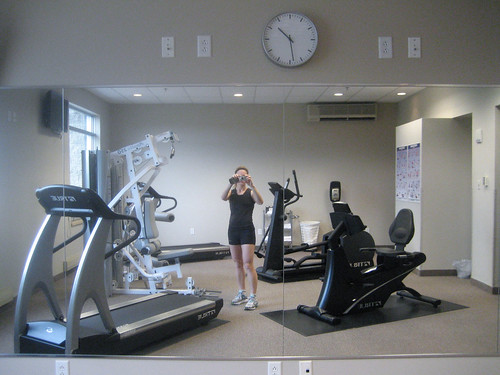
I took our old digital camera on my trip to Winnipeg, and figured out pretty quickly why we’d stopped using it: the battery runs dead after approximately a minute of use. But nevertheless it allowed me to capture fuzzy moments of my whirlwind adventure. The first photo, above, shows the Museum of Human Rights, still under construction, which was my view out the window when I ran on the treadmill in the empty fitness room (I never saw anyone else there). I stayed at the hotel for less than 24 hours, but still managed to run twice, and nap once.
On Monday, I had dinner with Sheree Fitch and took no photos. I knew her instantly though we’d never met in person, and I mean knew her knew her, not just recognized her. Maybe it seemed so natural to be with her that I assumed we’d have lots of time to pose for photos together, forgetting for the moment that she lives in Nova Scotia, and I’m here in Waterloo, and that mere fortune had allowed us to overlap in Winnipeg. Now I’m plotting to bring her to Waterloo to read in some schools — especially in my kids’ schools. How do such things get arranged?
At the table behind us were Bill Richardson and Karen Levine. Sheree knew them both. I’d met Karen eleven years ago when I recorded a story for a CBC radio program — I was just striking out on my own as a writer, and I was also massively pregnant with Albus, and for some reason had chosen to wear gigantic maternity overalls that day. (Why???)
For my mainstage reading on Monday night, I chose to wear my pretty red high heeled shoes that get compliments every time (which my sister Edna has now given to me to keep), and the cute/countryish/suedish jacket that makes jeans look dressy. (I hope.)
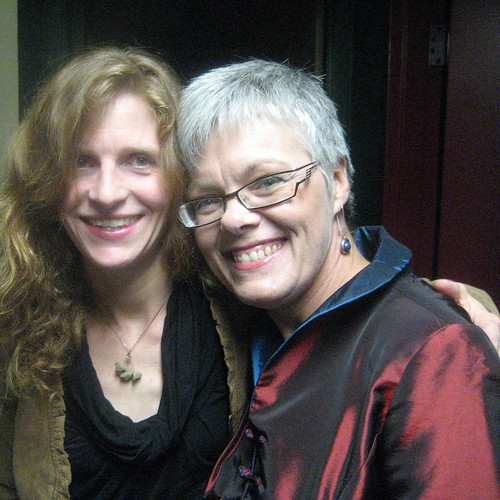
That’s me (and my poufy prairie hair) with the the festival’s director, Charlene Diehl, whom I first met when I was 20 and I walked into her CanLit class at the University of Waterloo. What a festival she’s made in Winnipeg. I’m so proud of her. The venues are terrific, the audiences come out (at our book chat on Tuesday afternoon, someone counted 95 people!), and the writers are treated, oh, so well. The hotel was a haven, and I loved every peaceful minute I spent there. What a gift.
I slept soundly. I woke refreshed. I sat and wrote. I read. I ran on the treadmill. There was space to retreat to — I appreciated having that space, as well as having opportunities to connect. As something of an introvert, I need alone time to balance out the meeting and greeting.
Tiny side anecdote: One of the writers on Monday evening was Jess Walters (Beautiful Ruins), who was very funny — and thankfully last to read. He told a story about his dad, who just couldn’t wrap his head around the concept of a reading. “What — you wrote the book, now you gotta read it to them too?” Ha!
On Tuesday morning, I did not sleep in, but I got a nice cup of coffee, I wrote, and ran, and at 12:30 on the dot, with great regret, I checked out of my room and went for lunch. I decided to order a glass of wine with my meal. I sat alone at the table, and read. It was a strange luxury, not one I could imagine getting used to — not one I particularly would like to get used to, when it comes right down to it. But it was good because it was so unusual.
Then I went up to the hospitality suite and discovered a small frenzy, lots of people. Being a bit thick, I didn’t figure it out right away, plopped down on the couch, checked my phone, gazed around, and went, duh! That’s Richard Ford, Pulizter Prize winner, he of the steely blue eyes. We introduced ourselves and shook hands. The general atmosphere was of people excitedly dropping things and attempting not to sound ridiculously giddy or silly.
I missed his reading that evening. I was on a plane back to Toronto, which sounded disconcertingly like its muffler had fallen off.
When I walked through our front door, after midnight, I snuck around to every room and squeezed and kissed and hugged every child. In the morning, in the whirl and bustle of getting us all ready for school and work, nobody even asked: hey, Mom, how was Winnipeg? I though that was funny. It was a short trip, and I enjoyed it immensely, and I’m glad that it was so easy to slide back into home life, so easy that no one seemed to notice much that I’d come and gone. Or maybe they just accepted me back, as if I’d never left.
There’s a bit of that to travelling too. Being present in the moment. And then it’s gone, and it reverts to being almost dream-like in memory, vivid snippets, densely packed. I wonder which vivid snippets from Winnipeg will stick with me most strongly? There’s no telling.
Thursday, Sep 13, 2012 | Big Thoughts, Readings, Spirit, Writing |

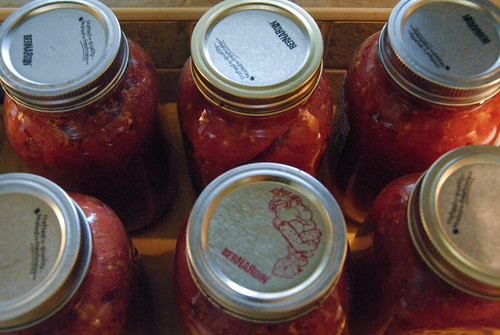
I’ve put away the canning kettle for the season. And while this wasn’t a banner canning year for me, I was reminded, as every year, that it’s not that hard to do. It’s time-consuming, finicky, hot, and has to be done when the fruit is ripe, that’s all. Listen to the radio. Accept help. Try not to whimper because you’ve got one more canner full of jars to boil and it’s nearly midnight on a weeknight.
For some reason, it’s worth it to me. Maybe it’s the colourful jars in the cupboards. Maybe it’s looking forward to a winter of sauces and chilis and soups in the crockpot.
Speaking of seasonal, I had a little thought in church on Sunday (I take the family occasionally, to touch base with the Mennonite in us — Kevin excepted, though he still has to go). The thought was this: Sometimes I’m open to soaking in experiences, observing, learning, participating, doing. And sometimes I just want to reflect. And these two states of being don’t really overlap, much, for me. Or maybe they do, in ways I just can’t see. Maybe what I’m trying to talk about is that sometimes I feel like I’m skimming along on the surface of things, and other times I’m very still and quiet, and I can sense the sacredness in everything. When I’m skimming along, I don’t even really like the word sacred. It sounds too serious, too self-conscious, too heavy, too inward-looking. I appreciate and respect it, but I don’t like it.
I don’t get to decide what kind of mood or state I’m in. I’m just there. It’s like being in the mood to play the piano, or write a poem. I have to accept where I’m at.
It’s hard to accept where I’m at when it’s somewhere I don’t want to be.
I’m skimming along right now. I’m frustrated by my inability to be still and quiet.
But here’s another tiny thought: sometimes — really, most of the time — it doesn’t matter what I’m in the mood for. I have to take my chances when they come. I have to can the tomatoes while they’re ripe. I have to run during soccer practice, and read stories at bedtime, and cook supper when everyone’s hungry for supper. And right now I have to get revved up for readings and for meeting new people and a bit of travelling — and even a bit of travelling is a lot, for me.
One of the places I’m travelling to is Winnipeg. I’ll be there a week from this coming Monday (!!), reading at the Thin Air Writers Festival. I found this lovely blog post on their site, written by Rosemary Nixon who appeared at the festival last fall. I’ll admit to some gnawing apprehension about leaving the kids and dogs and Kevin, with all the scheduling excitement to manage on their own, but Rosemary’s post reminded me of the potential that is waiting in this new experience — exciting.
A lot of life is about getting it done. And that’s fine, that’s probably even good, and necessary, and right. I’m privileged enough without getting to do what I’m in the mood for all the time. So the tricky part is appreciating what’s going on, floating on random flotsam and jetsom amidst the current that is carrying me along, and, maybe, glimpsing something mysterious in the trees that is there to be seen.
Maybe even while skimming along, I’m catching and keeping the things that will sustain me when I’m ready to be still and quiet again.
Tuesday, Aug 14, 2012 | Exercise, Kids, Parenting, Spirit, Writing, Yoga |

Went to hot yoga yesterday, the first time in months. The focus for the class was “gratitude.” Just what I needed! Talking with a friend yesterday afternoon had already got me thinking about the unhappiness that’s caused by comparing oneself to others (see the lovely Soule Mama). Caught up in wishing I had sheep and five homeschooled children and cupboards of freshly preserved home-grown goodness, I completely ignore and minimize all the goodness in my own life, right here and now.
Comparing lives is foolish, and possibly even worse than that — insidious. Now, that isn’t to say that inspiration can’t be found from investigating with interest the choices other people make. I wonder what the distinction is between comparison and inspiration. Is it my own frame of mind?
Here’s a good reminder as I go about my every day activities: I’m doing things that I’ve chosen to do, that I enjoy doing (mostly), and that, by necessity, cancel out my ability to do other things. There is only so much time and energy in one life (or in one family’s life).
Here are a few choices we’ve made:
We live in the city, a very short walk to the uptown core (because I also dislike driving and relying on cars). Therefore, we don’t live in the country on many rolling acres with paddocks and fields and a truck patch and barn. Nevertheless, we enjoy a lively herb garden, and lots of fresh tomatoes from our patches around the yards, front and back.
I write, and I need quiet time on my own to do it. Therefore, we’ve chosen not to homeschool our children, the responsibility for which would fall on me. Nevertheless, the kids have lots of freedom in the summertime, and also pursue extra-curricular activities they enjoy.
I love exercising: swimming, training to run long distance, taking early morning classes with friends. Therefore, most of my free time, which could otherwise be spent baking muffins before breakfast or canning food or tending a garden, is allotted to exercise instead. Nevertheless, I bake bread fairly often and cook locally sourced meals from scratch.
**
A few random footnotes.
Here’s a very funny essay by writer Lauren B. Davis: 10 questions never to ask a writer. I especially liked number 1. Sigh.
As I’ve hinted, I’ve been writing. In fact, I’ve been writing pretty steadily. But I think it’s pre-writing, telling the basic story to myself in order to understand my characters more deeply, so that I can distill their lives into something more meaningful. As with The Juliet Stories, I wrote many early layers of politics, of explication, of developing characters and relationships and plot that did not make it into the book itself. This is necessary writing, but it isn’t the most satisfying. Every time you sit down to write, you want to believe you’re landing on the perfect shape and form. Instantly. But that’s rare, if not impossible. A deep rich work requires deep rich work. The book that deserves to be read will come out of the disheartening and ultimately invisible work underpinning it. I write in hope!
One more tiny thing. If you’re so inclined, CBC Books is inviting readers to nominate books they’d like to see on The Giller Prize list. Here’s an entry from someone who nominated The Juliet Stories. Want to join in?
Monday, Aug 6, 2012 | Kids, Mothering, Parenting, Soccer, Spirit |
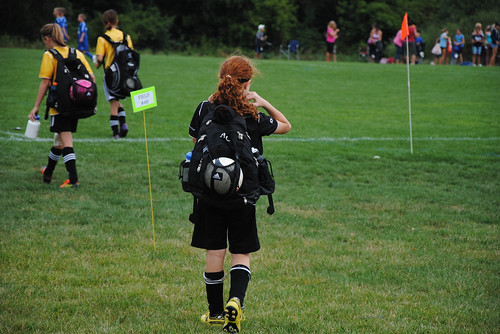
Sometimes I find it hard to watch.
Sometimes I wonder whether I’ll survive the emotions. I can’t explain rationally why I care so much–not whether she wins or loses, but whether she’s out there believing in herself and playing with confidence.
Sometimes I wonder whether it’s helping her in the least to have a pacing anxious mother on the sidelines. After a really tough loss on Saturday afternoon, I went to visit her under the tent where she and her teammates were resting and waiting for another game. She looked despondent. I tried to think of the right things to say: praise, mostly, for another game well-played regardless of outcome. I couldn’t tell whether it helped. Kevin took a turn too, and then I went back again just to hang out, appreciating how the coaches were keeping the atmosphere light, and glad to see that a Freezie had put some colour back in her cheeks. Both Kevin and I know we can’t force our kids to believe in themselves; all we can do is believe in them and let them know that we do. I’ll admit it: I was worried to see her so down.
“Did it help when Daddy and I came over to talk to you yesterday?” I asked her when we were talking after the tournament was over. We were talking about winning and losing and playing with consistency no matter what’s going on around us. I was wondering how to help her cope with the ups and downs that are part of competitive sport.
A warm, appreciative smile, a simple: “Yes.”
(My silent response: relief that our offerings of help are welcome; hard to tell in the moment.)
What amazed me and made me most proud was that by the time her team went onto the field for their next game, Saturday evening, she was ready. She played a big game, making aggressive saves that were audacious and, frankly, heart-stopping. She drew the impressed notice of other coaches. Her team dug out a win.
This season, in these tournaments, she’s been fighting nerves before games. Butterflies. Feeling sick. But as soon as she takes her place on the field, you’d never guess it. She throws herself in time after time. She looks like she loves what she’s doing.
The least I can do is watch.
Friday, Jul 20, 2012 | Big Thoughts, Friends, Running, Spirit |
lettuce flowers (yes, really, that’s what they are)
I was in Waterloo Park yesterday evening, finishing off a hard run. When running, I find that I disappear a bit, and my focus changes. In some ways, the tiniest details sharpen, in other ways, much sensory information blurs. But I often catch some small moment in passing, and it seems to flare more brightly than it could if I were walking or standing still.
Yesterday evening, as I ran up a big hill, trying to push the pace and push myself, I saw a family gathered below, sitting in four lawn chairs in the middle of a wide open grassy space. I wondered what they were doing, sitting all in a row, looking up the hill. And then I saw a mother and daughter walking down the hill. My trajectory would take me directly in between the two small groups of people.
Then the people in the lawn chairs saw the mother and daughter too. Someone called something out, which I didn’t catch. The daughter, who looked to be a younger teenager, waved and cried, “Happy birthday!” and I saw that another younger teenaged girl was running up the hill from the row of lawn chairs. The other girl started running downhill, and the two friends met giddily in the middle of the field, and hugged and jumped around with obvious delight to be together on what was clearly a special day — a birthday — for one of them.
I ran past the mother, and we exchanged broad smiles. I kept running and didn’t look back.
The whole scene occupied no more than ten to twenty seconds.
What struck me, instantly, was the joy it had given me to be witness to such a happy moment. How often do we see other people in their moments of unguarded, totally free happiness? Usually we see people when they are occupied with something else, distracted, on their way somewhere, busy, or idle; moments of spontaneous joy, well, they’re rare.
I’m going to keep looking for them.
Thursday, Jun 28, 2012 | Big Thoughts, Good News, Kids, Photos, Play, Publishing, Soccer, Spirit, Work, Writing |
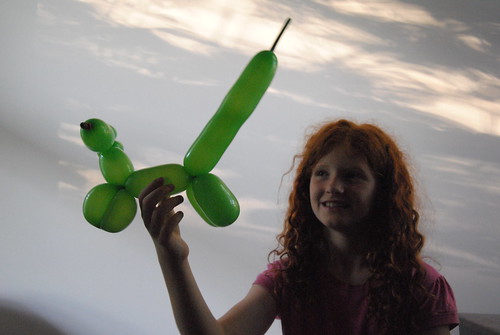
balloon-dog, by AppleApple*
*Yes, she made her own balloon-dog. She looked up instructions on the internet. When she explained the twisting technique to me, my brain malfunctioned. That is because, when it comes to engineering of any practical sort, I am the opposite of gifted. She’s thinking she could sell balloon animals this summer at street parties; we weren’t convinced the yard sale approach would work for such a specific product.
:::
Here’s what I’ve learned at soccer, so far. This is purely skills-related. Skip over this section if you’re not remotely interested in playing the game of soccer.
First game: I learned to touch the ball.
Second game: I learned that I was fast. And that this is handy, if you like touching the ball.
Third game: I learned that a pass into the net is as good as a hard shot; likely better. Perhaps not coincidentally, I also learned how to kick the ball without injuring myself.
Fourth game: I learned to run with the ball by kicking it in front of me rather than trying to dribble it at my foot. I also learned how to do a throw-in. Unfortunately, I learned the hard way–during game play, by doing it wrong the first time.
Fifth game: I learned that when heading for the net, I need to turn in toward the middle a lot sooner. Unfortunately, in this lesson I’ve only gotten as far as realizing that I must be doing something wrong. I get the ball, start running up the wing, and then (mostly) lose it because I come up against a defender. Kevin tells me I shouldn’t really be coming up against a defender, but should be making my decision earlier either to turn or to pass.
Maybe in the sixth game I will learn to keep my head up?
:::
While speaking of learning things, here’s an anecdote to make you feel better about yourself.
Yesterday I was at the bank to make a simple deposit, and found myself waiting for ten minutes in a line-up of one (me), while one teller served one client, and several other teller-types walked briskly around in the background avoiding catching my eye, as if to say, I’m much too busy to open up another window here. Is a ten minute wait long enough to start getting truly impatient? Because I was truly getting impatient. In fact, steam was coming out of my ears.
When finally I handed over my cheques for deposit, a transaction that look less than a minute to complete, the teller thanked me for my patience. It felt farcical, like I was part of a reverse psychology experiment. I almost replied, “It would be much more accurate to thank me for my impatience because it’s clear I’ve got none of that other stuff, and you know it as well as I do!”
Oh my goodness, I am not a patient person. It’s the main reason I swear so much while driving. All that time wasted, endless inefficiencies, and being at the mercy of systems not of my own creation.
My goal is to find something good in every situation, to waste nothing, by which I mean to find in any situation something redeeming: educational or funny or comforting or amusingly distracting or morally relevant; but I sure enough wasted those ten minutes at the bank, seething with irritation. What do you think I should have done to salvage the situation?
:::
One more miscellaneous item, relevant today-only, and only if you live in the greater Toronto area. If you pick up today’s Toronto Star, you’ll find a special section on Canada Day, with a bunch of stories and a few photos by me! I’m especially pleased about the photos, though this job has spurred me to make a few minor (and thankfully inexpensive) improvements to my current photo-processing and -storing capacity. I would like to add Photographer to my toolkit of marketable skills, and this is an excellent start.
I see myself as a workmanlike photographer rather than an artistically-skilled one. But I think that’s not necessarily a bad thing, and that there’s a place for it.
It fits in with my philosophy that there’s a place for all kinds of writing, too; I aspire to be able to work across the genres. I think anyone who writes serious literary fiction should damn well be able to write light-hearted party-planning pieces, and snappy headlines, and generally entertaining well-constructed articles on most any topic imaginable, assuming there’s time to do proper research. These take technical skill, as much as anything else. I also believe that writing across the genres will make me a better literary writer. (My only caution would be: don’t get stuck in a rut, and don’t write the same thing over and over; write widely, if possible.)
And that concludes my On Being a Writer 101 lecture for today.